

Tracking competitor sales on Amazon is one of the most effective ways to find profitable products, benchmark pricing, and stay ahead in your business. Yet most sellers still rely on manual storefront checks – a slow, inconsistent process that misses more than it catches.
Seller Assistant’s Seller Spy is a dedicated Amazon competitor tracking tool that automatically monitors rival storefronts, detects new and removed products, and surfaces pricing changes in real time.
Whether you do wholesale, online arbitrage, or dropshipping, this post walks you through how to track competitor sales on Amazon and turn that intelligence into sourcing decisions.
What Is Seller Spy?
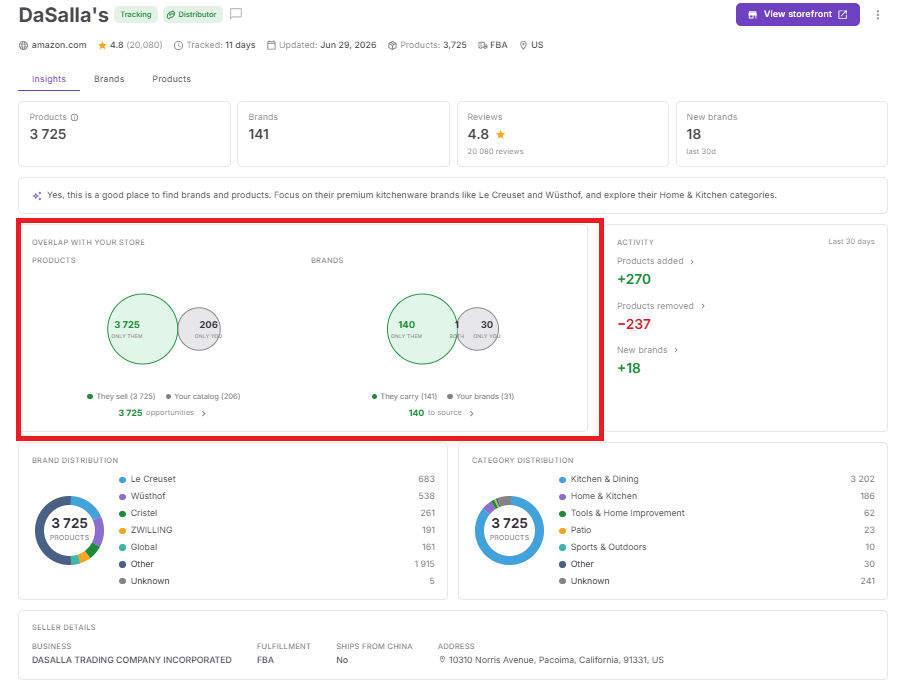
Seller Assistant’s Seller Spy is an Amazon competitor monitoring tool that helps wholesale sellers, online arbitrage sellers, and dropshippers discover sourcing opportunities by tracking competitor activity. Instead of manually checking Amazon storefronts, sellers can monitor competitors’ catalogs, brands, products, and pricing changes from a single workspace, making it easier to identify new opportunities, follow market trends, and build a stronger sourcing strategy.
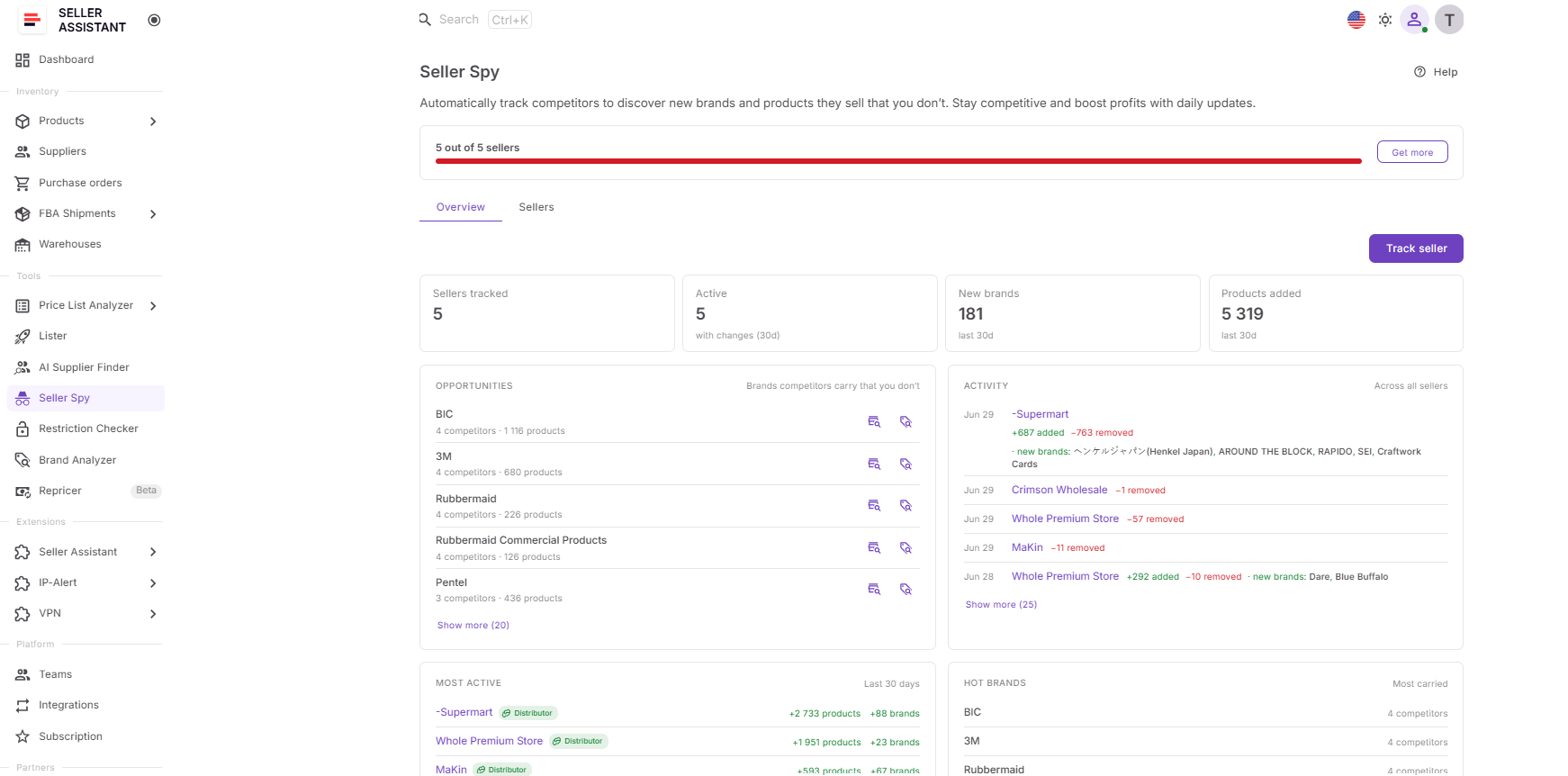
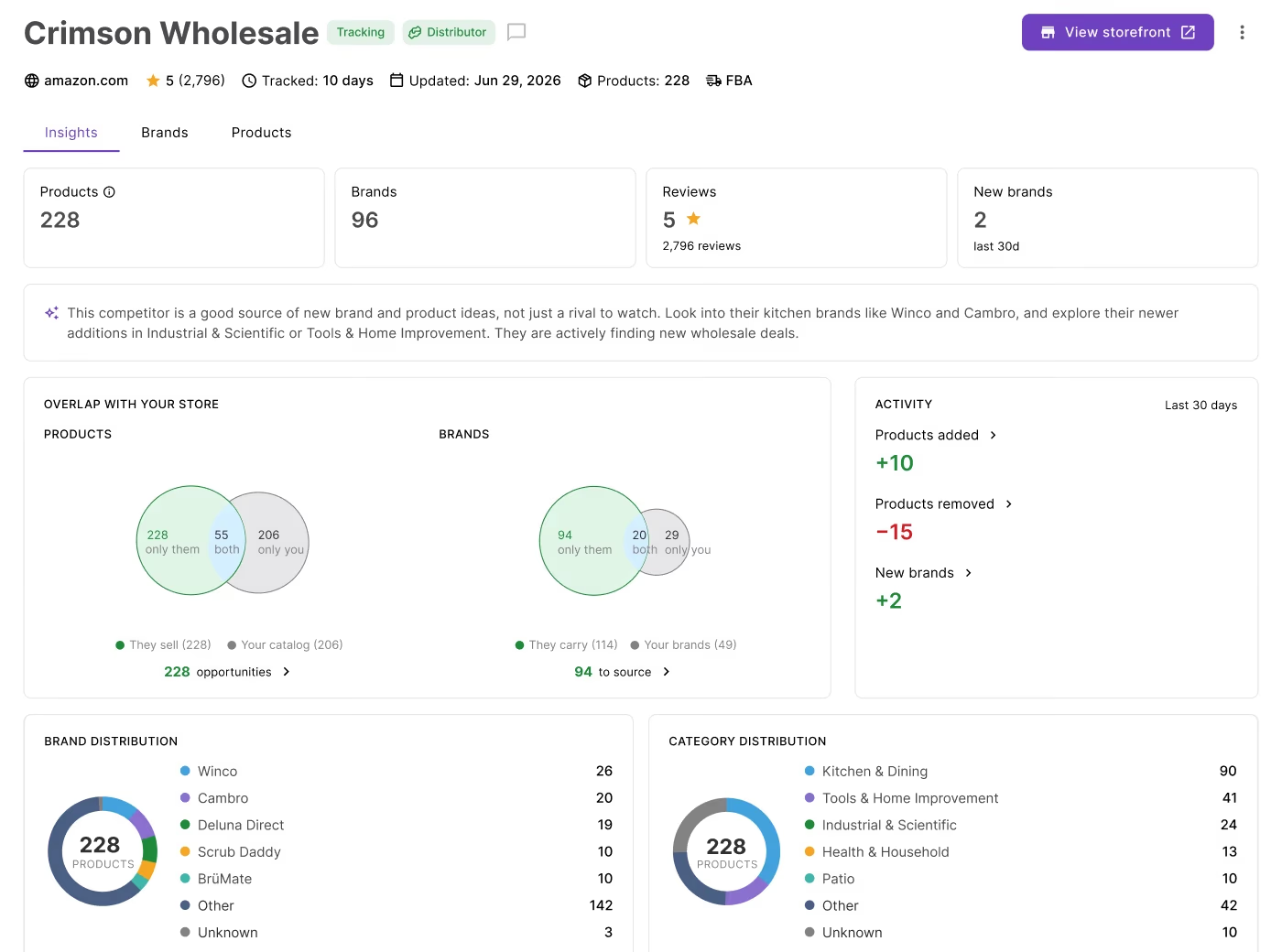
Seller Spy provides competitor intelligence at multiple levels. The Overview dashboard gives a market-wide view of competitor activity, sourcing opportunities, trending brands, and recently added products. The Sellers dashboard organizes tracked competitors and displays key metrics such as catalog size, marketplace, seller rating, and recent catalog changes. The Seller Details page offers deeper insights into each competitor’s business, including brand and category distribution, catalog overlap with your inventory, current and newly added brands, and product-level changes.
| Area | Description |
|---|---|
| Multi-level competitor monitoring | Seller Spy monitors competitors at multiple levels, helping sellers move from a market-wide overview to detailed seller, brand, and product analysis. |
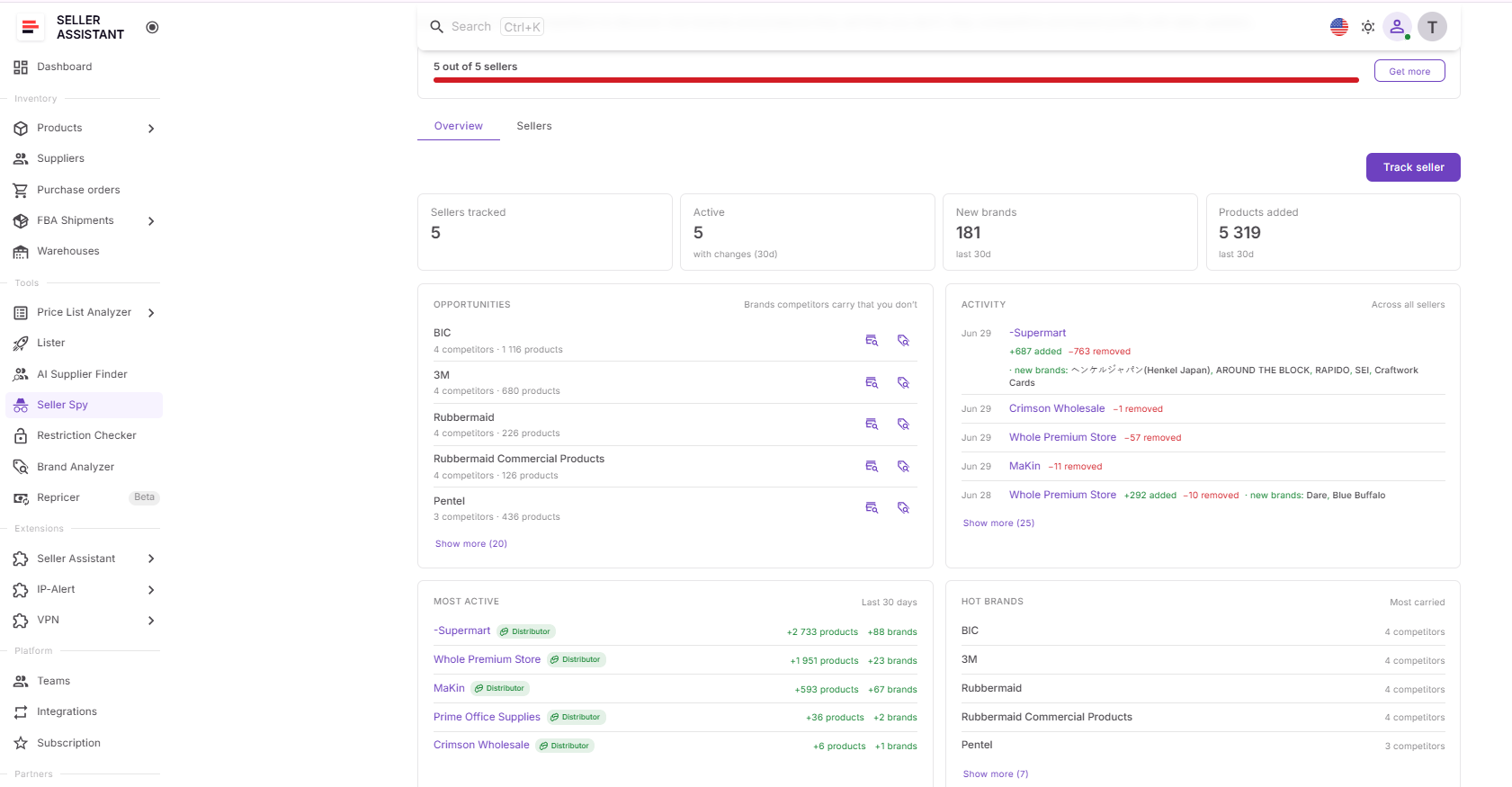
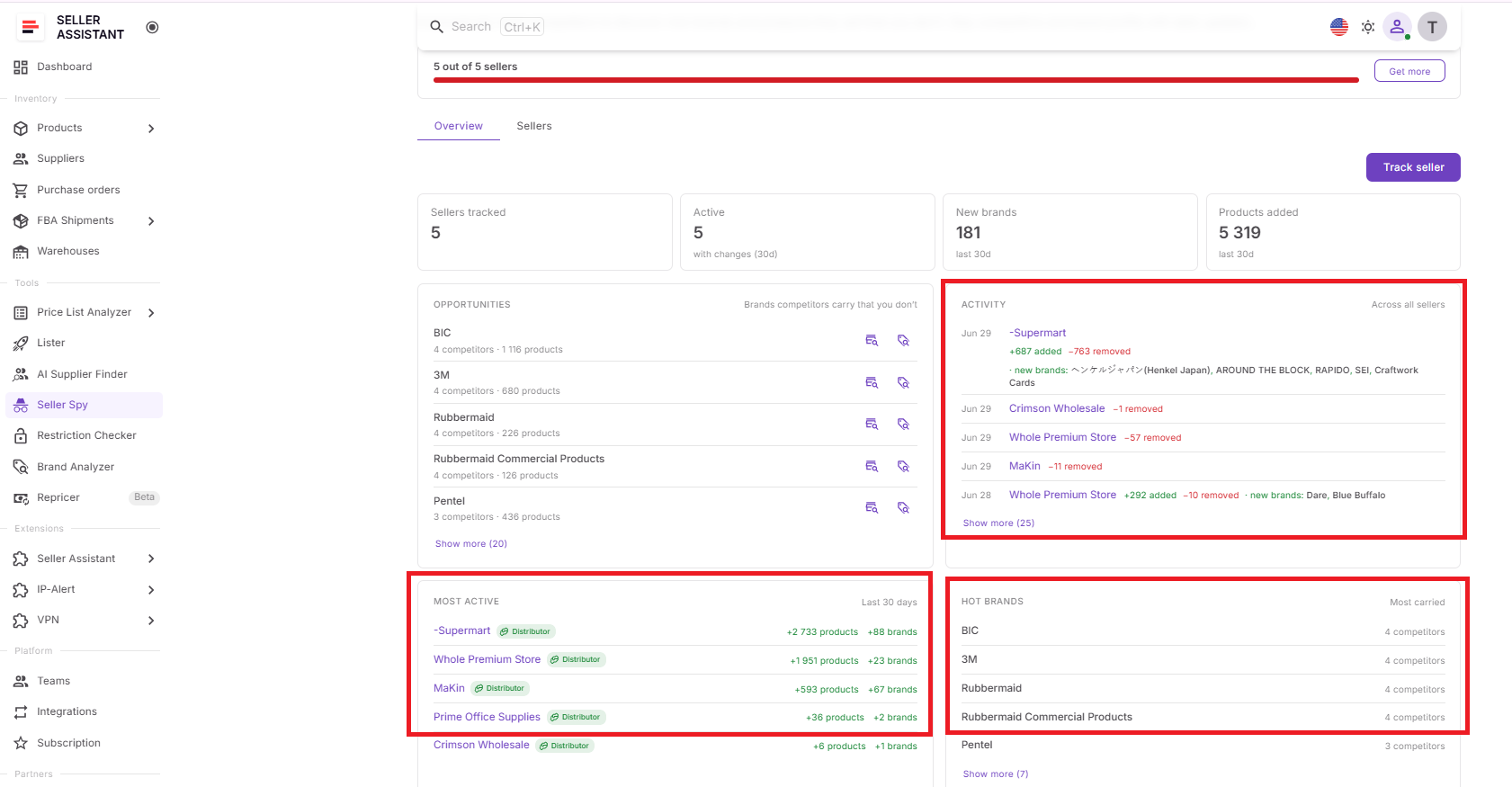
| Market-level insights | The Overview dashboard summarizes competitor activity across all tracked sellers, highlighting sourcing opportunities, newly discovered brands, recent product additions, the most active competitors, and trending brands. |
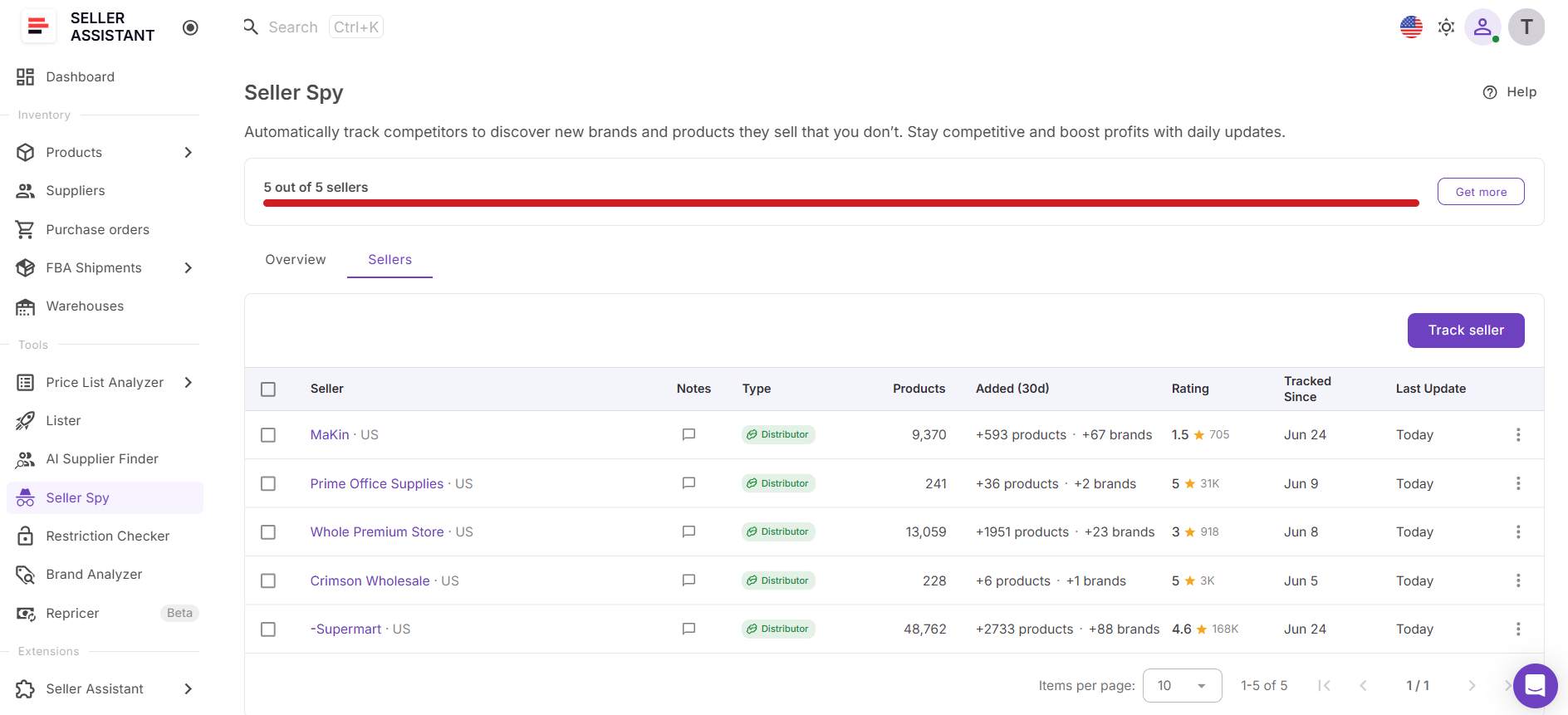
| Seller-level insights | The Sellers dashboard organizes tracked competitors and displays key information such as catalog size, newly added products and brands, marketplace, rating, notes, tracking history, and last update. |
| Brand- and product-level insights | The Seller Details page lets sellers analyze competitor catalogs in depth with Insights, Brands, and Products tabs, making it easy to review catalog overlap, recent activity, brand portfolios, product changes, and filter results for deeper research. |
| Connected sourcing workflow | Seller Spy integrates with Brand Analyzer and AI Supplier Finder, allowing sellers to evaluate promising brands and find suppliers without leaving their sourcing workflow. |
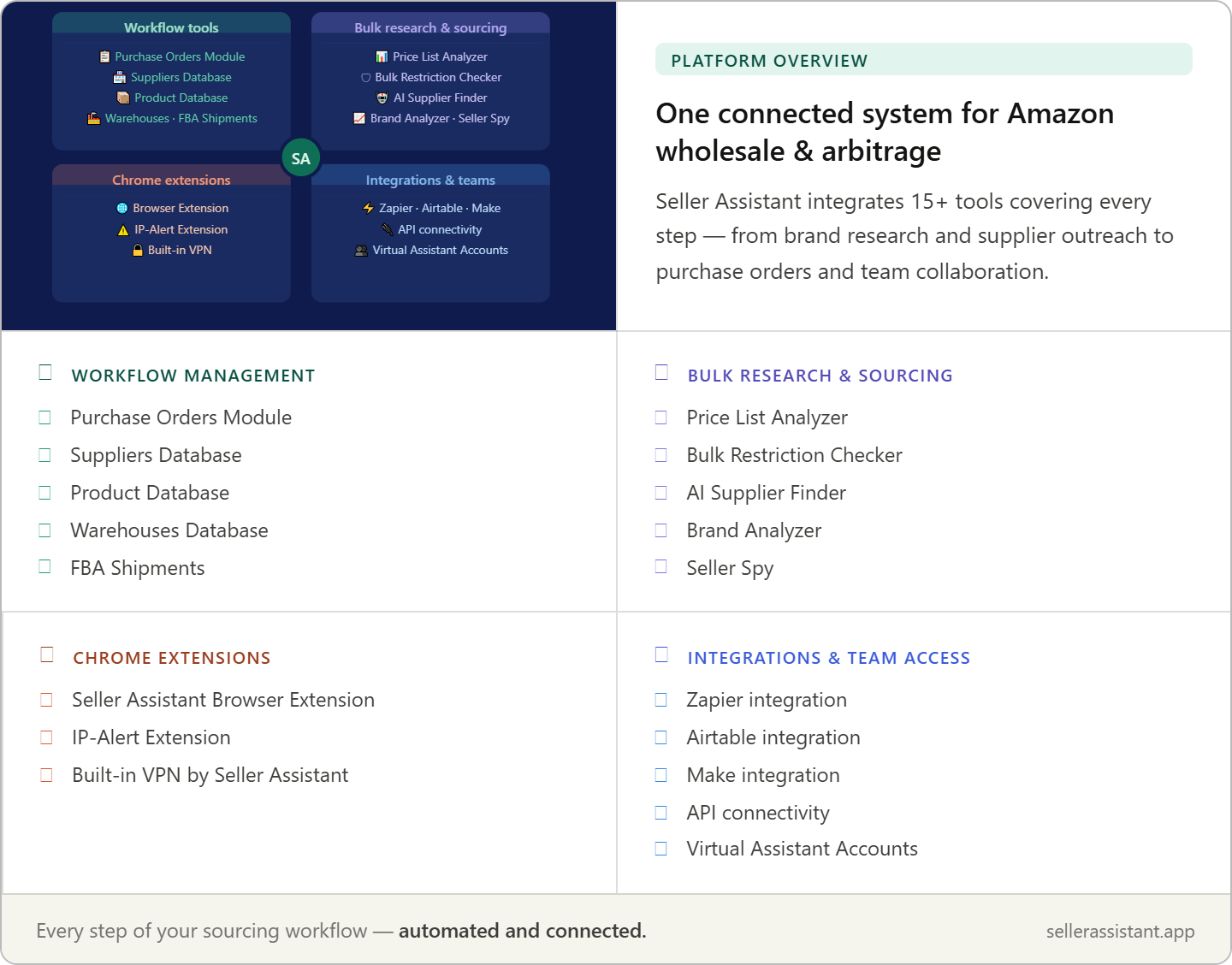
As part of Seller Assistant’s connected sourcing workflow, Seller Spy also integrates with Brand Analyzer, AI Supplier Finder, Price List Analyzer, and other workflow tools. Sellers can validate promising brands, find manufacturers and distributors, evaluate product profitability, and move from competitor research to sourcing decisions without switching between multiple tools.
What You Can Track with Seller Spy
Seller Spy gives you a complete view of competitor activity, helping you understand how Amazon sellers build, expand, and manage their catalogs over time. Instead of relying on occasional storefront checks, you can continuously monitor changes that reveal new sourcing opportunities and market trends.
Competitor activity
Track how competitors grow their businesses by monitoring product additions, removals, pricing updates, and overall catalog changes. This helps you identify active sellers and spot sourcing opportunities as they emerge.
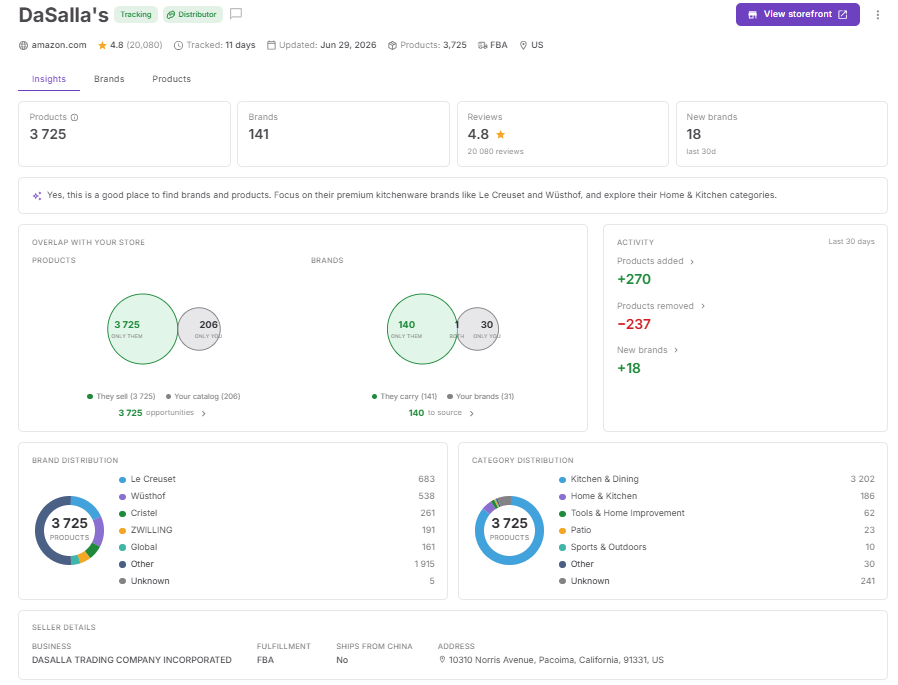
Brands
Monitor the brands competitors currently sell and discover new brands they’ve recently added. You can also compare competitor brands with your own catalog to identify opportunities for expansion.
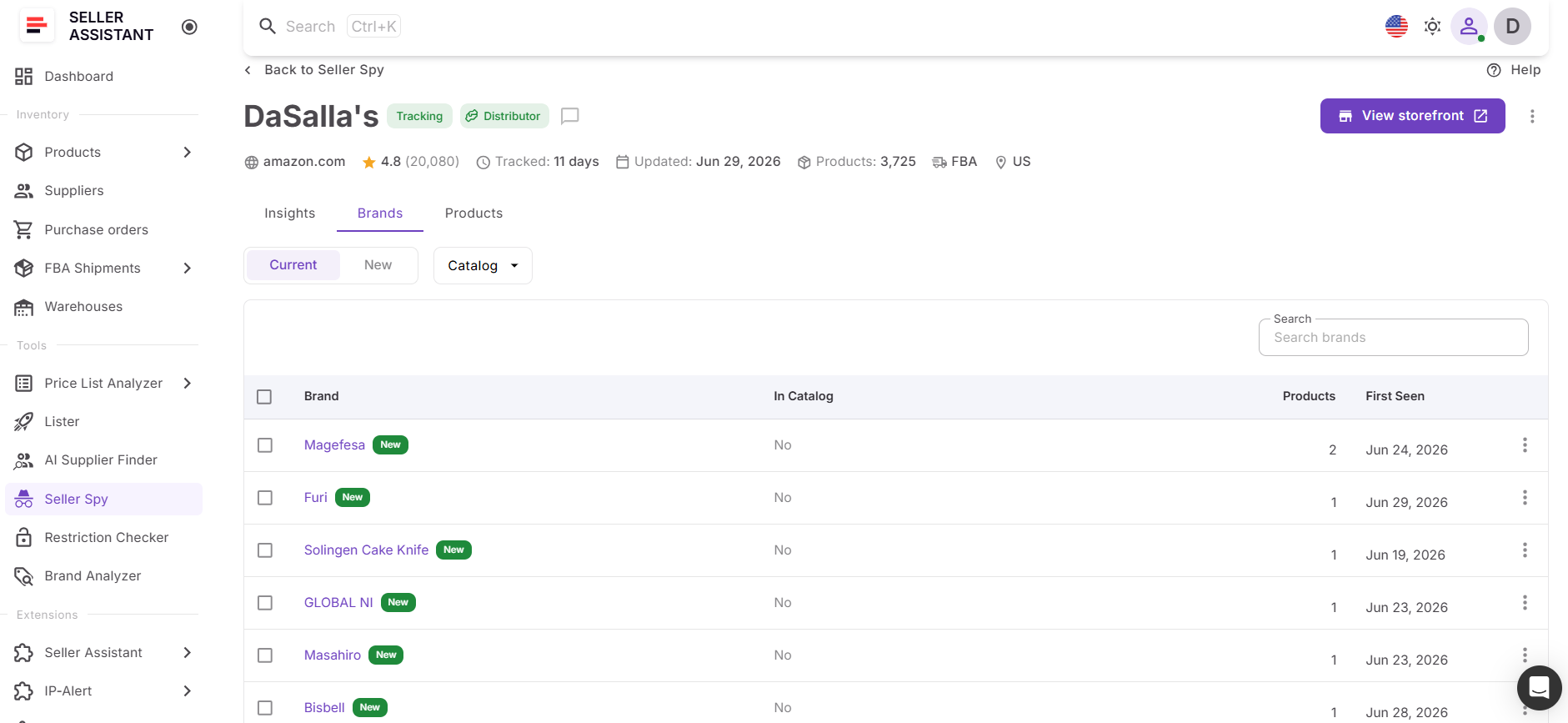
Products
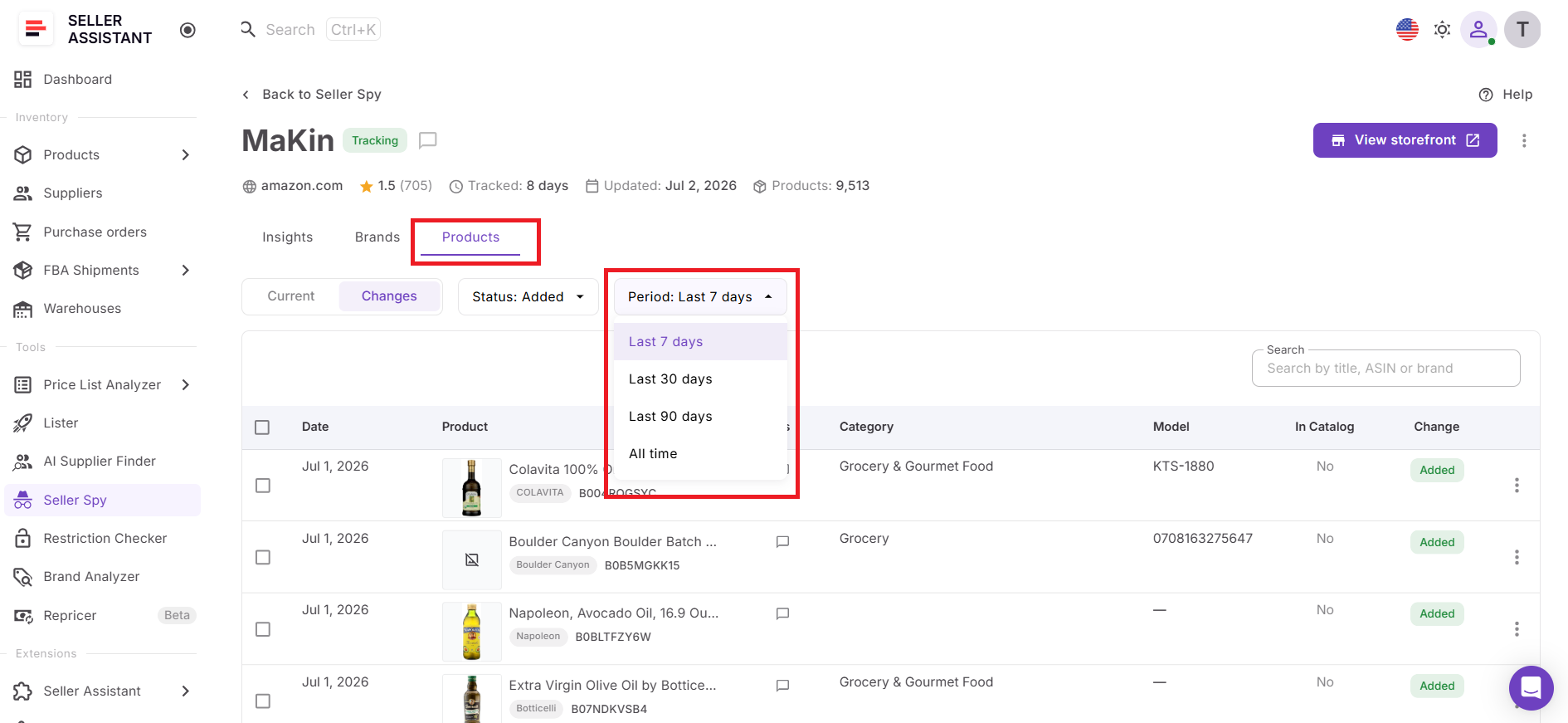
Follow current products and track catalog changes over time. Filter products by brand, category, keyword, ASIN, time period, or change status to investigate specific opportunities.
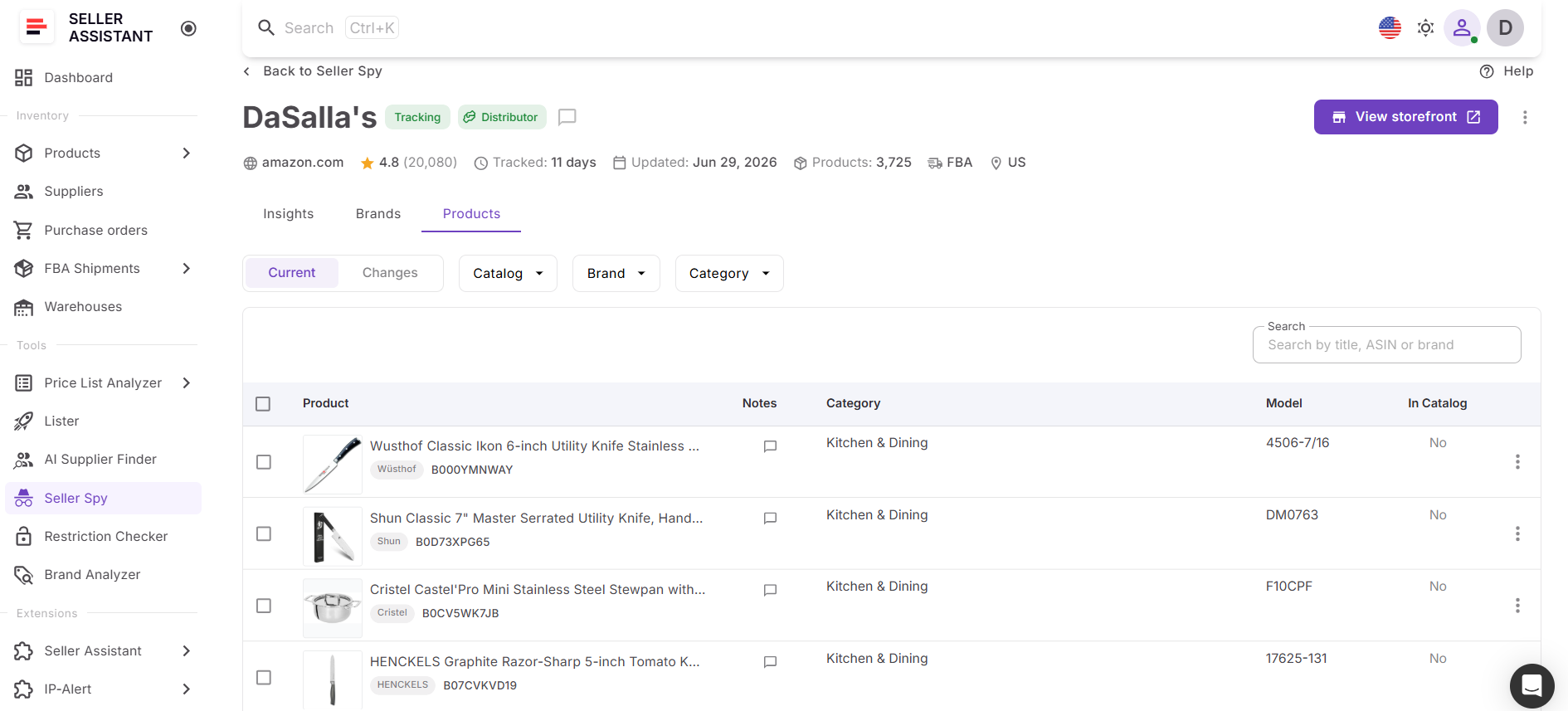
Catalog overlap
Compare competitor catalogs with your inventory to see which products and brands you already sell and which ones represent potential sourcing opportunities.
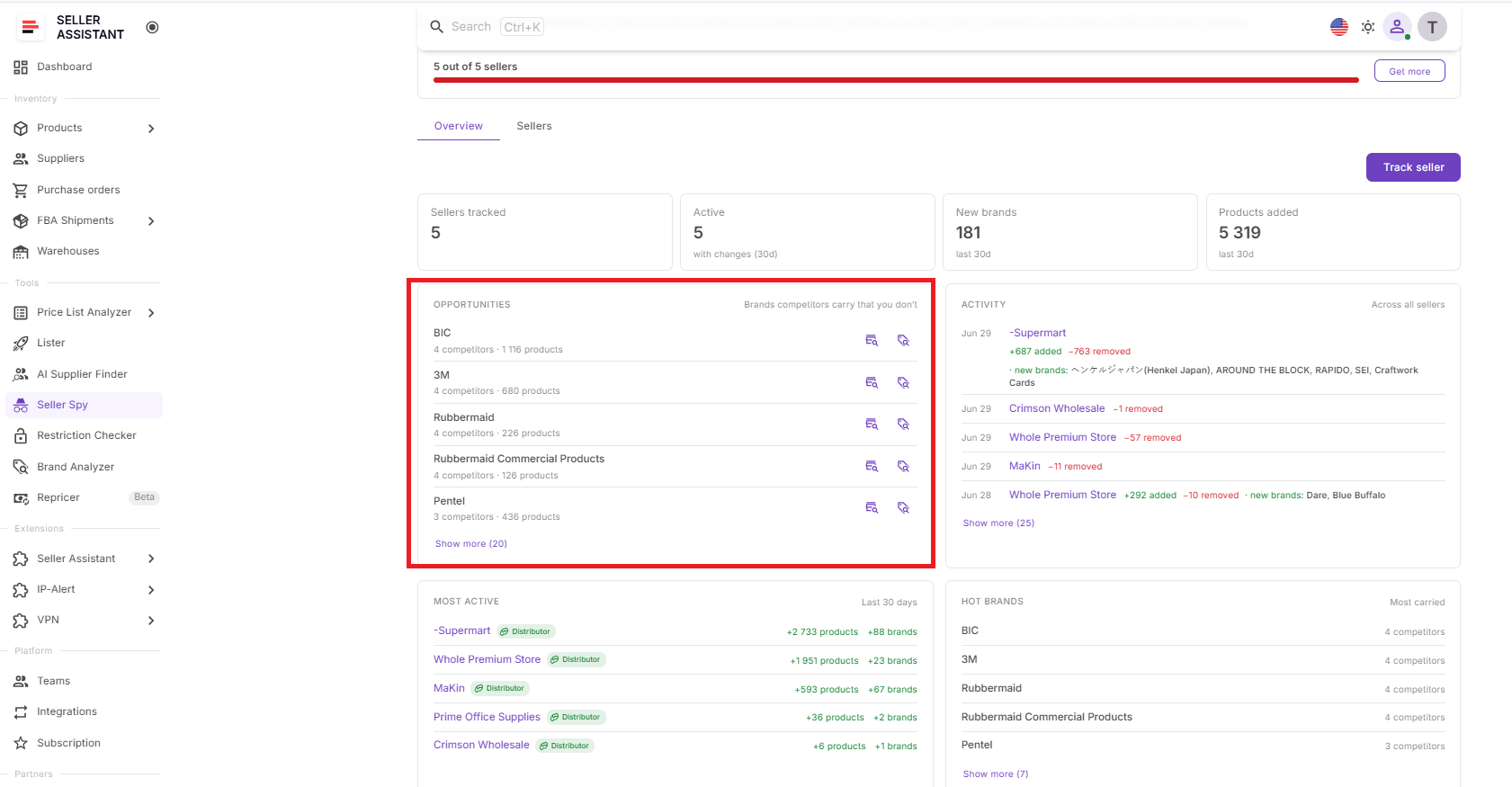
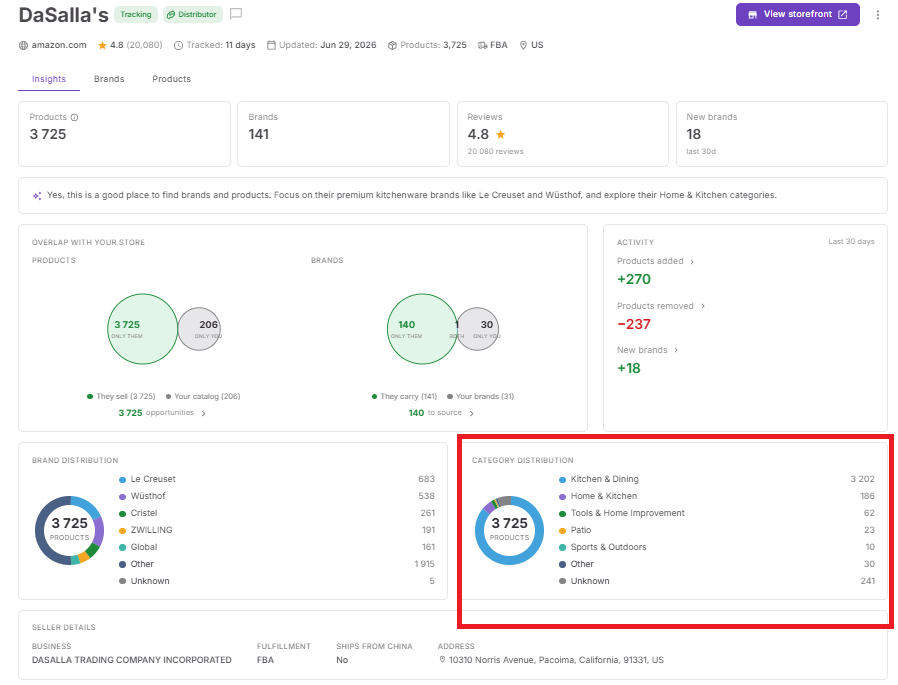
Categories
Analyze how competitors distribute their inventory across product categories. This can help you identify new niches, understand sourcing priorities, and discover growing market segments.
Seller information
Review key seller details such as marketplace, fulfillment model, seller rating, review count, business information, and tracking history to better understand each competitor’s business.
Market trends
Monitor activity across all tracked competitors to identify trending brands, recently added products, the most active sellers, and emerging sourcing opportunities from a single dashboard.
Connected sourcing opportunities
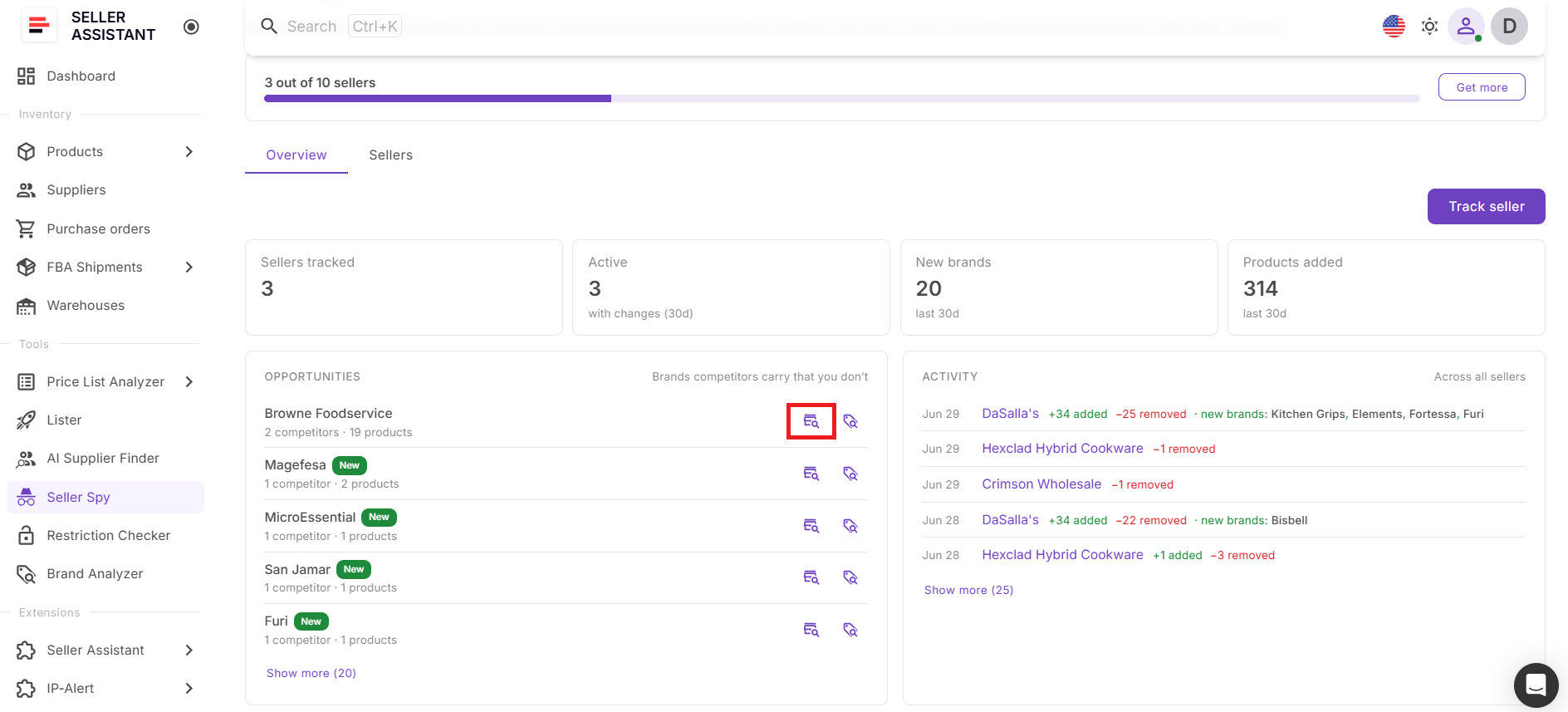
Turn competitor insights into action by launching Brand Analyzer to evaluate promising brands, AI Supplier Finder to locate manufacturers and distributors, and Price List Analyzer to assess product profitability before sourcing inventory.
How to Use Seller Spy – Step By Step
Step 1. Go to Seller Spy
Log in to your Seller Assistant account and open Seller Spy from the Tools section.
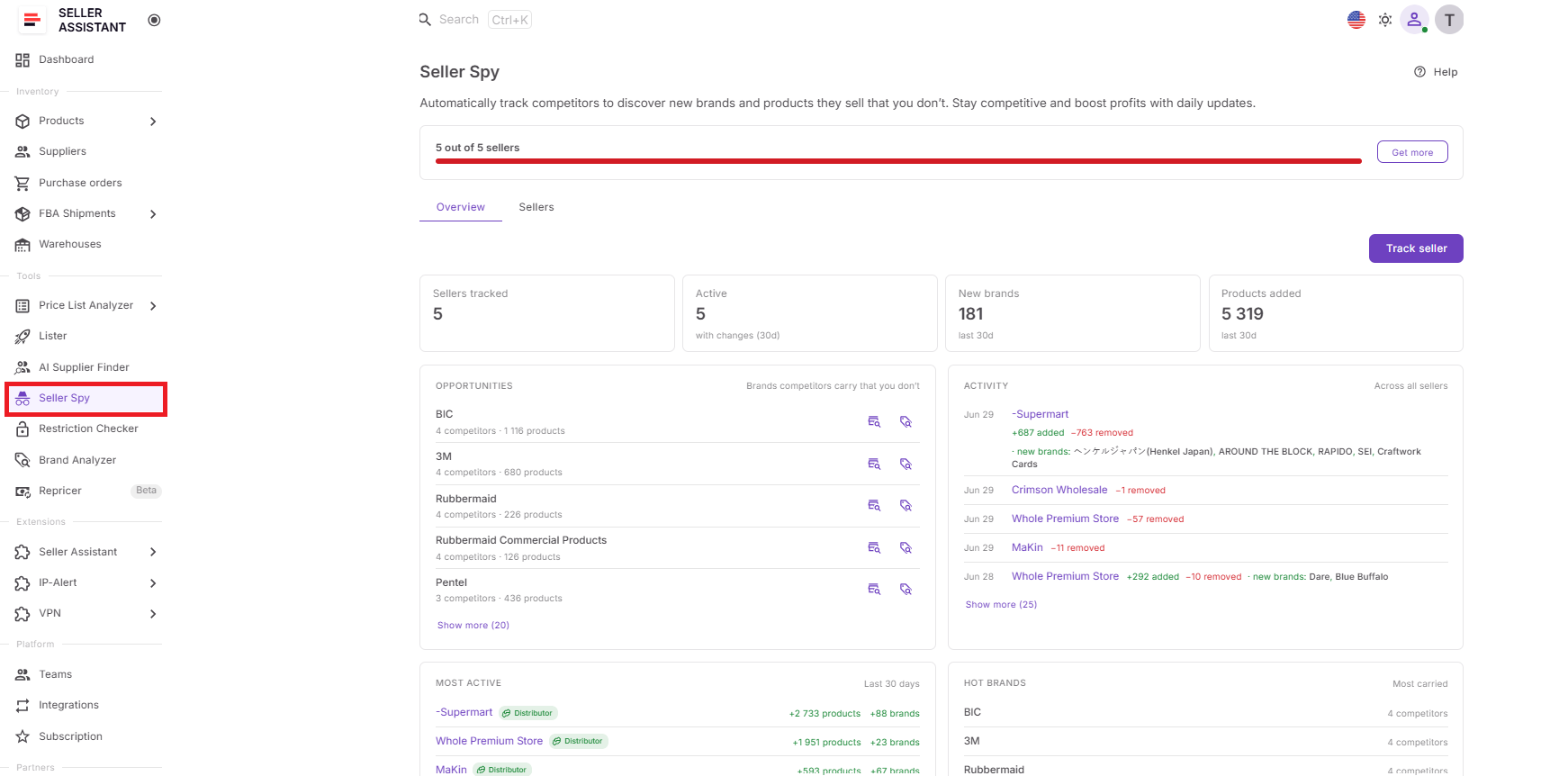
This is your competitor monitoring workspace, where you can add sellers, review market activity, and open the Overview, Sellers, and Seller Details dashboards.
Step 2. Start tracking competitors
Click Track seller and paste the competitor’s Amazon storefront link or seller information page.
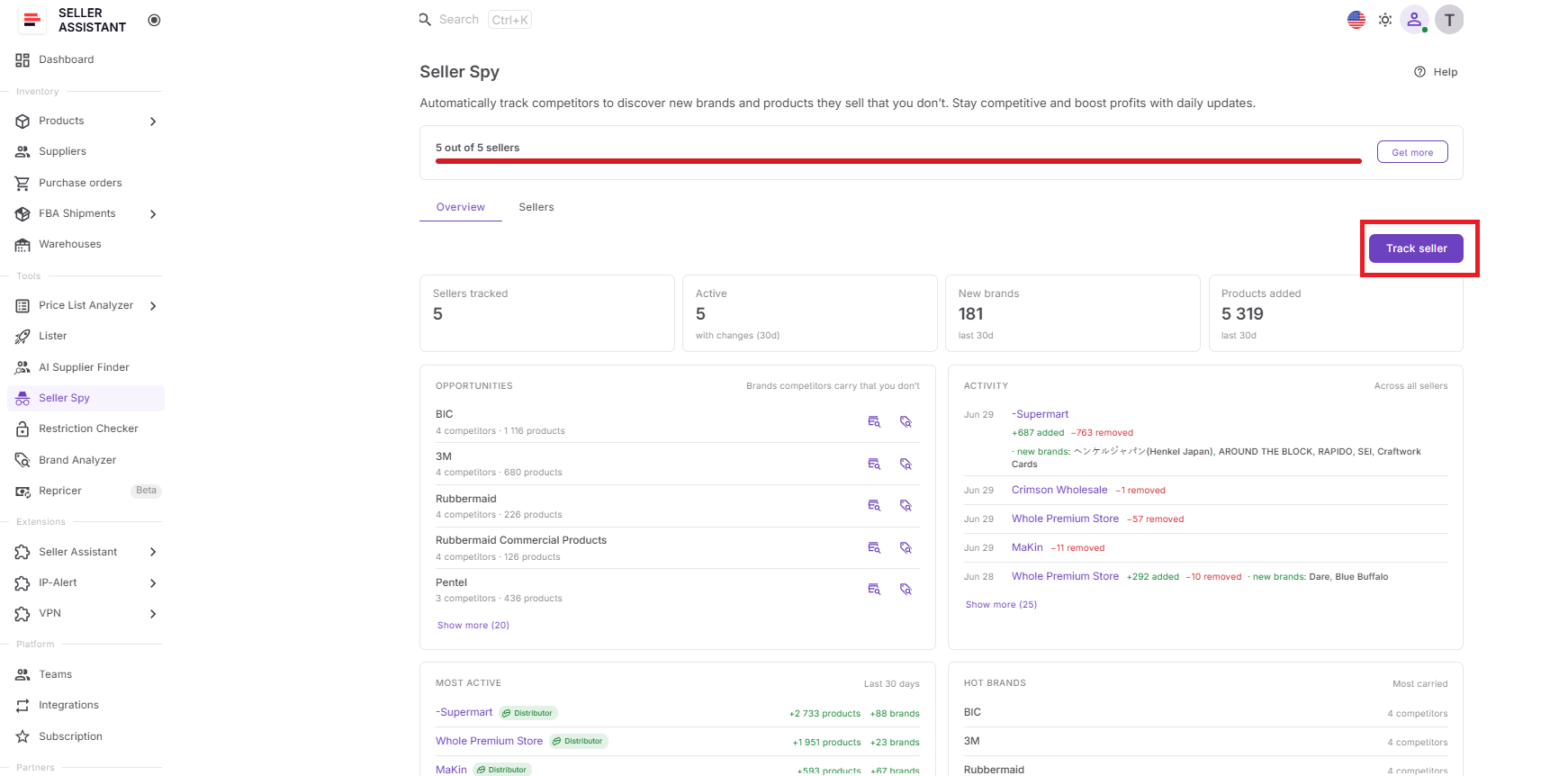
Seller Spy needs tracked sellers to begin monitoring catalog changes, including products, brands, and pricing updates.
Step 3. Check the Overview dashboard
Review tracked sellers, active sellers, new brands, products added, Opportunities, Activity, Most Active, and Hot Brands.
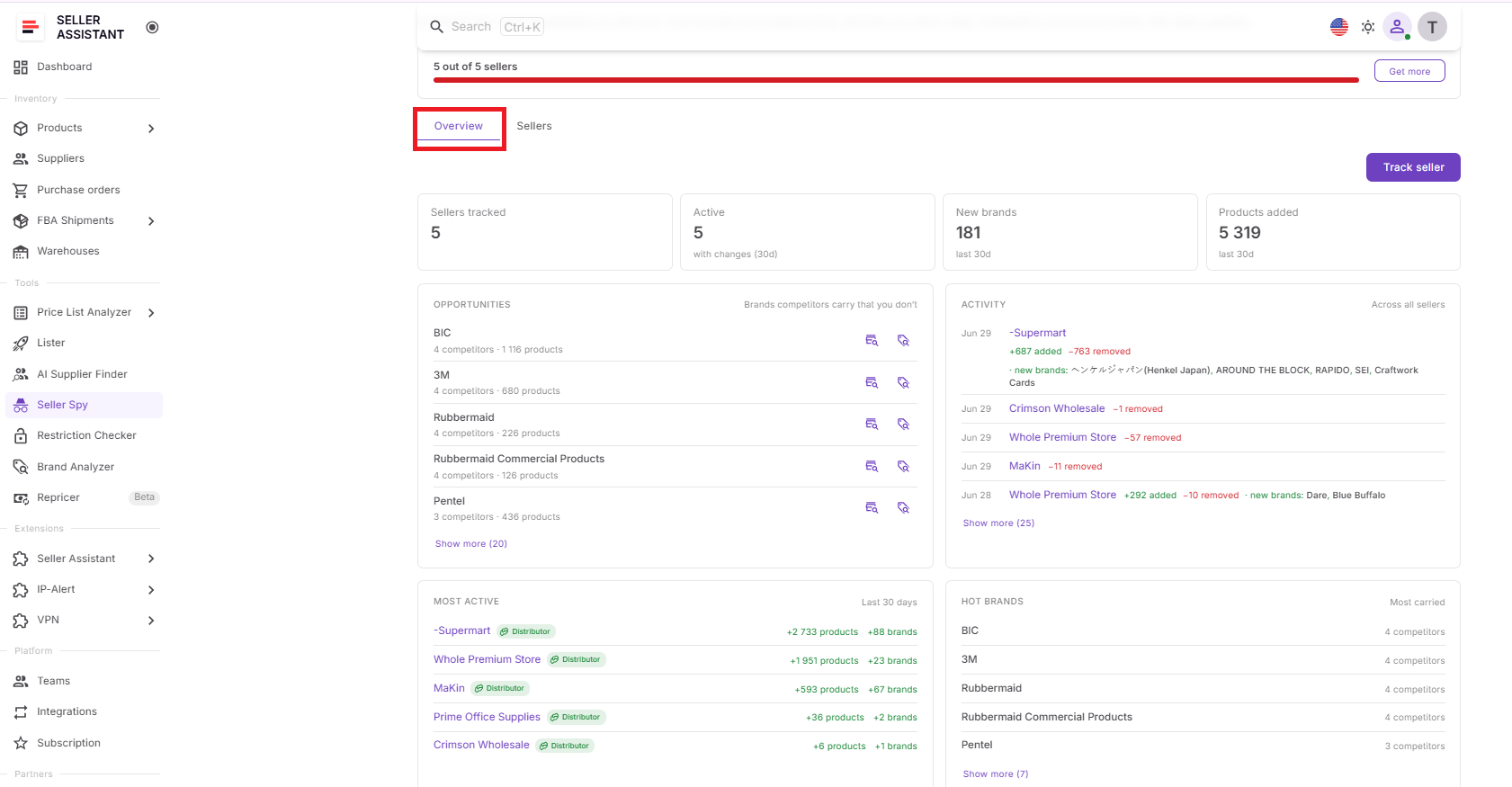
This gives you a market-level snapshot of competitor movement and helps you quickly spot brands, products, and sellers worth investigating.
Step 4. Review your seller list
Open the Sellers dashboard and compare tracked competitors by marketplace, seller type, product count, newly added products and brands, rating, notes, tracked since date, and last update.
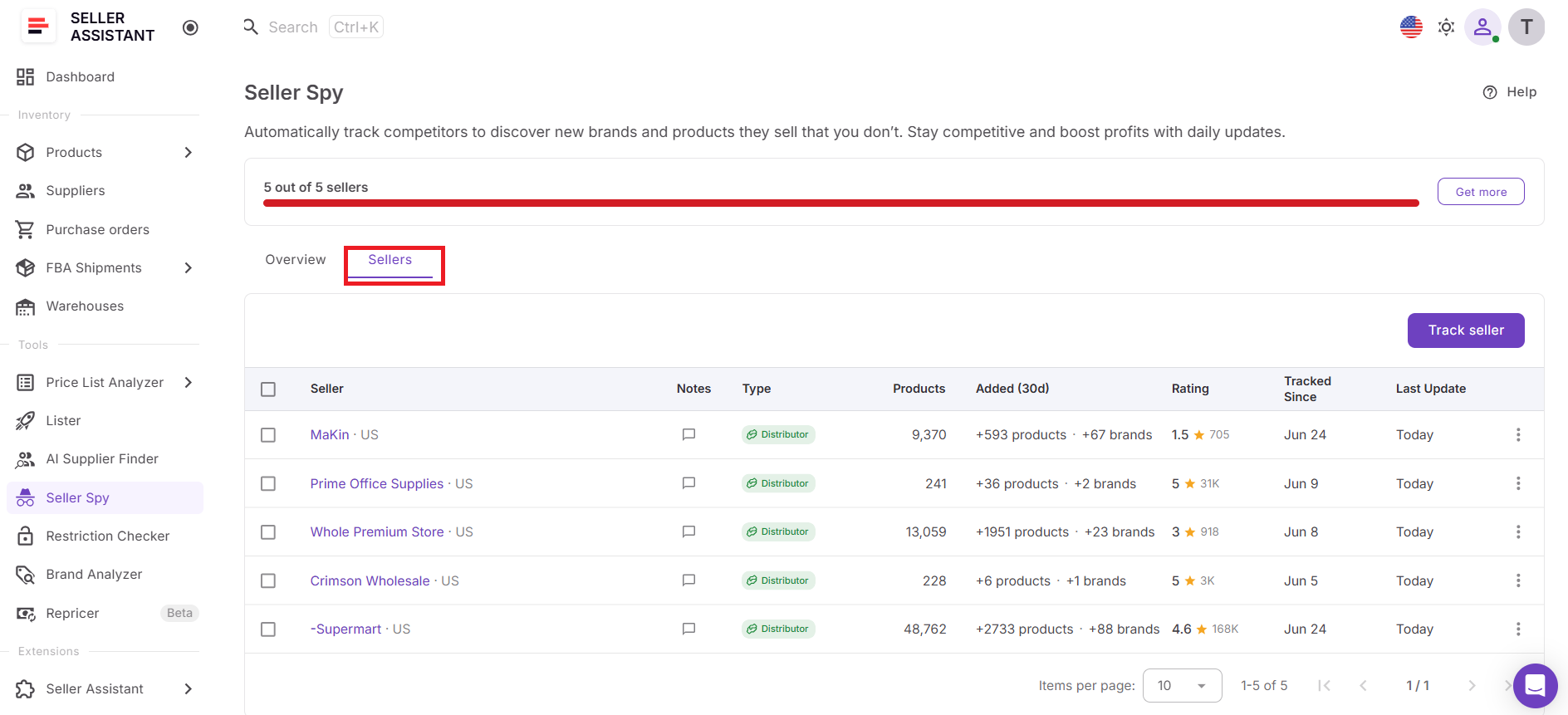
This helps you identify which competitors are actively expanding and which ones deserve deeper analysis.
Step 5. Open Seller Details
Click a seller’s name to open the Seller Details page and review the Insights, Brands, and Products tabs.
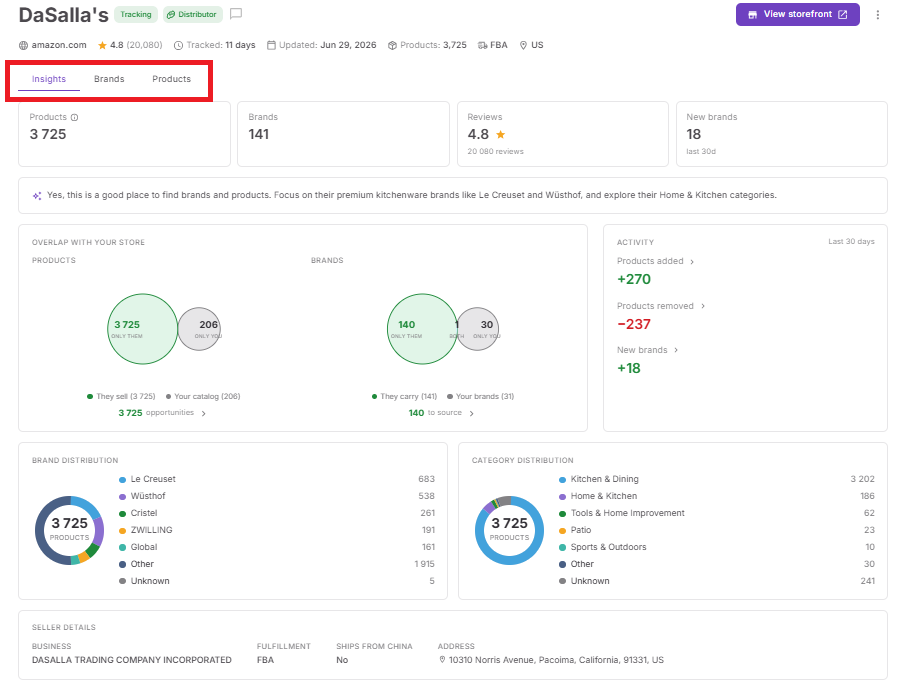
This is where you analyze catalog overlap, new brands, product changes, category distribution, and seller-level sourcing opportunities.
Step 6. Validate promising brands
When you find a brand worth checking, open Brand Analyzer directly from Seller Spy.
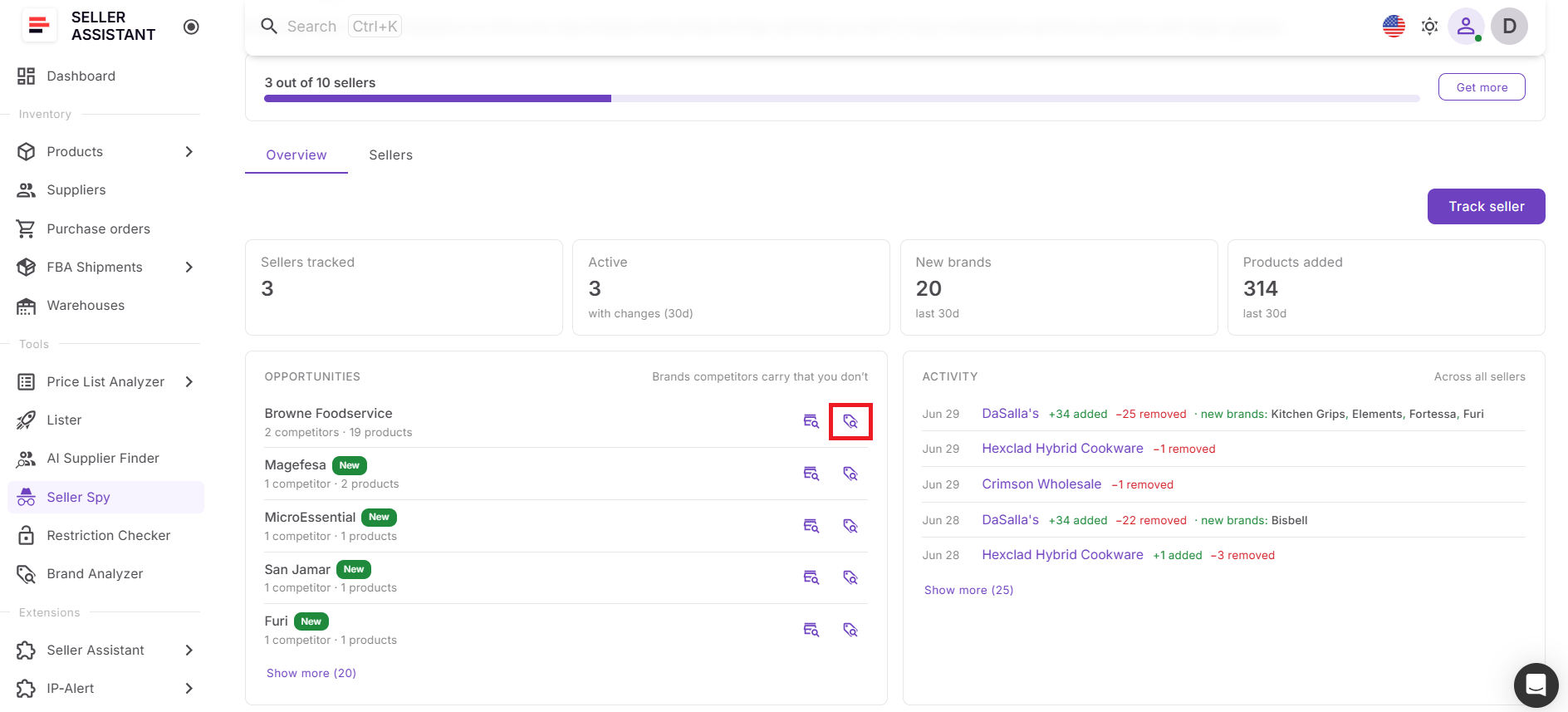
Brand Analyzer helps you evaluate demand, competition, catalog depth, Amazon presence, and resale potential before spending time on supplier outreach.
Step 7. Search for suppliers
Launch AI Supplier Finder for brands you want to source.
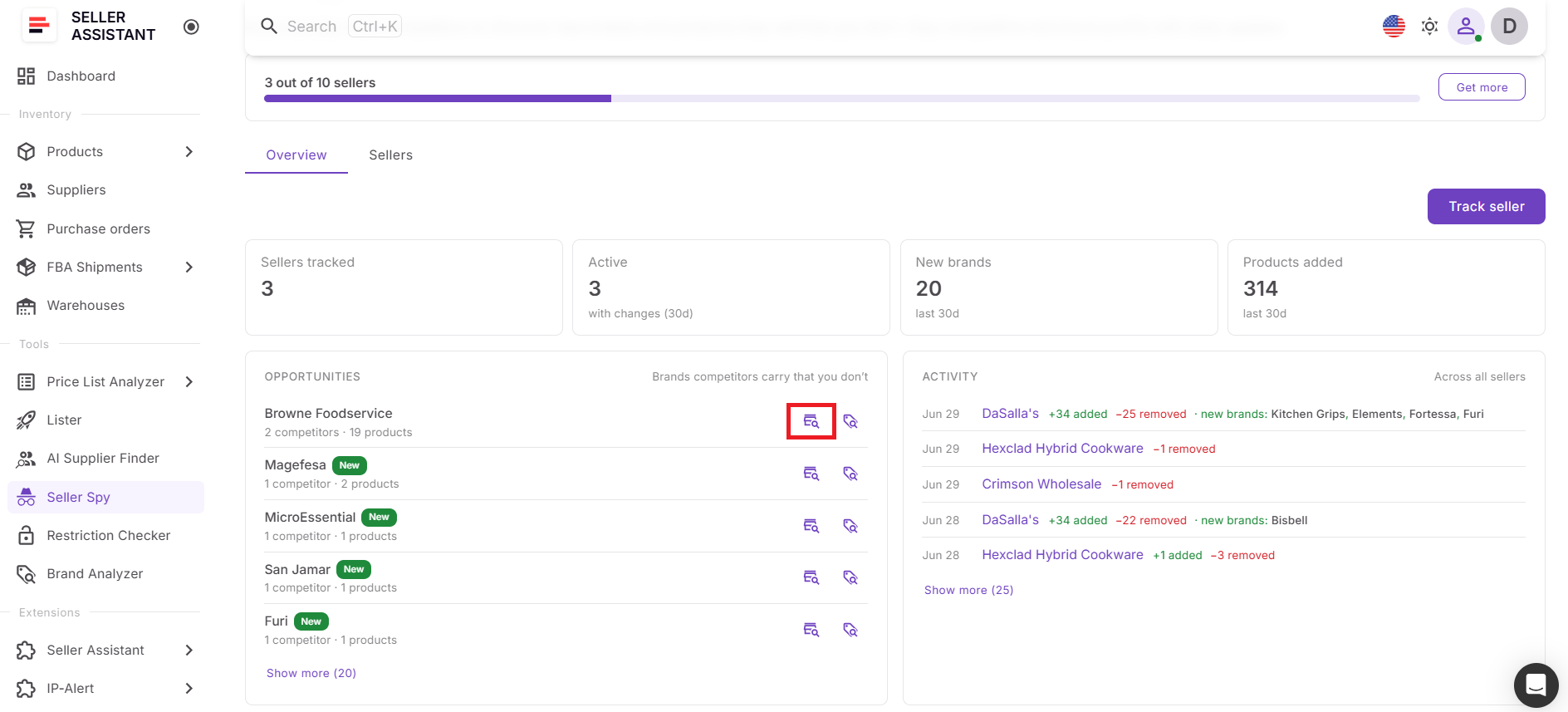
This helps you find manufacturers, authorized distributors, and wholesalers connected to the brand, so you can move from competitor research to supplier outreach.
Step 8. Continue product research
Use Price List Analyzer or other Seller Assistant workflow tools to evaluate promising products.
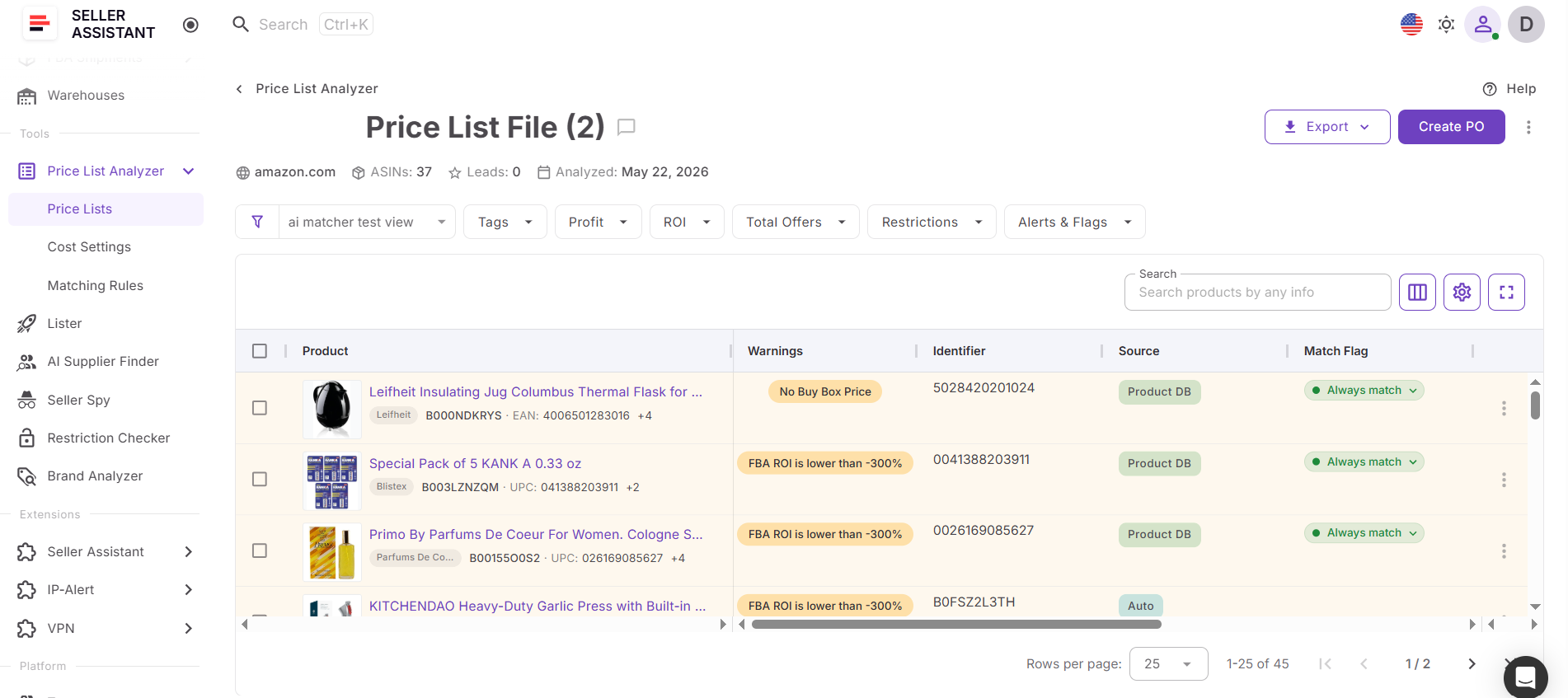
Before buying inventory, confirm ROI, fees, demand, competition, restrictions, and other Amazon resale risks.
How to Turn the Data into Sourcing Decisions
Seller Spy doesn’t just show what your competitors are doing – it helps you identify sourcing opportunities you can act on. By combining competitor intelligence with Brand Analyzer, AI Supplier Finder, Price List Analyzer, you can turn marketplace insights into profitable inventory decisions.
Case 1. A competitor starts selling a new brand
What you see
A tracked competitor recently added a brand that wasn’t previously in their catalog.
What to do
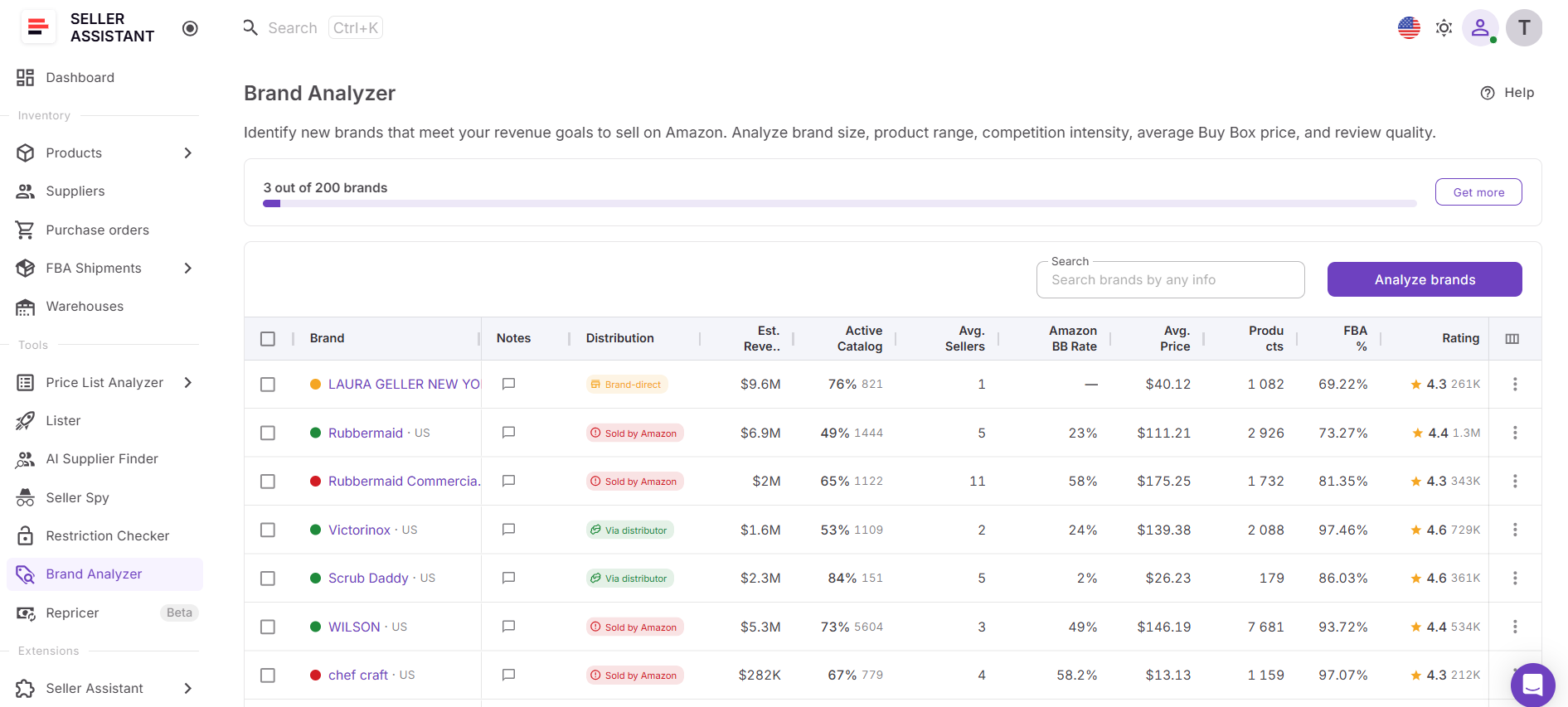
Open the brand in Brand Analyzer to evaluate its demand, competition, Amazon presence, and resale potential.
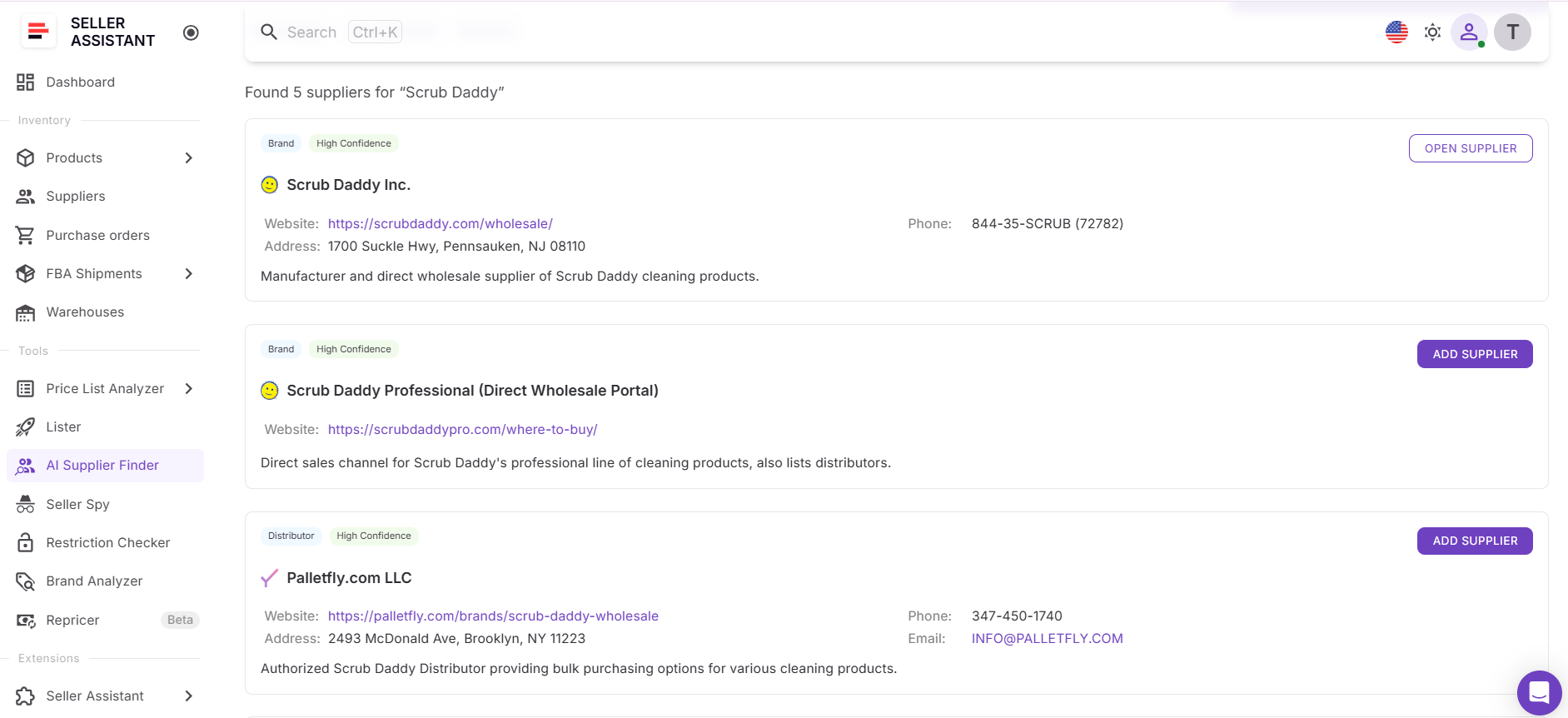
If the brand meets your sourcing criteria, use AI Supplier Finder to locate manufacturers, distributors, or wholesalers that carry it.
Case 2. Multiple competitors begin selling the same brand
What you see
The same brand appears across several tracked competitors within a short period.
What to do
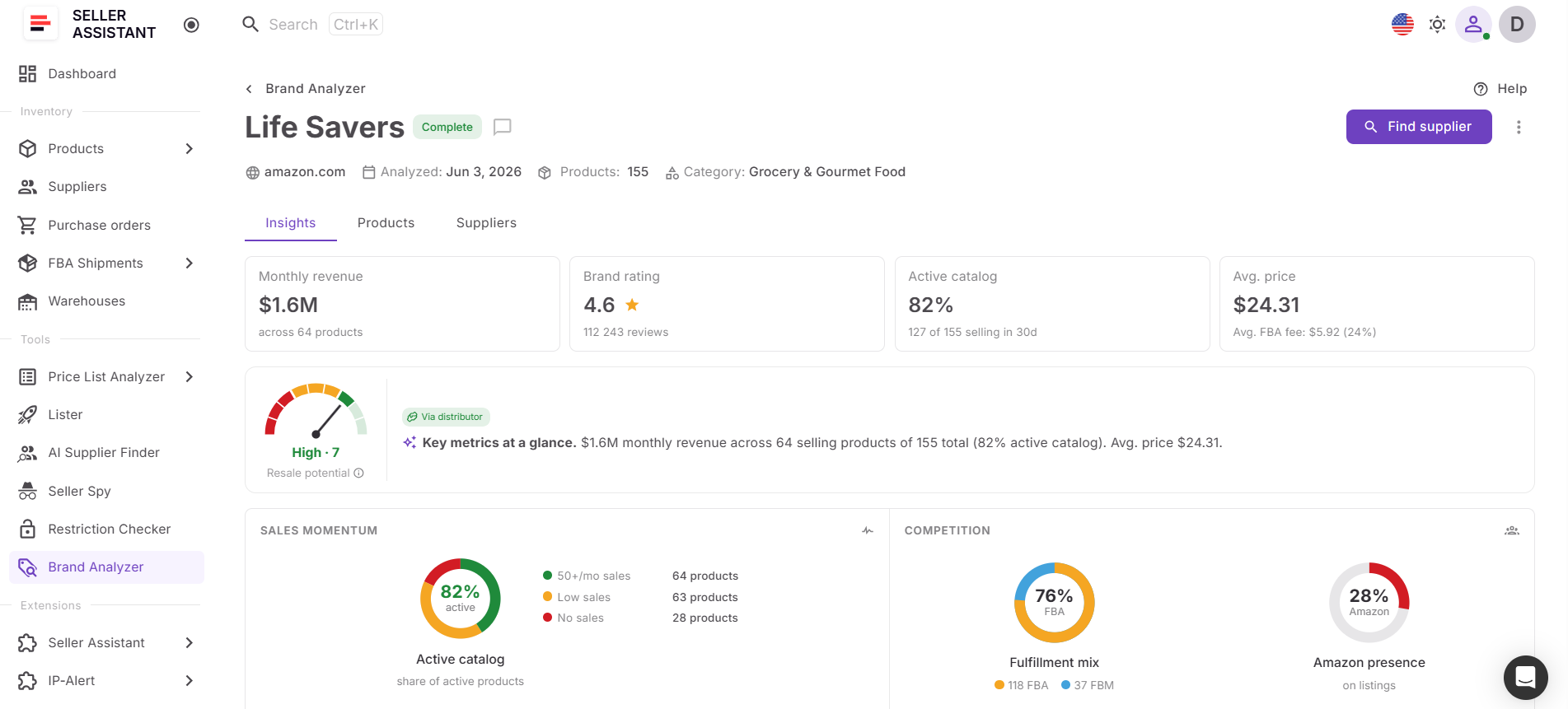
This often indicates growing market demand or improved supplier availability. Analyze the brand with Brand Analyzer, then identify the strongest products and begin supplier outreach before competition increases further.
Case 3. A competitor rapidly expands their catalog
What you see
A competitor adds dozens of new products or several new brands over a short period.
What to do
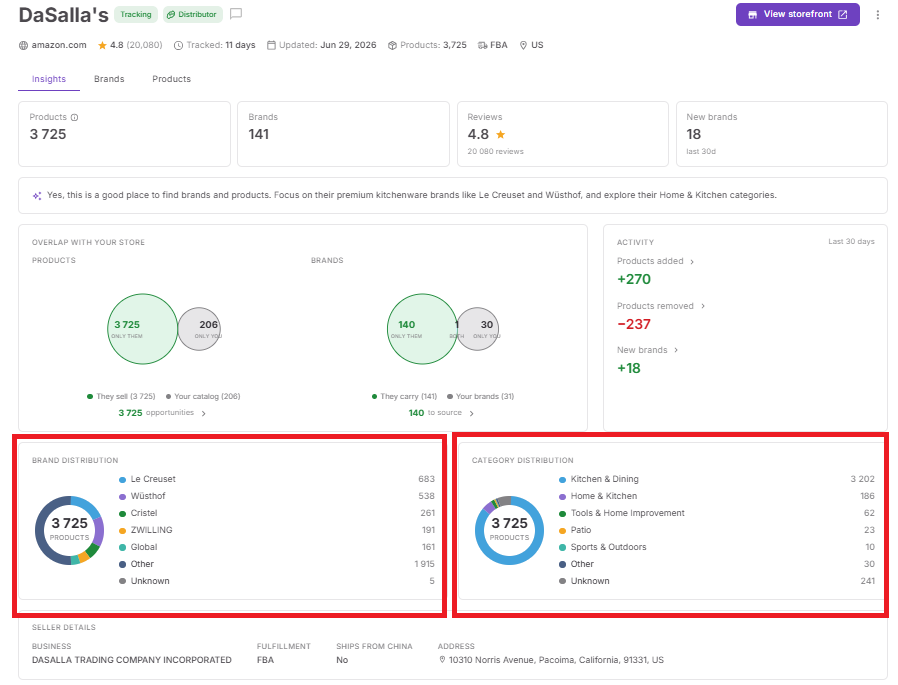
Review the Seller Details page to identify which brands and categories are driving the expansion. This can reveal new supplier relationships, seasonal buying trends, or categories worth researching for your own business.
Case 4. You find brands your catalog is missing
What you see
The catalog comparison shows competitors carry brands you don’t currently sell.
What to do
Prioritize those brands based on how frequently they appear across tracked competitors. Then use Brand Analyzer to validate each opportunity and AI Supplier Finder to identify legitimate wholesale suppliers.
Case 5. A competitor consistently keeps products in their catalog
What you see
Certain brands and products remain in a competitor’s catalog for months instead of disappearing quickly.
What to do
Long-term catalog presence often indicates stable demand rather than short-lived opportunities. Research those products further with Price List Analyzer to evaluate profitability, competition, ROI, fees, and restrictions before adding them to your sourcing pipeline.
Who Should Use Seller Spy?
Seller Spy is designed for Amazon sellers who want to make sourcing decisions based on real competitor activity rather than guesswork. Whether you’re building a wholesale business, expanding your online arbitrage operation, or researching new products for dropshipping, Seller Spy helps you discover opportunities, monitor the market, and stay ahead of the competition.
| Who | How Seller Spy Helps |
|---|---|
| Amazon wholesale sellers | Monitor competitors to discover new brands, identify supplier opportunities, and expand your wholesale catalog. |
| Online arbitrage sellers | Track successful sellers to find profitable products, trending brands, and new inventory opportunities. |
| Dropshippers | Monitor competitor catalogs to identify fast-selling products and discover brands worth adding to your listings. |
| New Amazon sellers | Learn from established competitors by analyzing their catalogs, brands, and sourcing strategies instead of starting from scratch. |
| Experienced Amazon sellers | Stay informed about competitor activity, identify market shifts, and uncover opportunities before they become widely adopted. |
| Sourcing managers | Monitor multiple competitors simultaneously and prioritize brands and products for supplier outreach. |
| Virtual assistants (VAs) | Track competitor activity, organize findings, and prepare sourcing opportunities for review by the sourcing team. |
| Amazon seller teams | Centralize competitor research in one workspace, making it easier to collaborate and coordinate sourcing decisions. |
FAQ
Do I need to know my competitors before using Seller Spy?
No. You can start by tracking sellers that appear on products you already source or brands you’re interested in selling. As you analyze their catalogs, you’ll naturally discover additional competitors to monitor.
How long should I track a competitor before drawing conclusions?
It’s best to monitor competitors over several weeks rather than relying on a single snapshot. Long-term tracking helps you distinguish temporary inventory changes from consistent sourcing patterns and long-term strategies.
Should I track large or small Amazon sellers?
Both can provide valuable insights. Large sellers often reveal broader market trends, while smaller niche sellers may uncover specialized brands and sourcing opportunities before they gain widespread attention.
Can Seller Spy help me prepare for supplier conversations?
Yes. Reviewing a competitor’s catalog and recently added brands helps you identify which brands are actively selling on Amazon before contacting suppliers. This allows you to approach supplier discussions with a clearer sourcing strategy and a shortlist of products or brands to ask about.
How does Seller Spy fit into my overall sourcing workflow?
Seller Spy is the starting point for competitor intelligence, helping you discover brands and products worth researching. You can then validate those opportunities with Brand Analyzer, locate suppliers with AI Supplier Finder, and evaluate product profitability with Price List Analyzer before making purchasing decisions.
Final Thoughts
Successful Amazon sellers don’t just research products – they also monitor their competitors to uncover new sourcing opportunities. Seller Assistant’s Seller Spy simplifies that process by tracking competitor catalogs, brands, products, and pricing changes, giving you the insights you need to spot market trends, discover profitable opportunities, and make more informed sourcing decisions.
As part of Seller Assistant’s connected sourcing workflow, Seller Spy helps you move seamlessly from competitor monitoring to action. You can validate promising brands with Brand Analyzer, find suppliers and distributors with AI Supplier Finder, and evaluate product profitability with Price List Analyzer before investing in inventory. Whether you’re a wholesale seller, online arbitrage seller, or dropshipper, Seller Spy helps you source smarter, react faster to market changes, and build a stronger, more competitive Amazon business.