Seller Assistant vs Flashpricer
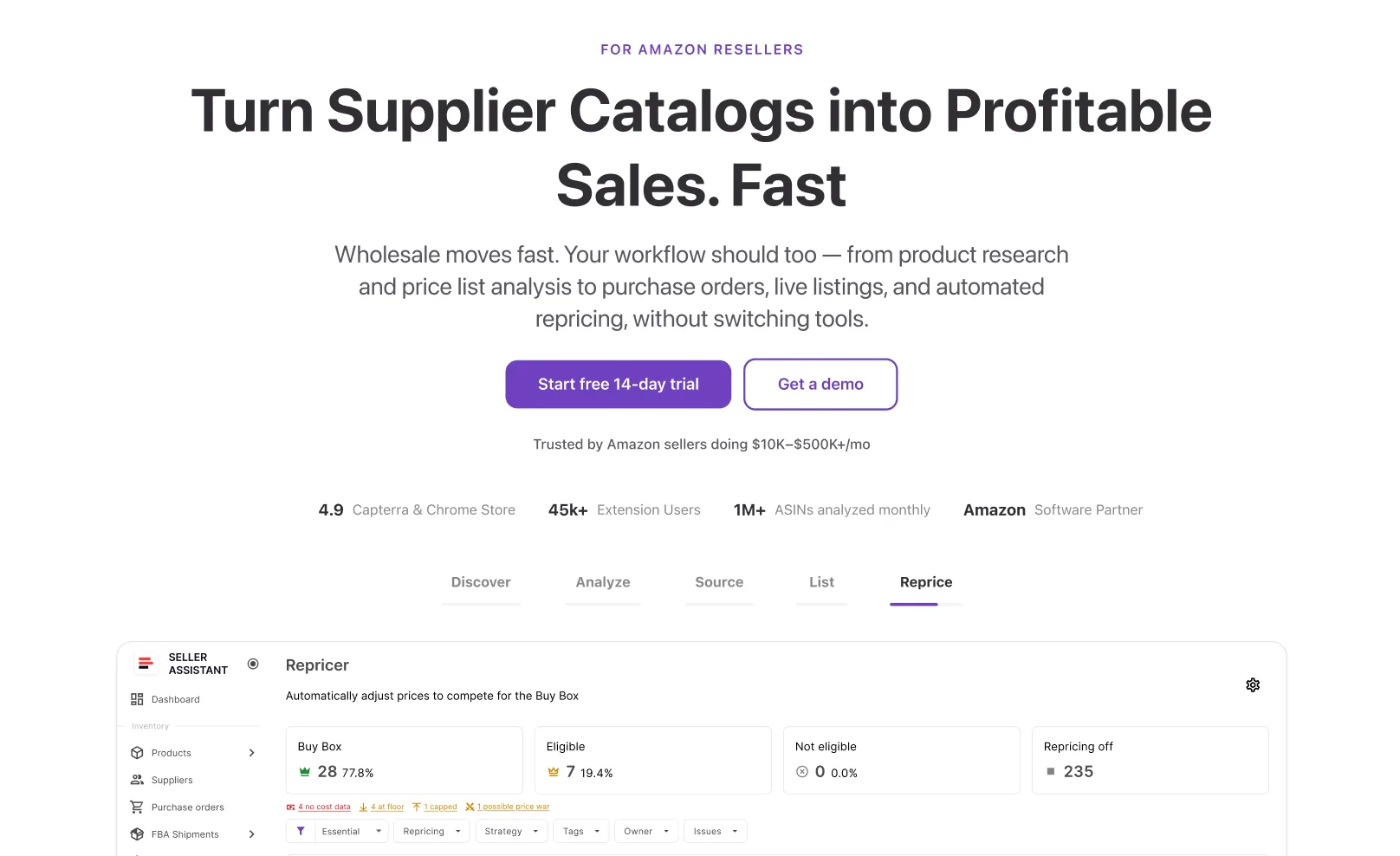
Flashpricer pulls your costs every 30 minutes. Seller Assistant already has them — unit cost, prep, and inbound freight come from your own purchase orders and shipments.

Which one fits your workflow?
Choose Seller Assistant if your costs should come from your own orders
No second system to sync, no polling window — the purchase order that created the cost lives in the same platform as the repricer.
- Landed cost from your own POs, prep fees, and inbound freight
- Cost changes recalculate floors and reprice affected products
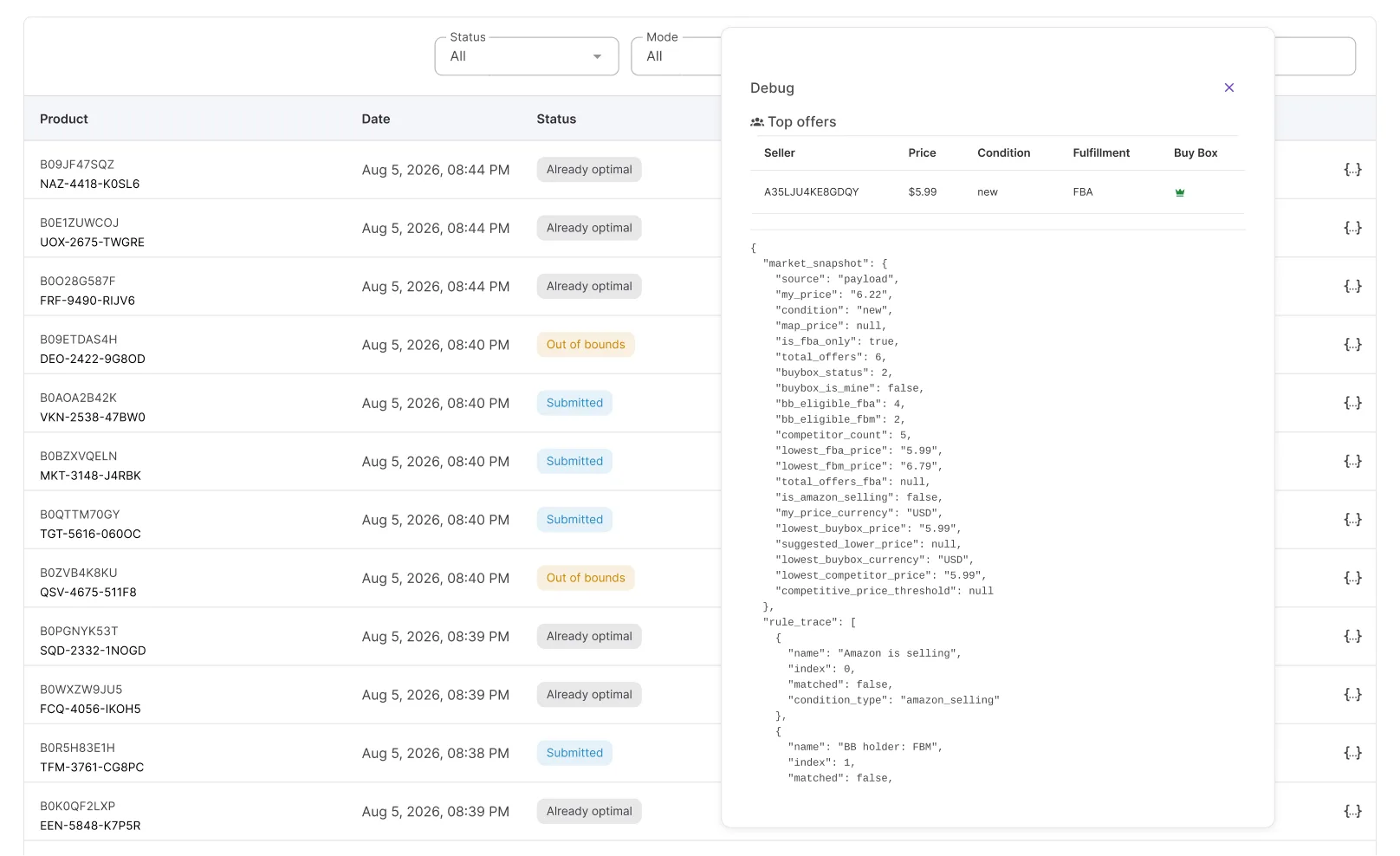
- Full decision history with the matched rule behind every reprice

See where each tool wins
Both of us reprice fast and protect margins with real costs. The difference is where those costs come from — and how long they take to arrive.


Produced by your own purchase orders, prep settings, and shipments
Synced from a separate inventory system, FTP, or sheet
Recalculates and reprices affected products within seconds
Picked up at the next 30-minute sync, then pushed to the marketplace
Unit cost, allocated PO expenses, prep, and inbound freight, plus fees
Synced item cost plus marketplace fees
Every reprice — and every non-change — logs the matched rule and market snapshot
Analytics, heat maps, and scheduled reports
Rule-based strategies with conditional logic you can read and adjust
CH.AI algorithms, price experiments, and Yo-Yo repricing
Event-driven, seconds, whole catalog, on every plan
Sub-30-second updates with no throttling, on every plan
Amazon
Amazon and Walmart, with real-time Walmart data
Research → PO → listing → repricing, one connected platform
Repricer only; pairs with the inventory system you already run
Three differences that actually matter
Both repricers promise your price will never fall below your cost. What differs is how quickly they find out your cost changed — and how much of that cost they know about.

Your floor moves the moment your cost does
Flashpricer polls your inventory system every 30 minutes, so a supplier price change waits for the next cycle. In Seller Assistant there's nothing to poll: editing a purchase order or closing a shipment recalculates the affected floors and dispatches a reprice within seconds, because the cost and the repricer share the same record.
Prep and freight belong in your floor too
A synced item cost is usually just what you paid the supplier. Seller Assistant builds landed cost from unit cost, allocated purchase order expenses, prep fees, and FBA inbound freight — the charges that quietly turn a "profitable" price into a break-even one — and rebuilds your floor from all of them.

Every price has a reason you can read
Reports tell you how the month went, not why Tuesday's price dropped. Seller Assistant logs the matched rule and market snapshot behind every reprice — even the cycles where nothing changed — so any price you don't recognize has an explanation waiting.
Switching from Flashpricer?
Your min and max values import in bulk, and Repricer rebuilds those floors from the costs your purchase orders already produce — no inventory system in the middle.
Sync your catalog, assign strategies and overrides, and enroll products one by one or in bulk.
Every new order updates unit costs and expenses, so the floors feeding Repricer stay accurate.
Unit cost, prep fees, and inbound freight roll up into one landed cost that Repricer reads directly.
List products from purchase orders, then enroll them for repricing without rebuilding your catalog.
Win the Buy Box without losing sight of your margin
React in seconds, price from your real landed cost, and see exactly why every decision was made.
Start free 14-day trialFrequently asked questions
Visit Help CenterDo I need a separate inventory system for my cost data?
How quickly does a cost change reach my price?
What exactly goes into my landed cost?
Does Seller Assistant reprice on Walmart?
Is Seller Assistant's repricing AI-driven?
What happens to my Flashpricer min/max values when I switch?
Not sure which plan fits your sourcing workflow? Chat with our team — we're happy to help.