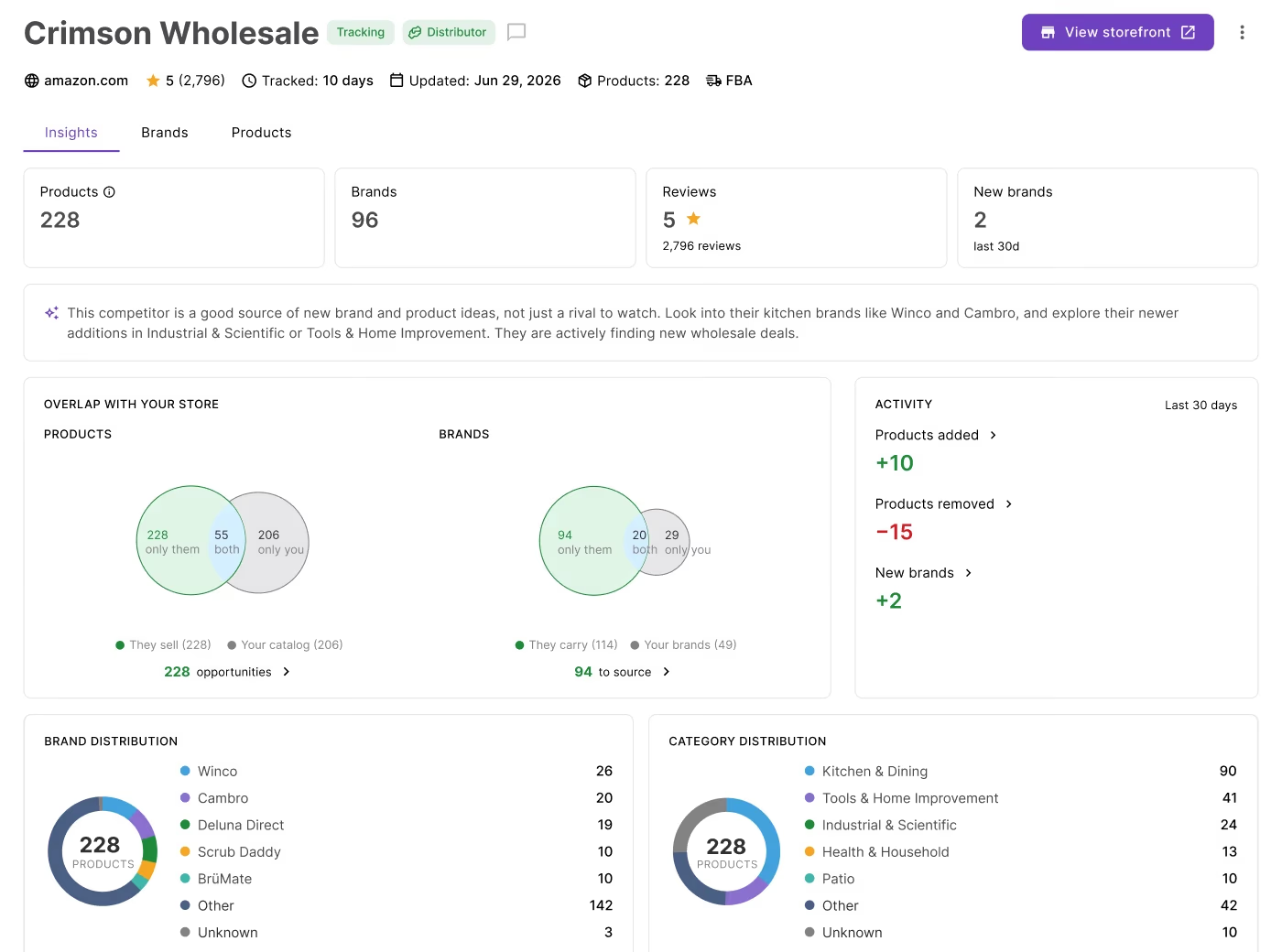


Finding profitable Amazon wholesale deals starts with knowing which brands are worth pursuing. Seller Assistant’s Seller Spy lets you monitor competitor catalogs and discover brands they’re already selling – giving you a proven starting point instead of guessing. But spotting a brand is only the first step.
To turn competitor insights into wholesale leads, you also need to validate brand viability, locate reliable suppliers, manage supplier relationships, and analyze wholesale catalogs before investing capital.
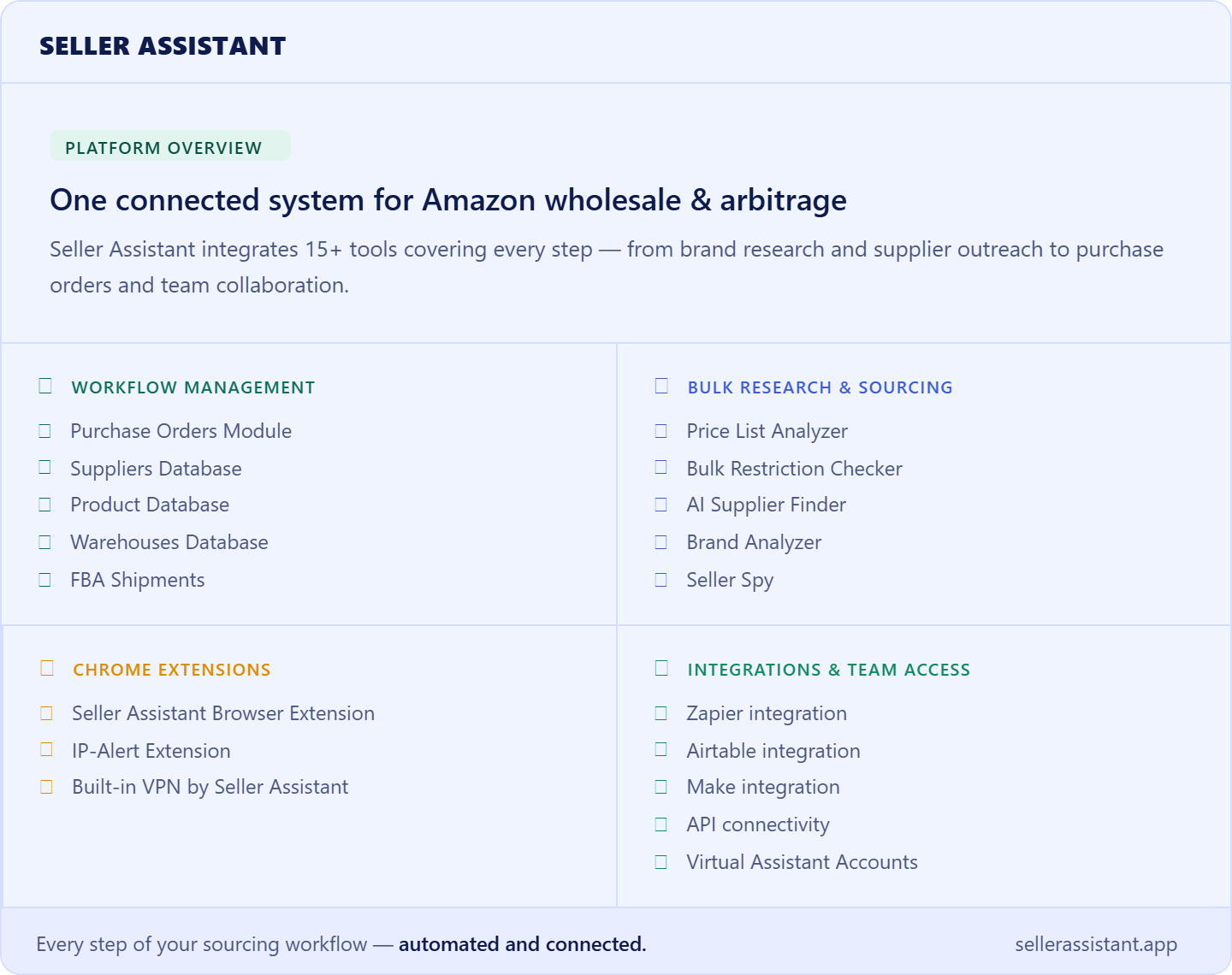
Seller Assistant connects Seller Spy, Brand Analyzer, AI Supplier Finder, Suppliers Database, and Price List Analyzer into one workflow – so you can move from competitor research to profitable wholesale deals faster.
How Amazon Sellers Turn Competitor Analysis into Wholesale Leads
Finding profitable wholesale opportunities isn’t just about discovering what your competitors sell. A competitor may carry a brand with strong sales, but that doesn’t automatically make it a good fit for your business. Successful sourcing requires a process that turns competitor insights into qualified brands, trusted supplier relationships, validated products, and, ultimately, purchase orders.
From competitor research to wholesale opportunities
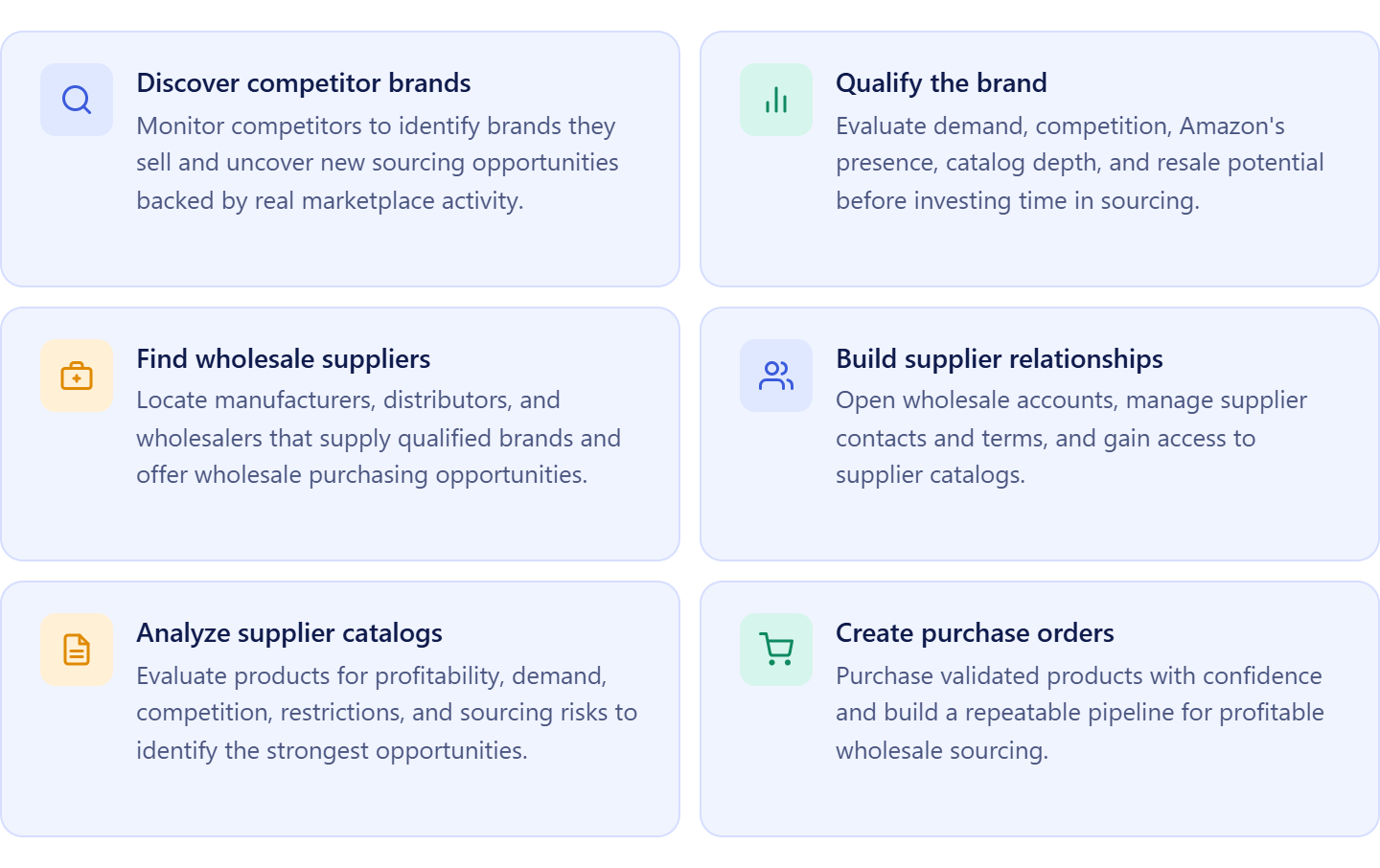
The process begins by monitoring competitors to identify brands they already sell successfully. Instead of researching brands at random, sellers start with opportunities that have already been validated by marketplace activity. The next step is analyzing those brands to determine whether they offer sufficient demand, manageable competition, catalog depth, and long-term resale potential.
Once a brand qualifies, sellers identify manufacturers, distributors, and wholesalers that carry it and begin building supplier relationships. After gaining access to a supplier’s wholesale catalog, they analyze the available products to identify the deals that best match their sourcing criteria.
Why validating opportunities before buying matters
Not every competitor brand leads to profitable inventory. Some brands are dominated by Amazon Retail, oversaturated with sellers, or lack enough demand to support long-term growth. Likewise, not every product in a supplier catalog is worth buying. Evaluating both the brand and the products before placing an order helps sellers focus their capital on opportunities with healthy margins, sustainable demand, manageable competition, and lower sourcing risk.
Why Turn Competitor Analysis into Wholesale Sourcing Leads?
Competitor research helps you discover what successful Amazon sellers are sourcing, but it becomes truly valuable only when you act on those insights. Instead of stopping at competitor analysis, you can qualify promising brands, find reliable suppliers, validate supplier catalogs, and build long-term sourcing relationships.
This structured approach helps Amazon wholesale sellers, online arbitrage sellers, and dropshippers identify better opportunities, reduce sourcing risk, and create a repeatable process for finding profitable inventory.
Start with proven opportunities
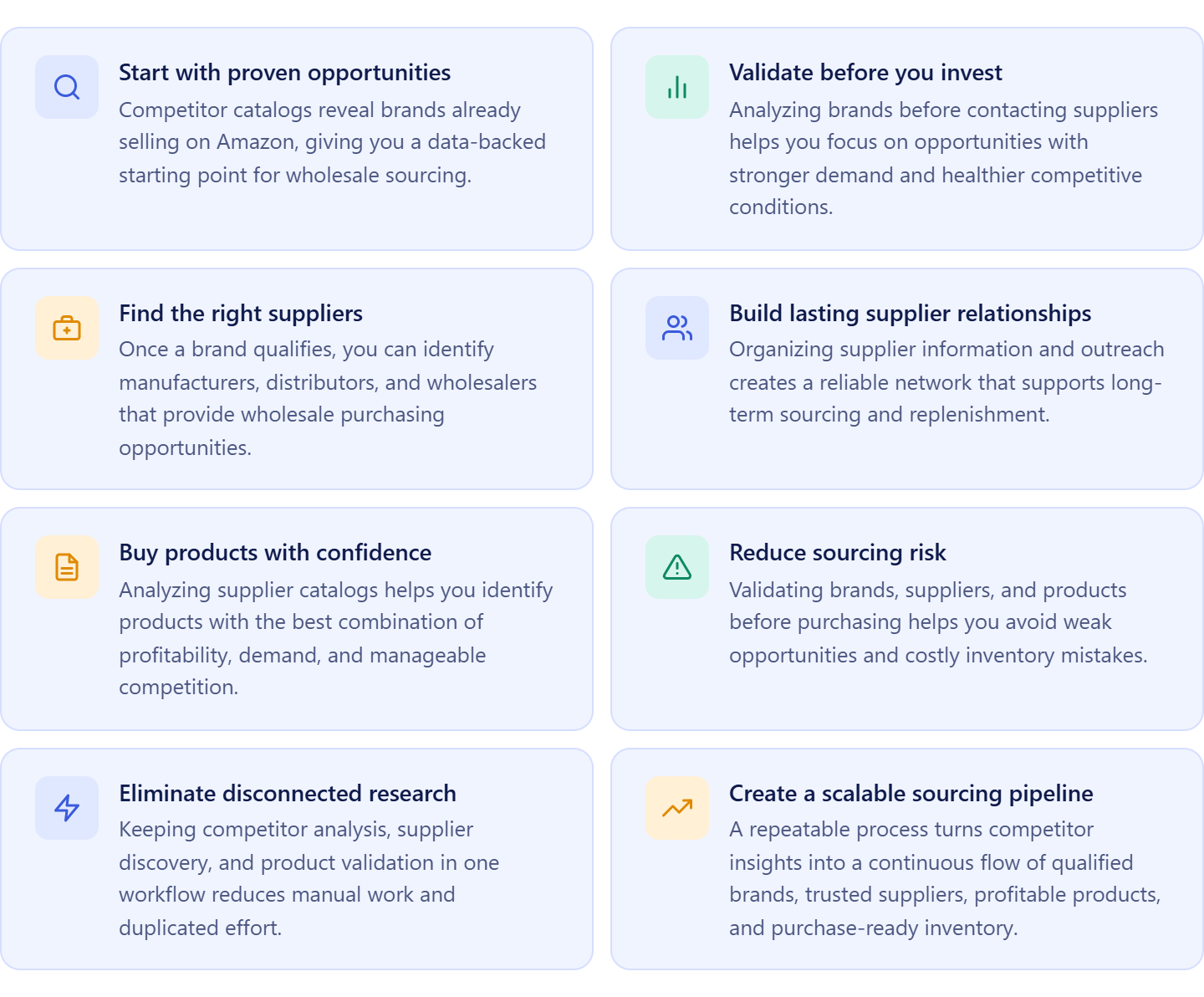
Competitor catalogs reveal brands that are already selling on Amazon. Beginning with brands validated by marketplace activity is more effective than researching opportunities at random.
Focus on brands worth sourcing
Not every competitor brand deserves your attention. Evaluating brands before contacting suppliers helps you concentrate on opportunities with stronger demand, healthier competition, and better long-term potential.
Find suppliers with confidence
Once you’ve identified a promising brand, the next step is finding manufacturers, distributors, and wholesalers that can supply it. This creates a direct path from competitor research to wholesale sourcing.
Build stronger supplier relationships
Successful wholesale sourcing depends on reliable supplier partnerships. Keeping supplier information organized makes it easier to manage outreach, approvals, and future purchasing opportunities.
Validate products before buying
Even strong brands can include weak products. Analyzing supplier catalogs helps you identify the products that best meet your profitability, demand, and competition requirements.
Reduce sourcing risk
Qualifying brands, verifying suppliers, and validating products before placing orders helps you avoid tying up capital in low-potential inventory.
Eliminate disconnected research
Keeping competitor research, brand analysis, supplier discovery, and product validation connected reduces manual work and creates a more efficient sourcing process.
Build a scalable sourcing pipeline
Following the same workflow for every opportunity helps you consistently discover new brands, expand your supplier network, and grow your Amazon business with confidence.
How Seller Assistant Turns Competitor Analysis into Wholesale Sourcing Leads
Discovering a promising competitor brand is only the beginning of the sourcing process. To turn that insight into profitable inventory, sellers must determine whether the brand is worth sourcing, find legitimate wholesale suppliers, build supplier relationships, and validate products before placing an order. When these activities are performed separately, research becomes fragmented, sourcing takes longer, and valuable opportunities can be missed.
Seller Assistant connects competitor monitoring, brand qualification, supplier discovery, supplier management, and product analysis into one continuous workflow. Instead of switching between Amazon storefronts, spreadsheets, emails, and multiple research tools, sellers can move from competitor intelligence to validated wholesale opportunities within a single platform.
How the workflow works
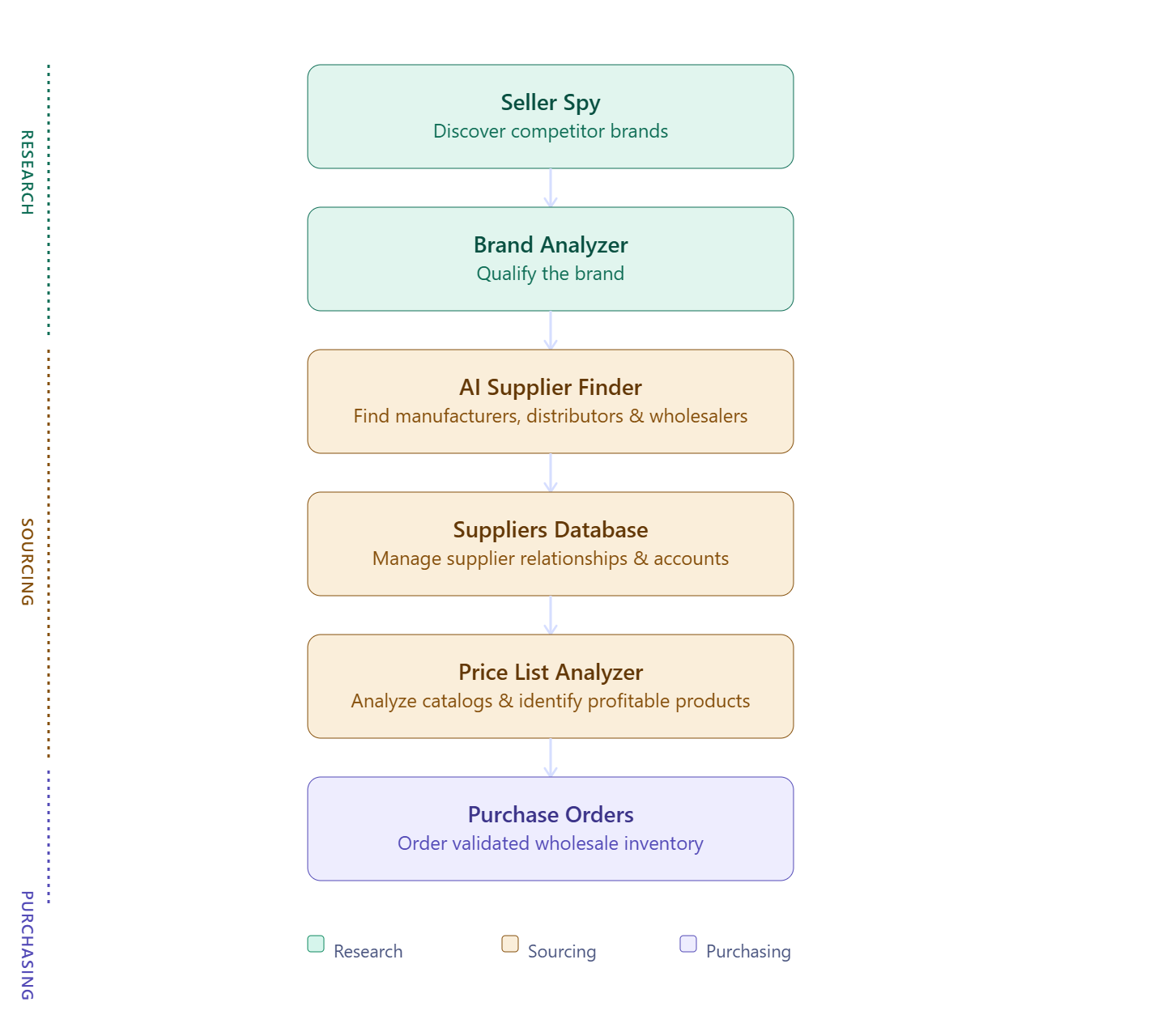
The process begins in Seller Spy, where sellers monitor competitors and discover brands they recently added or brands missing from their own catalog. These competitor insights provide a shortlist of opportunities already validated by marketplace activity.
Once a promising brand is identified, it can be analyzed in Brand Analyzer to evaluate demand, competition, Amazon’s presence, catalog depth, pricing, and overall resale potential. This helps sellers decide whether the brand is worth pursuing before investing additional time.
If the brand qualifies, AI Supplier Finder helps identify manufacturers, distributors, wholesalers, and other B2B suppliers connected to the brand. After contacting suppliers and opening wholesale accounts, sellers save supplier information in Suppliers Database, where they can manage contacts, purchasing terms, relationship status, and other operational details.
When a supplier provides a wholesale catalog, it is uploaded to Price List Analyzer, which matches products to Amazon listings and evaluates profitability, demand, competition, restrictions, HazMat status, IP risks, and other sourcing criteria. Sellers can then filter the results, identify the strongest opportunities, and create Purchase Orders for products that meet their buying requirements.
The result is a connected sourcing pipeline that transforms competitor intelligence into qualified brands, trusted suppliers, validated wholesale deals, and purchase-ready inventory.
Seller Assistant tools used in the workflow
| Tool | Purpose in the Workflow |
|---|---|
| Seller Spy | Monitors competitors to discover brands they sell, identify sourcing opportunities, and uncover brands missing from your catalog. |
| Brand Analyzer | Qualifies competitor brands by evaluating demand, competition, Amazon’s presence, catalog depth, pricing, and resale potential before sourcing. |
| AI Supplier Finder | Finds manufacturers, authorized distributors, wholesalers, and other B2B suppliers connected to qualified brands. |
| Suppliers Database | Organizes supplier profiles, contact information, purchasing terms, relationship status, and wholesale account details in one centralized workspace. |
| Price List Analyzer | Analyzes supplier catalogs in bulk to identify products with the best profitability, demand, competition, and lowest sourcing risk before purchasing. |
| Purchase Orders | Creates purchase orders for validated products and helps move approved sourcing opportunities into inventory replenishment. |
How Seller Spy Helps Find Wholesale Sourcing Leads
Seller Assistant’s Seller Spy is a competitor intelligence tool built for Amazon wholesale sellers, online arbitrage sellers, and dropshippers. It helps sellers identify wholesale sourcing opportunities by tracking competitor catalogs, brands, products, and marketplace activity.
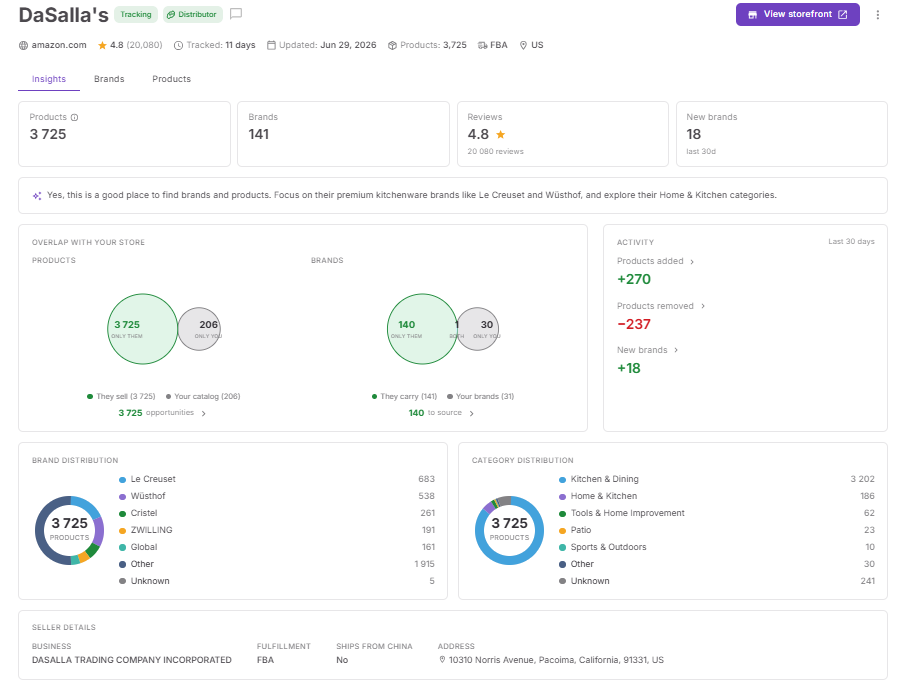
Instead of manually reviewing Amazon storefronts and trying to determine which brands are worth researching, sellers receive organized competitor insights that reveal new brands, catalog changes, and sourcing opportunities already validated by successful Amazon resellers.
What Seller Spy does
Seller Spy helps sellers discover and prioritize brands that can become future wholesale sourcing opportunities.
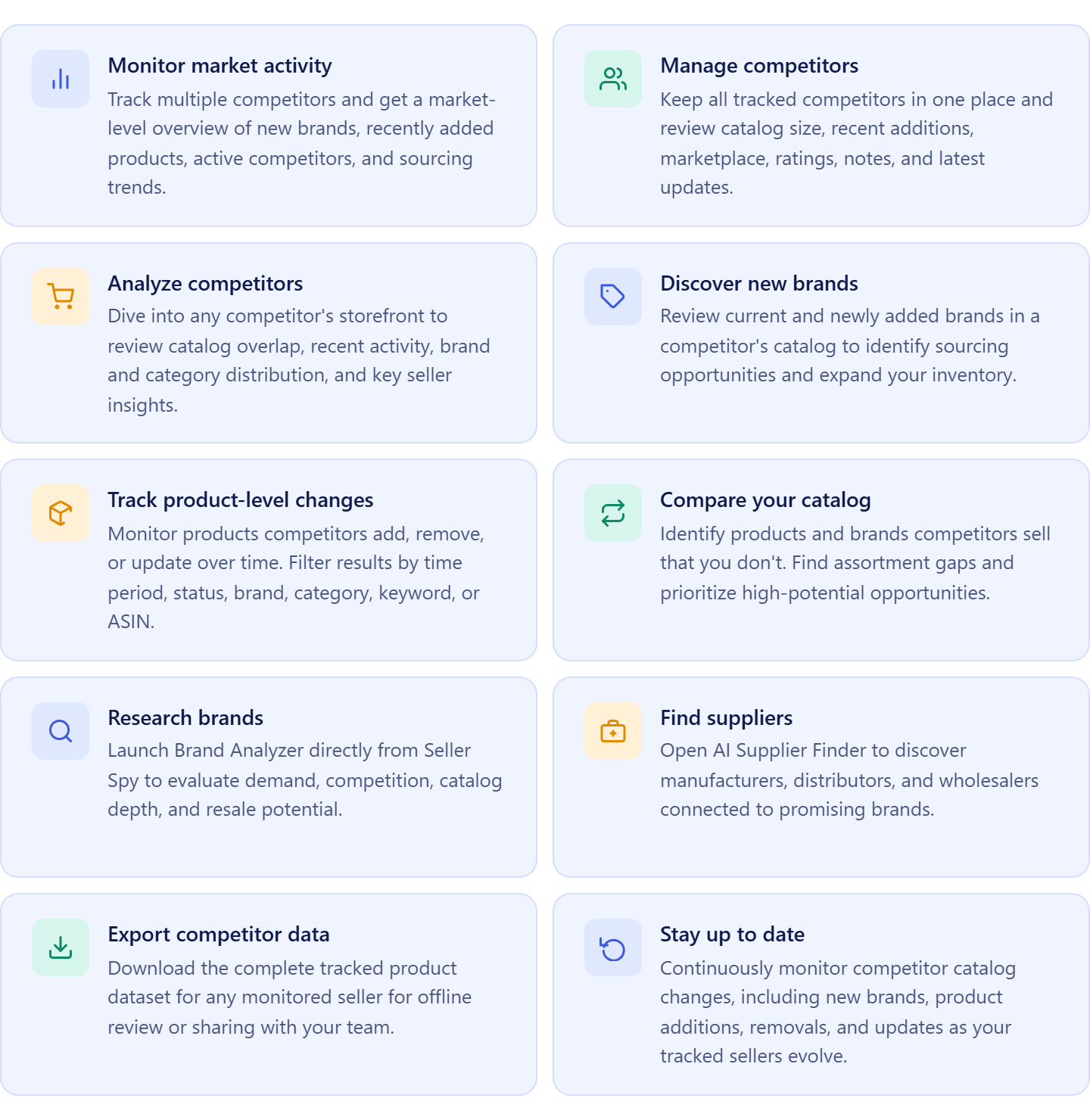
It allows sellers to:
- Track competitor storefronts automatically;
- Monitor brands competitors currently sell;
- Discover brands recently added to competitor catalogs;
- Identify brands missing from their own catalog;
- Monitor competitor activity and market trends;
- Review brand and product changes over time;
- Launch Brand Analyzer directly from discovered brands;
- Continue supplier discovery with AI Supplier Finder.
Why Seller Spy is the starting point for wholesale sourcing
Seller Spy helps sellers generate wholesale sourcing leads by solving the first challenge in wholesale sourcing – identifying brands worth pursuing. Instead of searching for opportunities at random, sellers start with brands that already show marketplace validation through competitor activity.
Once promising brands are identified, sellers can immediately analyze them in Brand Analyzer to evaluate demand, competition, Amazon’s presence, and resale potential. Qualified brands can then move directly into AI Supplier Finder to identify manufacturers, distributors, and wholesalers, creating a seamless path from competitor intelligence to supplier outreach, product validation, and profitable wholesale sourcing.
How Brand Analyzer Helps Find Profitable Wholesale Deals
Seller Assistant’s Brand Analyzer is a wholesale brand research tool built for Amazon wholesale sellers, online arbitrage sellers, and dropshippers. It helps sellers determine whether a brand is worth sourcing before they spend time contacting suppliers, reviewing wholesale catalogs, or analyzing individual products.
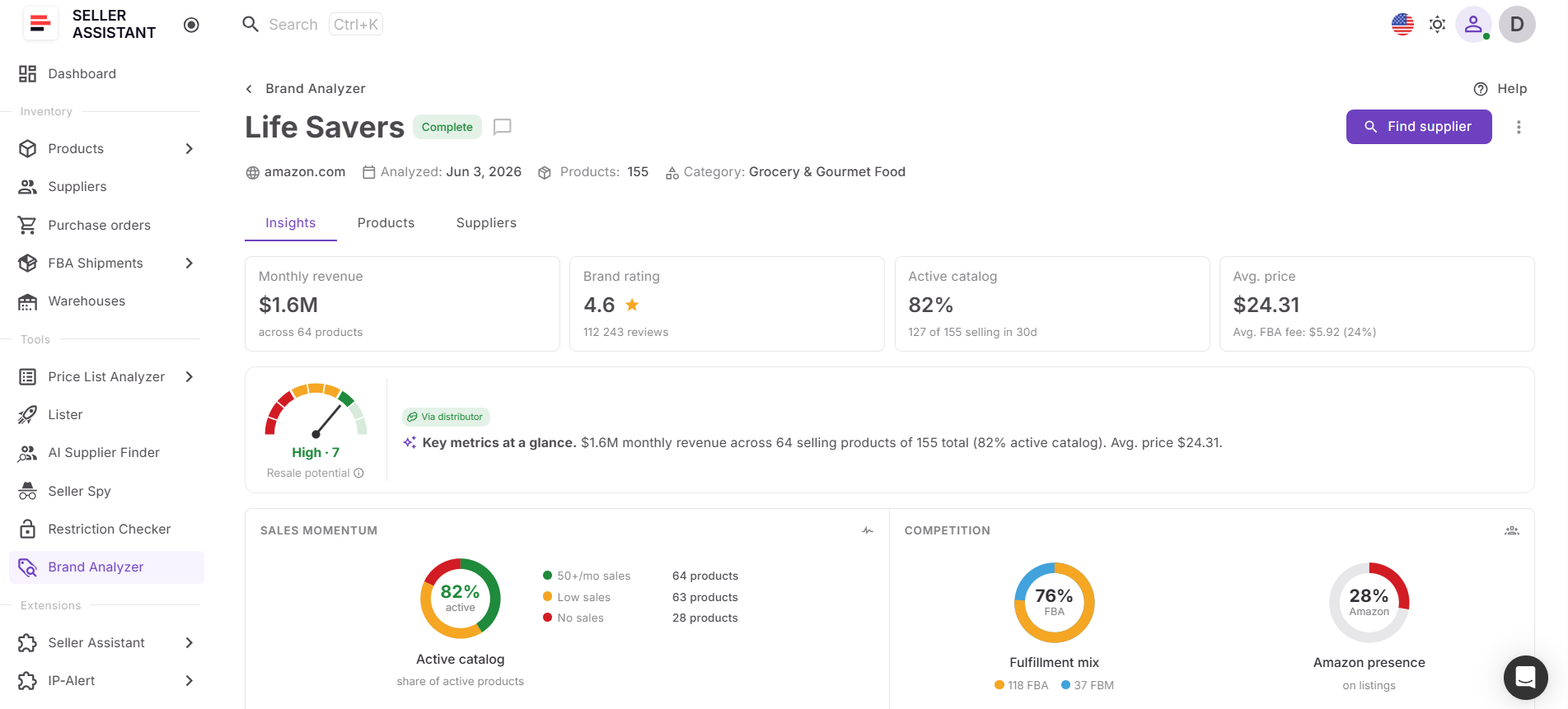
Instead of manually checking dozens or hundreds of ASINs, sellers receive a complete picture of a brand’s marketplace performance, including demand, competition, Amazon Retail presence, catalog depth, pricing, and AI-powered resale insights. This allows them to qualify brands faster and focus on opportunities with the strongest potential.
What Brand Analyzer does
Brand Analyzer helps sellers evaluate brands before investing time and resources into wholesale sourcing.
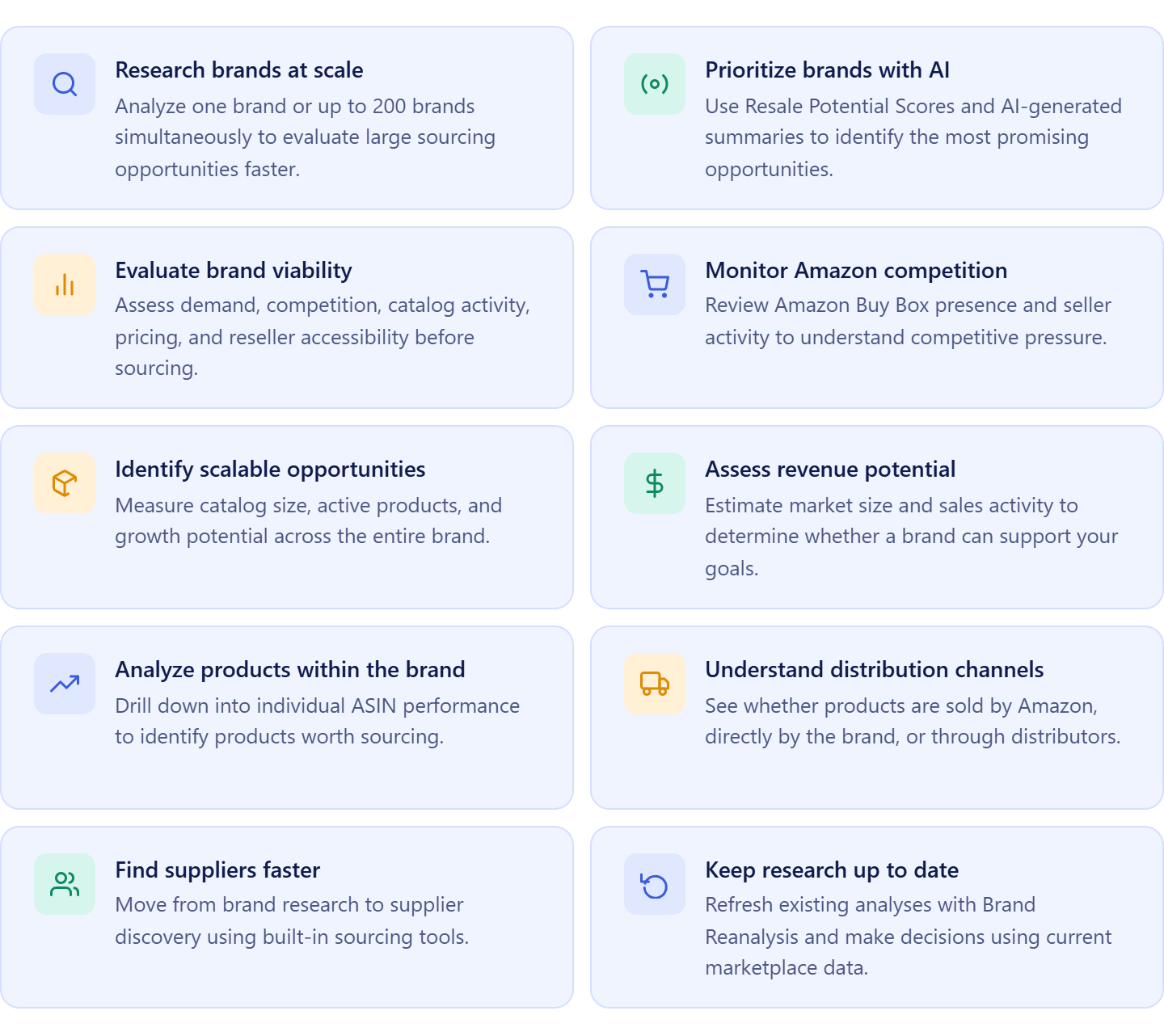
It allows sellers to:
- Analyze one brand or up to 1,000 brands simultaneously;
- Measure estimated monthly revenue and catalog size;
- Evaluate Amazon Buy Box rate, seller competition, and FBA share;
- Review pricing, ratings, categories, and distribution type;
- Receive an AI-powered Resale Potential Score and brand summary;
- Explore detailed product-level analytics within each brand;
- Identify suppliers connected to analyzed brands;
- Refresh analyses using the latest marketplace data with Brand Reanalysis.
Why brand qualification comes before supplier outreach
Brand Analyzer helps sellers find profitable wholesale deals by solving one of the biggest challenges in wholesale sourcing – identifying which brands are worth pursuing. Instead of contacting suppliers for every brand discovered through competitor research, sellers can first validate demand, competition, Amazon’s presence, and overall resale potential using comprehensive brand-level analytics.
Once a brand qualifies, sellers can confidently continue their sourcing workflow by finding wholesale suppliers, requesting supplier catalogs, and analyzing products for profitability. This structured approach reduces wasted supplier outreach, minimizes sourcing risk, and helps sellers focus on brands that are more likely to generate sustainable profits on Amazon.
How AI Supplier Finder Helps Find Profitable Wholesale Deals
Seller Assistant’s AI Supplier Finder is a supplier discovery tool built for Amazon wholesale sellers, online arbitrage sellers, and dropshippers. It helps sellers identify manufacturers, authorized distributors, wholesalers, and other B2B suppliers for brands they’ve already qualified through competitor research and brand analysis.
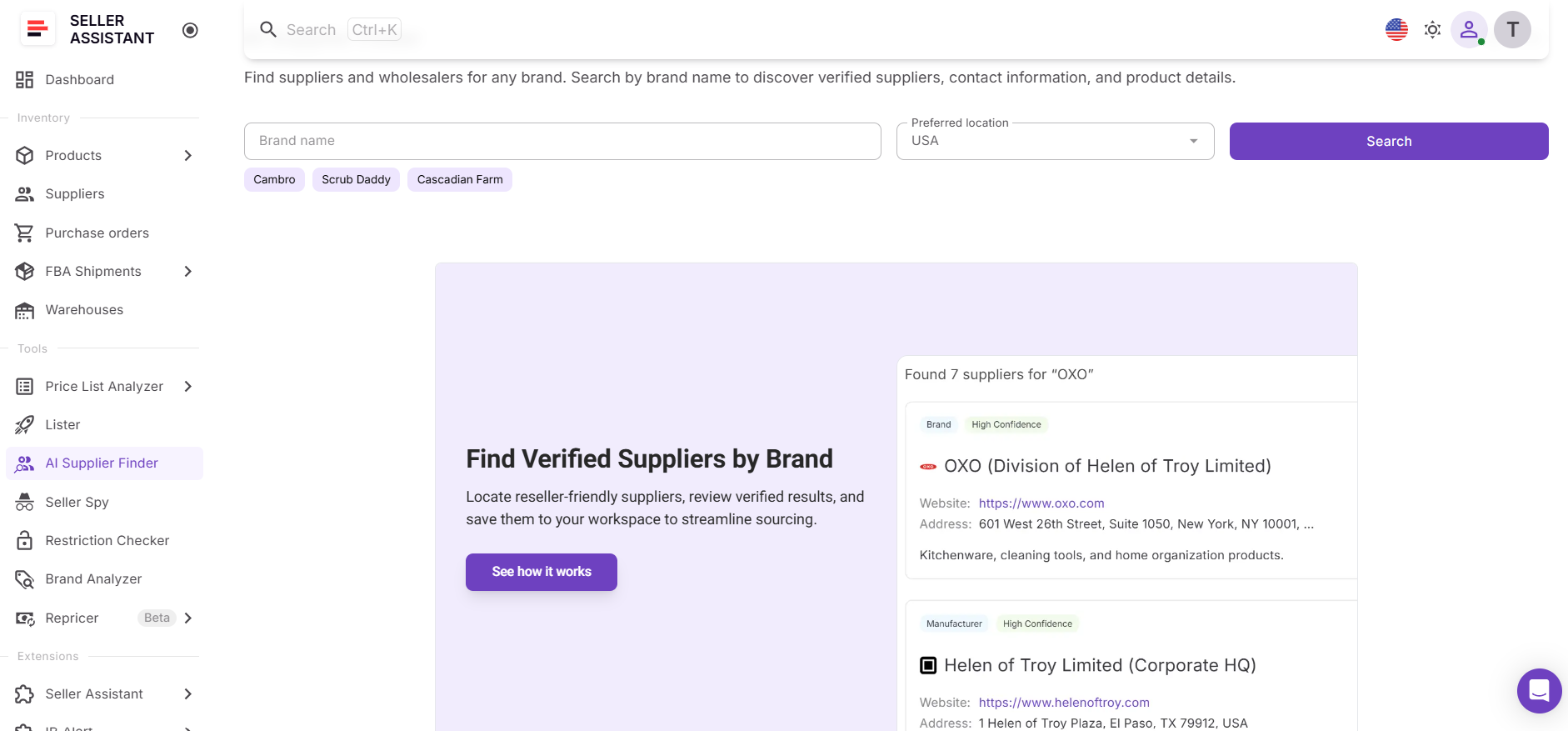
Instead of manually searching Google and sorting through retail websites, marketplaces, and irrelevant results, sellers receive a curated list of wholesale suppliers connected to a specific brand. This makes supplier discovery faster, more accurate, and better aligned with Amazon wholesale sourcing.
What AI Supplier Finder does
AI Supplier Finder helps sellers find legitimate wholesale suppliers and continue their sourcing workflow.
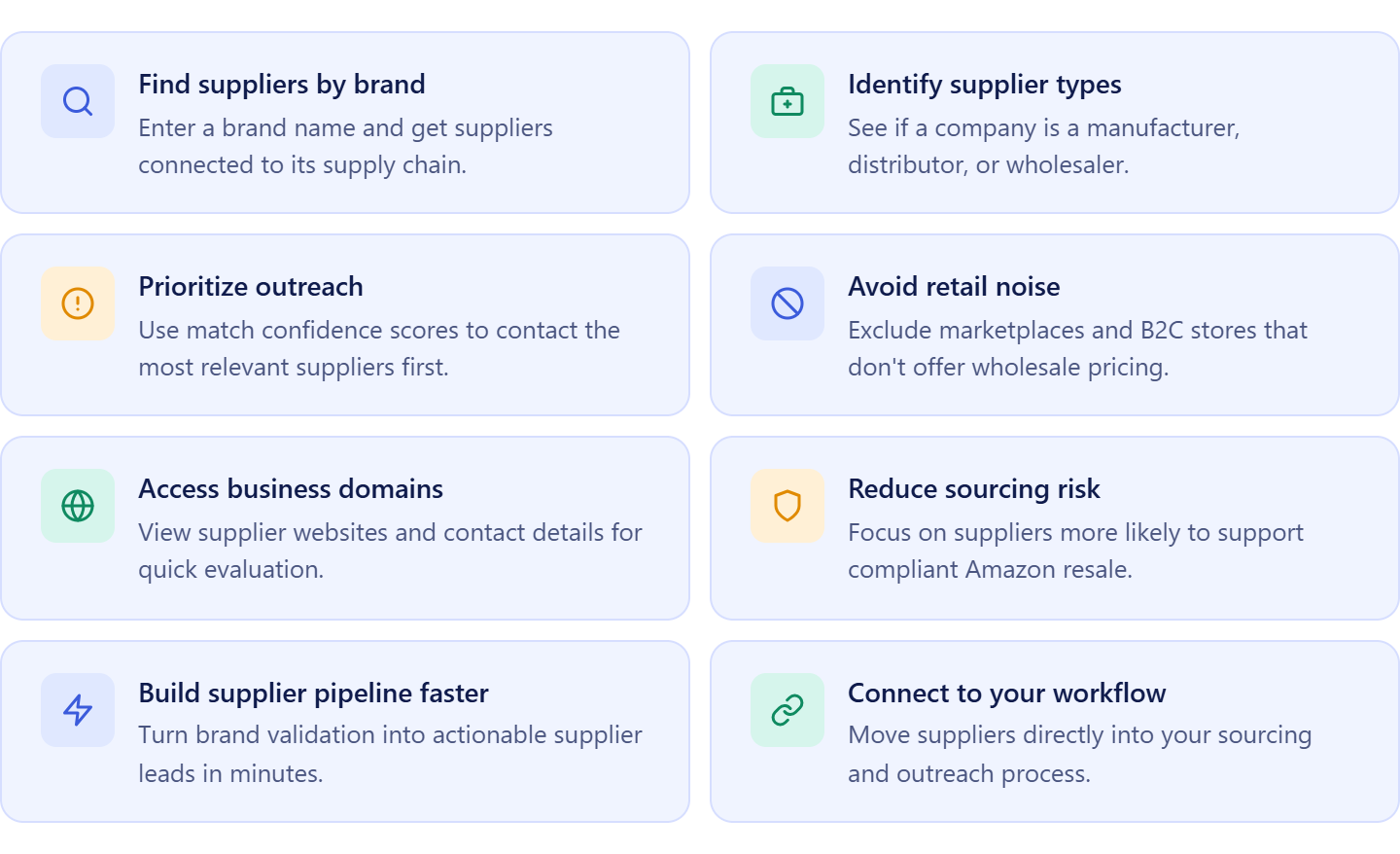
It allows sellers to:
- Search suppliers by brand name;
- Find manufacturers, distributors, wholesalers, and brand-authorized suppliers;
- Prioritize suppliers using AI-powered match confidence scores;
- Access supplier websites and available business contact information;
- Filter out retail stores, marketplaces, and consumer-focused websites;
- Launch supplier searches directly from Brand Analyzer and Seller Spy;
- Save supplier records to Suppliers Database;
- Continue supplier outreach without restarting research.
Why finding the right suppliers is critical
AI Supplier Finder helps sellers find profitable wholesale deals by connecting qualified brands with legitimate supply sources. Once a brand has been validated through competitor research and brand analysis, sellers can quickly identify suppliers that may provide wholesale pricing, inventory access, and long-term sourcing opportunities.
Rather than spending hours searching for suppliers manually, sellers can move directly into supplier outreach, account approval, and catalog acquisition. This keeps supplier discovery connected to the rest of the sourcing workflow, allowing sellers to progress efficiently from competitor intelligence to validated wholesale opportunities and profitable inventory.
How Suppliers Database Helps Find Profitable Wholesale Deals
Seller Assistant’s Suppliers Database is a supplier management tool built for Amazon wholesale sellers, online arbitrage sellers, and dropshippers. It helps sellers organize supplier relationships after identifying wholesale sources, keeping supplier contacts, purchasing terms, account status, and operational details in one centralized workspace.
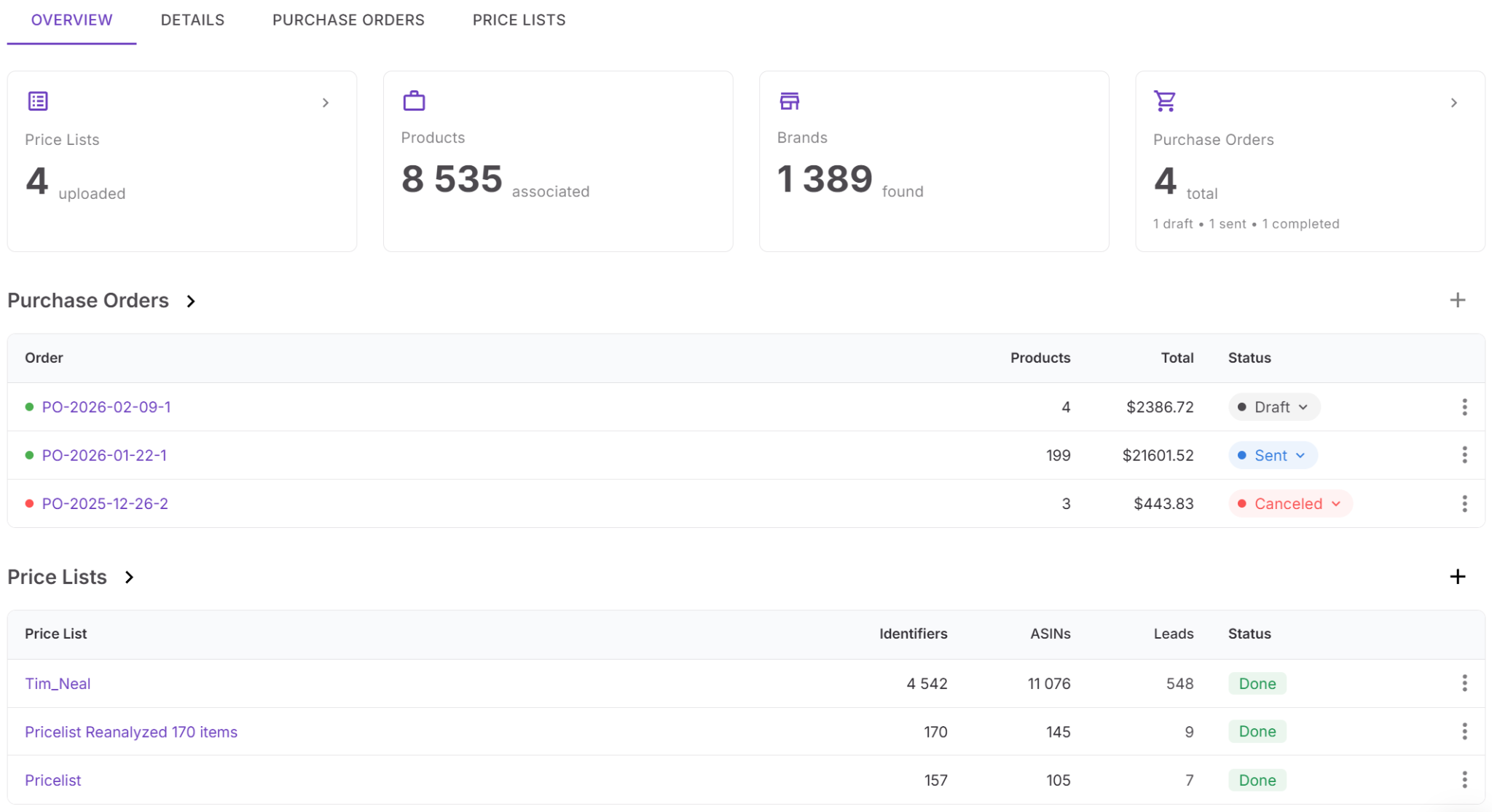
Instead of managing supplier information across spreadsheets, emails, and notes, sellers can maintain accurate supplier records that stay connected to the rest of their sourcing workflow. This makes it easier to manage multiple supplier relationships and move efficiently from supplier approval to purchasing.
What Suppliers Database does
Suppliers Database helps sellers organize supplier information and manage wholesale sourcing operations.
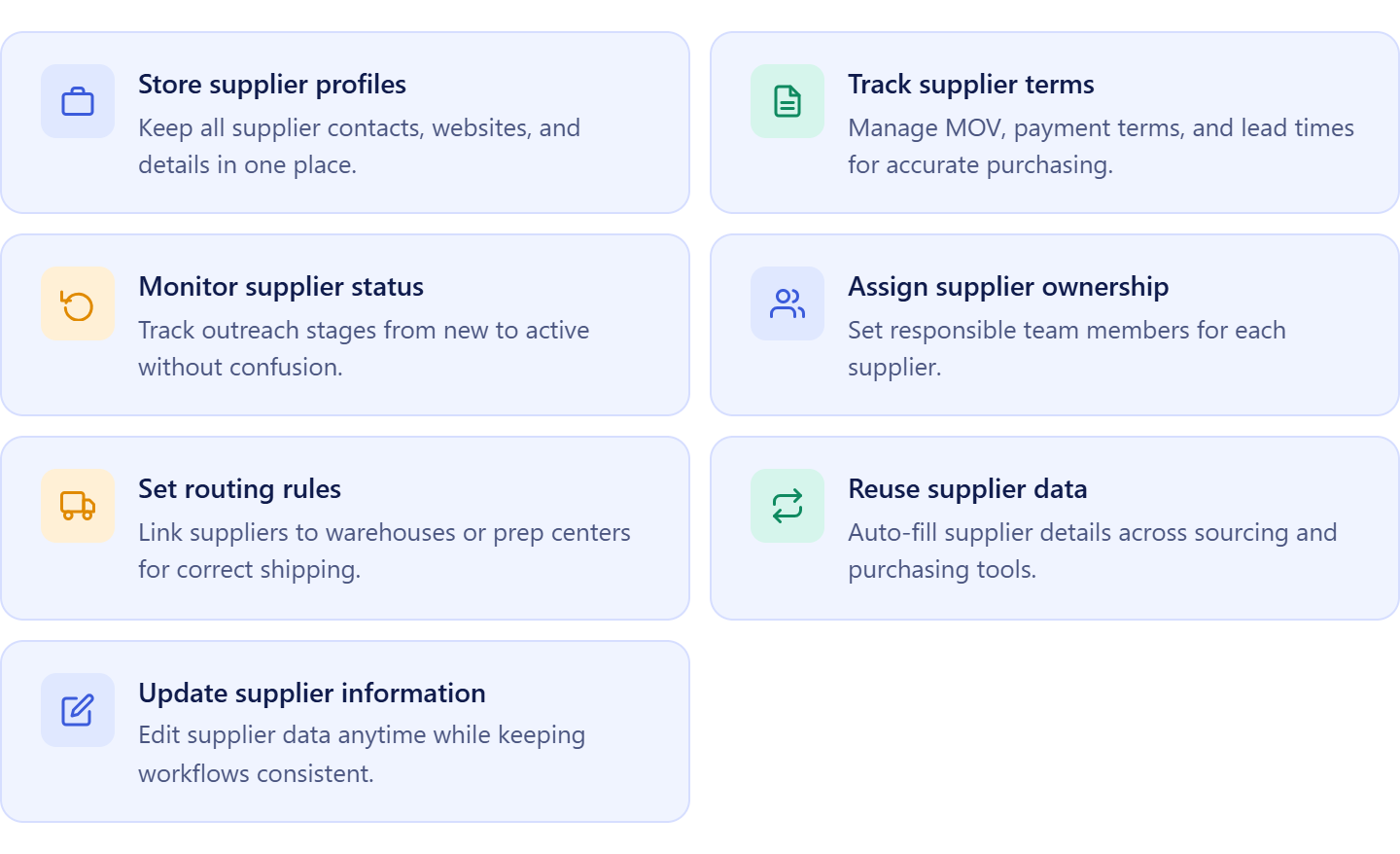
It allows sellers to:
- Store supplier profiles and business contact information;
- Track supplier relationship status and outreach progress;
- Manage payment terms, minimum order values (MOV), lead times, and shipping requirements;
- Assign suppliers to team members or virtual assistants;
- Link suppliers to warehouses or prep centers;
- Upload and manage supplier price lists;
- Create purchase orders using stored supplier information;
- Reuse supplier data across connected sourcing and purchasing workflows.
Why organized supplier management matters
Suppliers Database helps sellers find profitable wholesale deals by keeping supplier relationships organized after wholesale accounts have been approved. Once suppliers provide catalogs, all supplier information, purchasing terms, and operational details remain centralized, making it easier to compare opportunities, manage ongoing communication, and prepare for future orders.
Because supplier profiles connect directly with tools like Price List Analyzer and Purchase Orders Module, sellers can move from supplier management to catalog analysis and purchasing without re-entering data. This creates a more efficient sourcing workflow, reduces administrative work, and helps build a reliable network of suppliers that supports long-term wholesale growth.
How Price List Analyzer Helps Find Profitable Wholesale Deals
Seller Assistant’s Price List Analyzer is a bulk catalog analysis tool built for Amazon wholesale sellers, online arbitrage sellers, and dropshippers. It helps sellers evaluate supplier price lists and quickly identify the products with the strongest profit potential after securing access to a wholesale catalog.
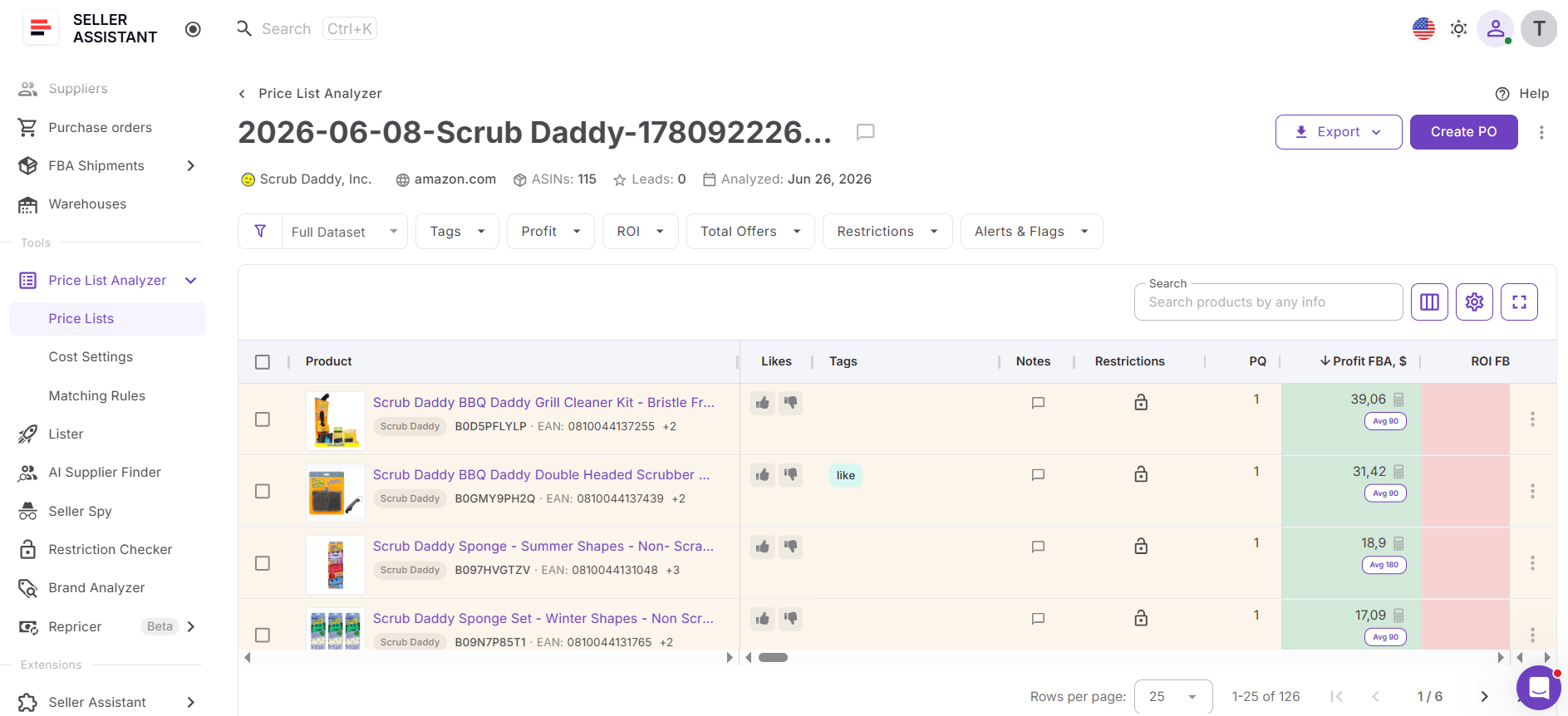
Instead of checking products one by one, sellers can analyze thousands of supplier offers at once using Amazon marketplace data. This makes it easy to separate profitable opportunities from low-margin, high-risk, or restricted products before investing in inventory.
What Price List Analyzer does
Price List Analyzer helps sellers validate wholesale opportunities and identify the best products to buy.
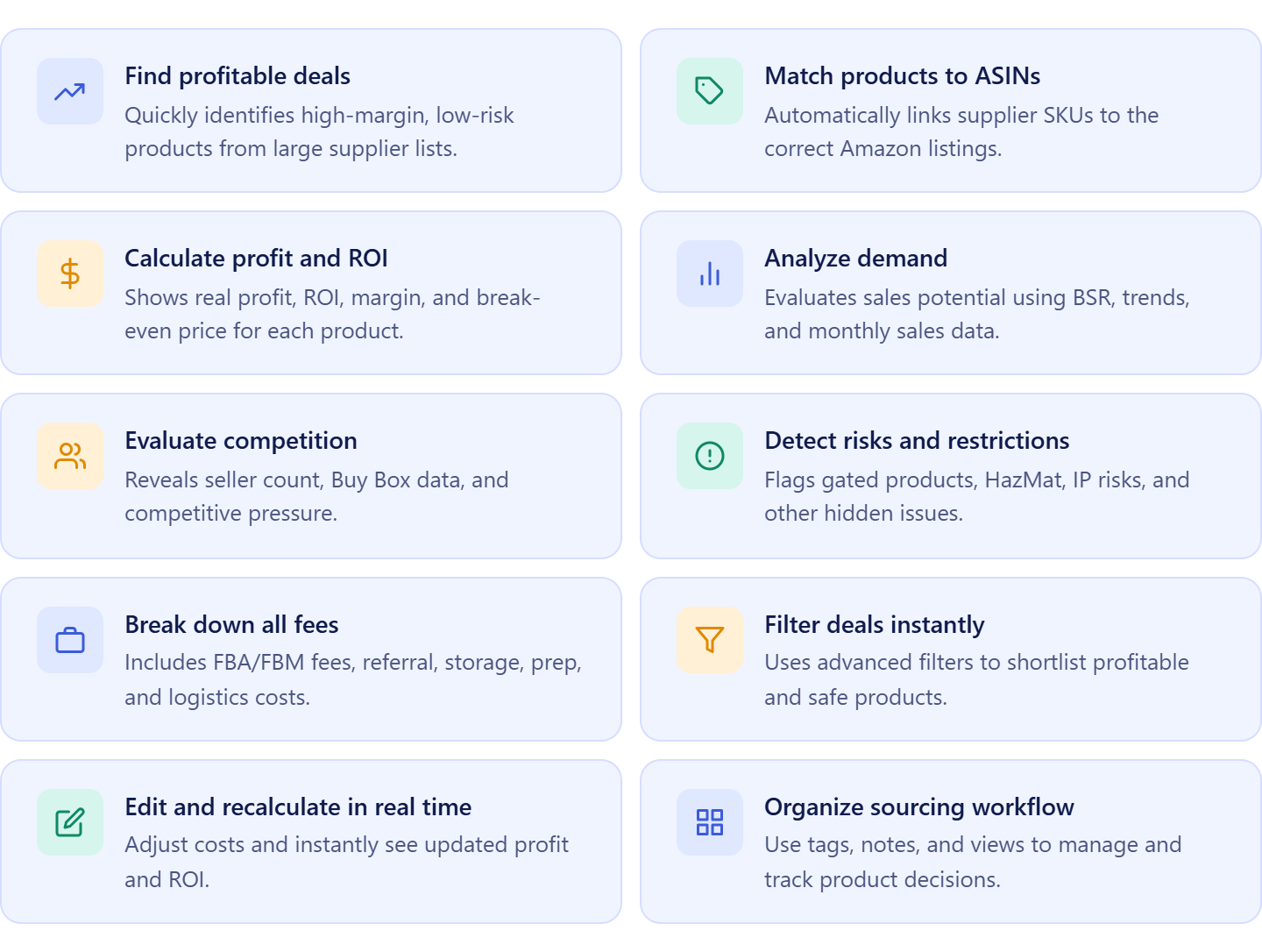
It allows sellers to:
- Upload and analyze supplier price lists in bulk;
- Match supplier products to Amazon ASINs automatically;
- Calculate ROI, profit, margin, and break-even pricing;
- Evaluate demand using sales estimates and BSR trends;
- Analyze seller competition, Buy Box conditions, and Amazon’s presence;
- Detect restrictions, HazMat products, IP complaints, and other sourcing risks;
- Filter products by profitability, demand, competition, and risk;
- Create purchase orders for approved products.
Why bulk catalog analysis drives better buying decisions
Price List Analyzer helps sellers find profitable wholesale deals by validating supplier catalogs before inventory is purchased. After discovering competitor brands, qualifying them, finding suppliers, and receiving wholesale price lists, sellers can quickly identify which products meet their profitability and sourcing criteria.
By evaluating margins, demand, competition, Amazon presence, and potential risks in bulk, sellers can confidently eliminate weak opportunities and focus on products with the greatest potential for long-term success. This data-driven approach helps maximize return on investment, reduce sourcing mistakes, and move validated opportunities directly into the purchasing process.
How to Turn Competitor Analysis Into Wholesale Sourcing Leads – Step by Step
Step 1. Find competitor brands
Use Seller Spy to monitor competitors and identify brands they sell, recently added, or carry but you don’t.
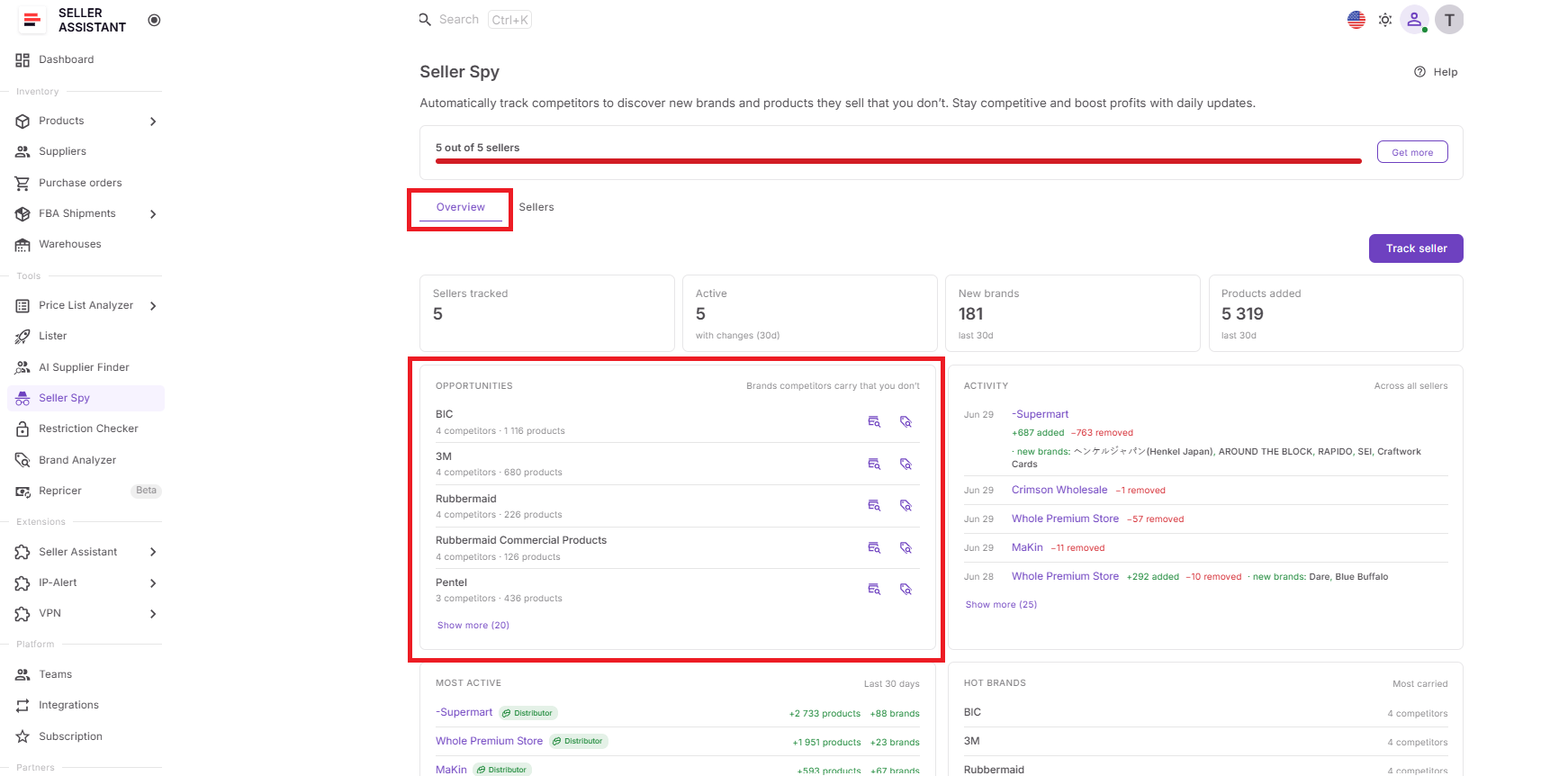
This gives you a market-tested starting point instead of researching brands at random.
Step 2. Qualify the brand
Open the brand in Brand Analyzer from Seller Spy to review demand, competition, Amazon’s presence, catalog depth, pricing, and resale potential.
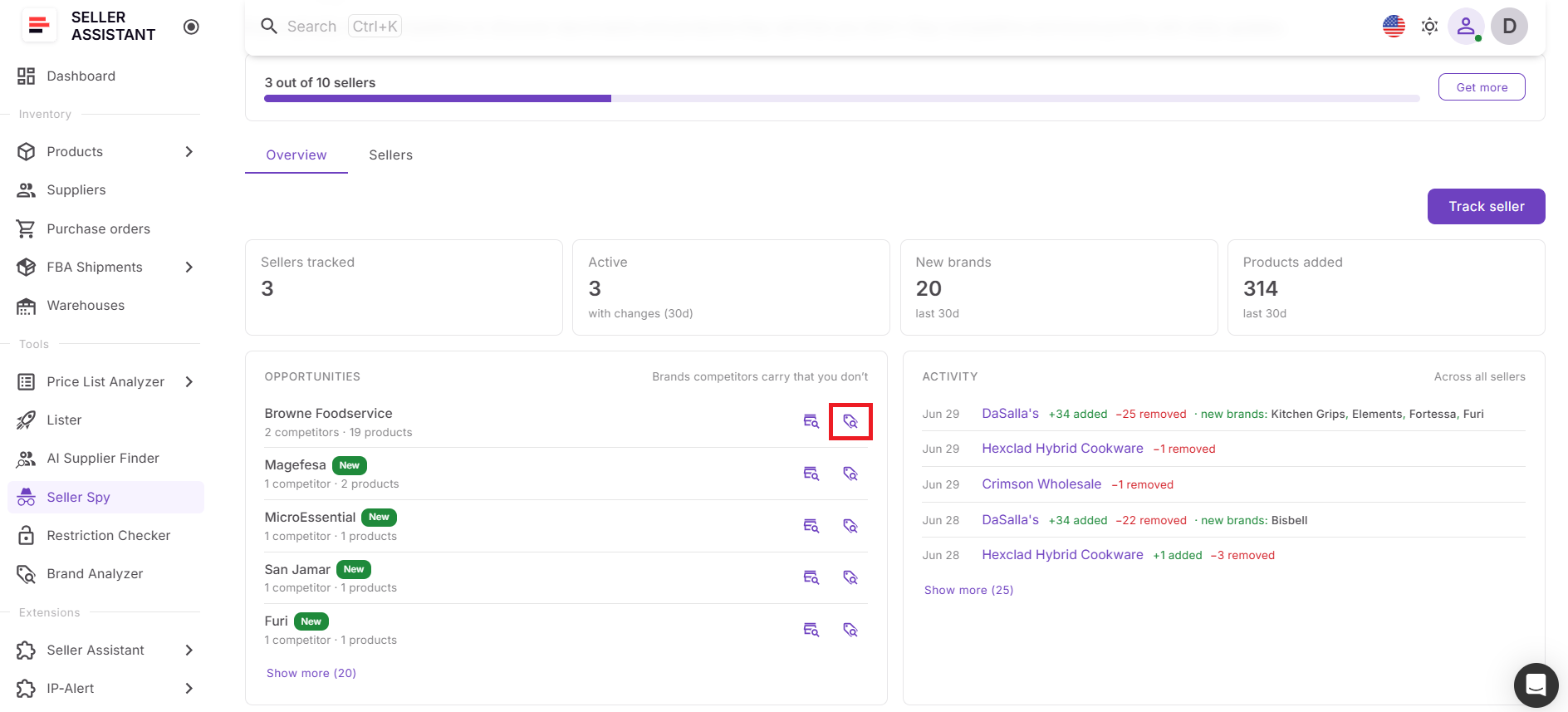
This helps you decide whether the brand is worth supplier outreach.
Step 3. Find wholesale suppliers
Use AI Supplier Finder to locate manufacturers, authorized distributors, wholesalers, and brand contacts.
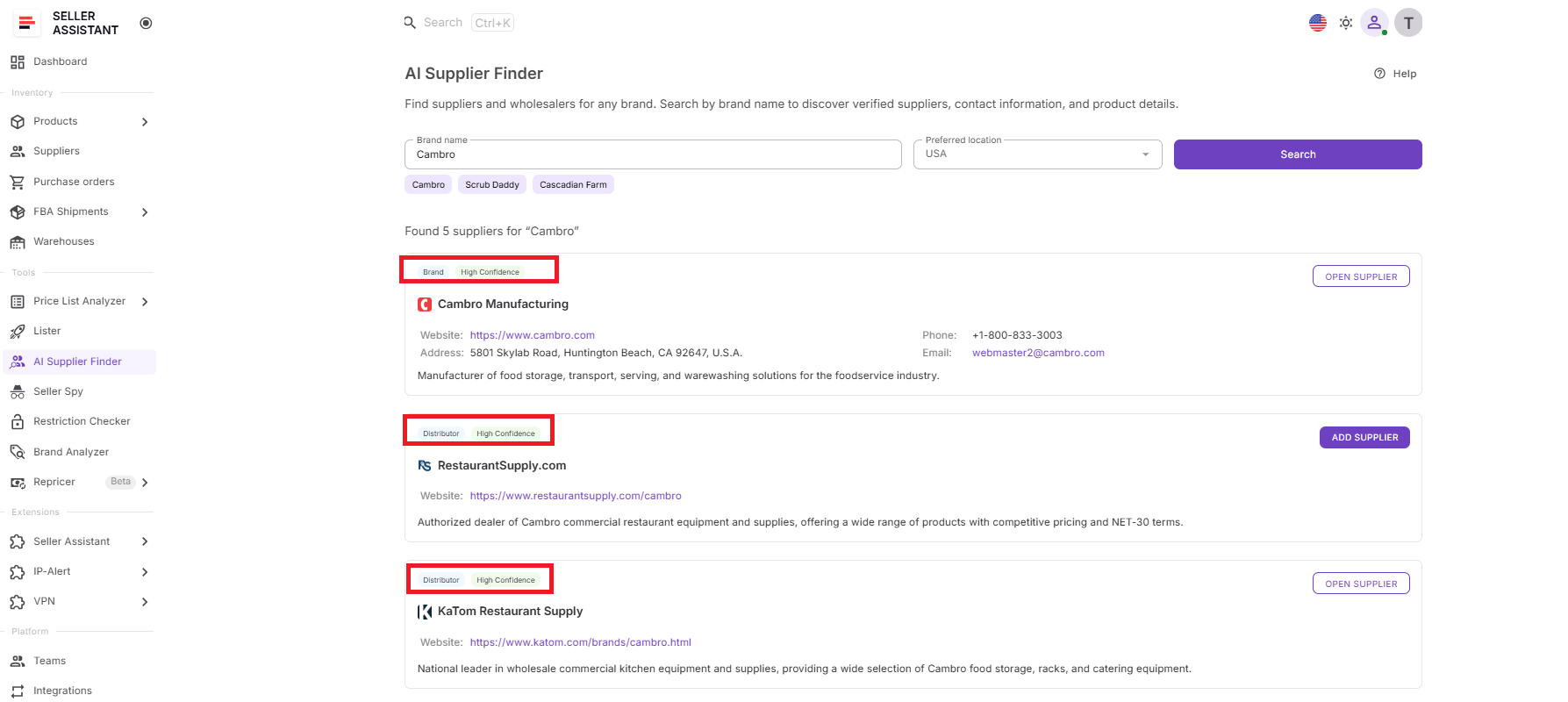
This turns a qualified brand into real supplier leads.
Step 4. Contact and organize suppliers
Reach out to suppliers, request account approval, and save approved or promising suppliers in Suppliers Database.
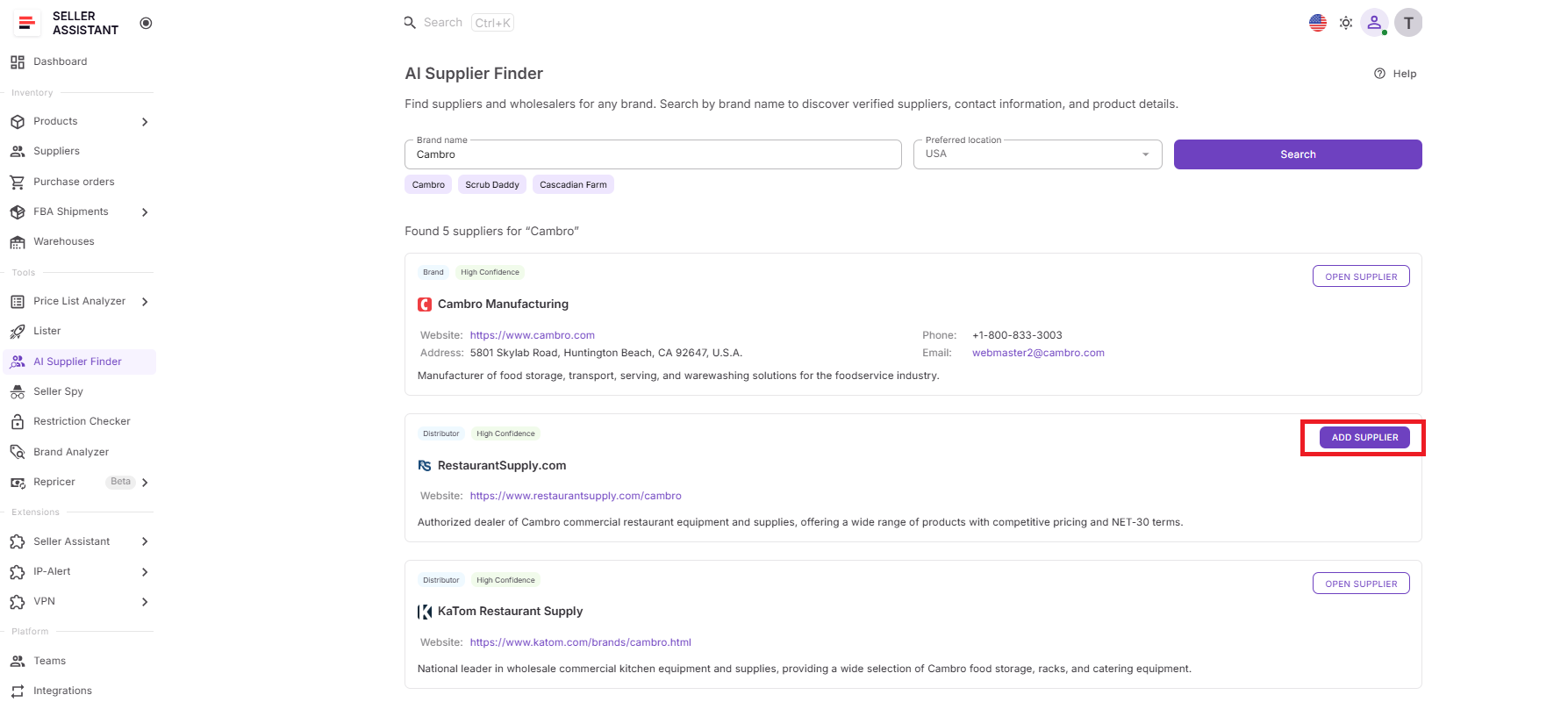
This keeps contacts, terms, MOV, lead times, and relationship status organized.
Step 5. Analyze supplier price lists
Upload the supplier’s catalog to Price List Analyzer.
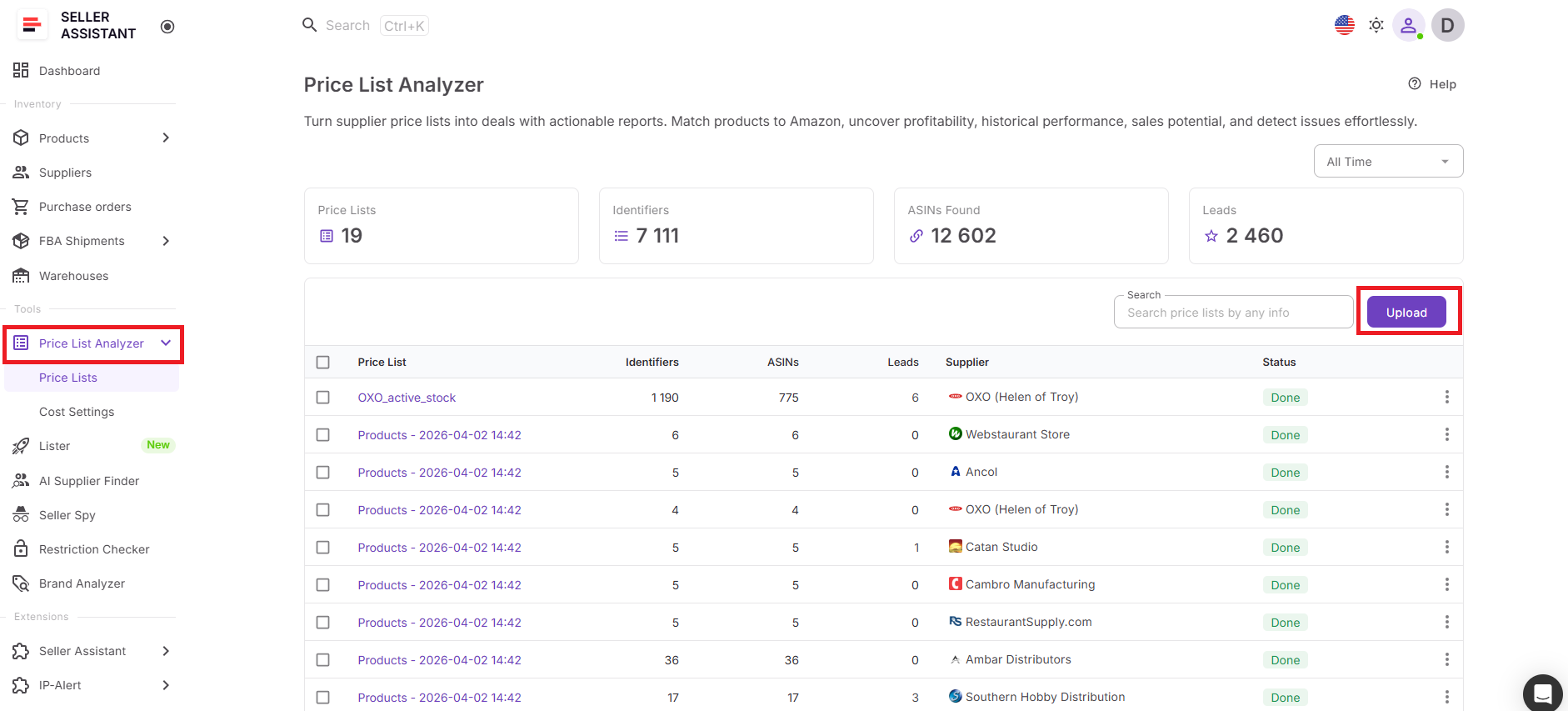
This helps you identify products with strong ROI, demand, manageable competition, and acceptable risk.
Step 6. Create purchase orders
Filter the best products and move approved deals into Purchase Orders Module.
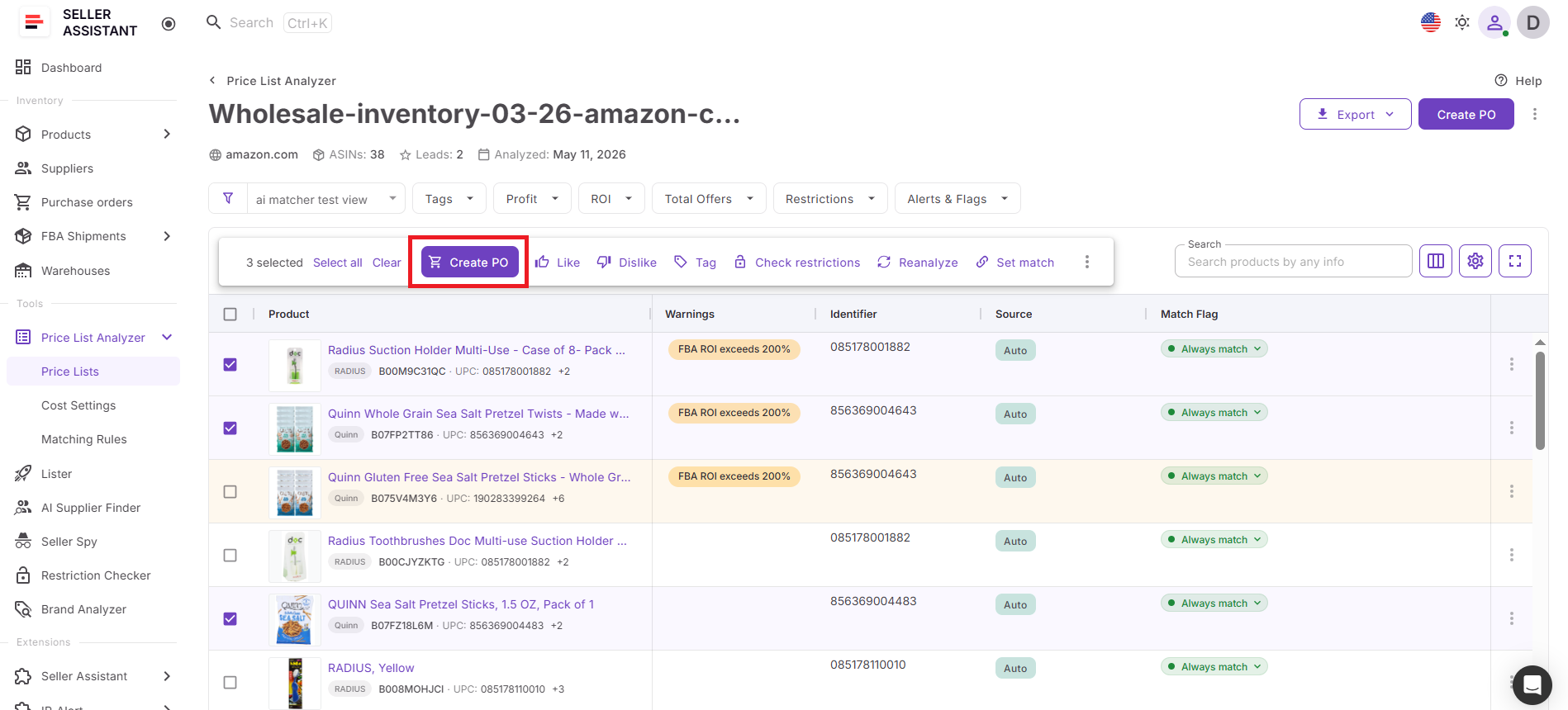
This turns validated sourcing leads into inventory you can buy and resell on Amazon.
FAQ
Can I use this workflow if I’m just starting with Amazon wholesale?
Yes. Starting with competitor research can actually shorten the learning curve because you’re researching brands that already have proven marketplace activity instead of trying to identify opportunities from scratch.
How many competitors should I monitor?
There’s no fixed number, but tracking sellers with a similar business model, product categories, or sourcing strategy usually provides the most relevant insights. Monitoring a mix of large and niche competitors also helps you discover a wider range of opportunities.
Should I contact every supplier I find for a qualified brand?
Not necessarily. Compare several suppliers for the same brand and prioritize those that appear to be manufacturers, authorized distributors, or established wholesalers that align with your purchasing needs.
How often should I review competitor activity?
Competitor catalogs change continuously as sellers add new brands, discontinue products, or expand into new categories. Reviewing competitor activity regularly helps you identify sourcing opportunities before they become widely adopted.
Can this workflow help me scale my wholesale business?
Yes. Following the same structured process for every opportunity makes sourcing more consistent as your supplier network and product catalog grow. It also helps teams and virtual assistants follow standardized workflows, reducing errors and improving operational efficiency.
Final Thoughts
Successful wholesale sourcing doesn’t begin with a supplier catalog – it begins with discovering the right opportunity. Competitor analysis helps you identify brands that are already succeeding on Amazon, but turning those insights into profitable inventory requires a structured process. By qualifying brands, finding reliable suppliers, organizing supplier relationships, and validating supplier catalogs before purchasing, you can make smarter sourcing decisions and reduce unnecessary risk.
Seller Assistant connects every stage of that workflow into one platform. With Seller Assistant’s Seller Spy, Brand Analyzer, AI Supplier Finder, Suppliers Database, and Price List Analyzer, you can move seamlessly from competitor intelligence to purchase-ready wholesale deals. Whether you’re an Amazon wholesale seller, online arbitrage seller, or dropshipper, this connected workflow helps you discover better opportunities, streamline sourcing, and build a scalable pipeline of profitable inventory.