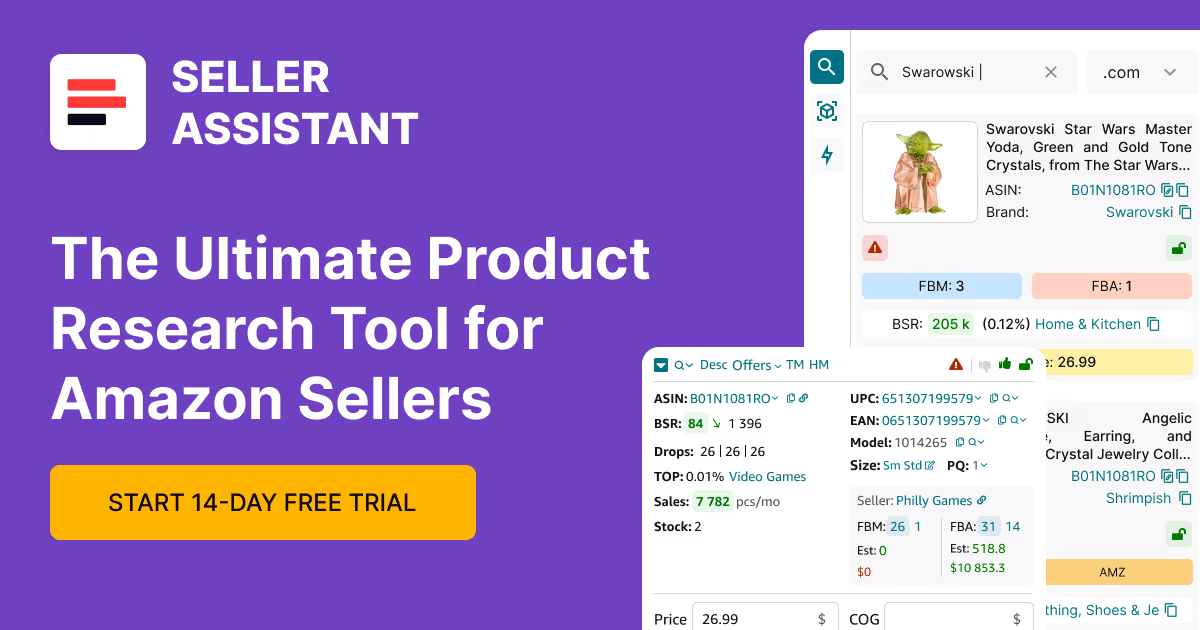



Analyzing supplier price lists is where most Amazon resellers lose time – and miss the best deals. Scanning SKUs one by one doesn’t show the bigger picture: whether a brand is actually worth reselling.
A product may look profitable, but if the brand is saturated, dominated by Amazon, or unstable, margins disappear fast. With Seller Assistant, you can analyze brands and products directly from bulk data instead of working manually.
This post shows how to evaluate demand, competition, and risk at scale – and turn raw supplier price lists into clear, confident sourcing decisions.
Why Brand-First Sourcing Wins
Most wholesale sellers start with products, not brands – and that’s where inefficiency begins. A supplier price list may contain thousands of SKUs, but without understanding the brand behind them, you’re making decisions in isolation. Strong-looking products can still fail if the brand is gated, oversaturated, or controlled by Amazon.
Analyzing brands directly from the price list allows you to filter entire segments of inventory before wasting time on product-level checks. It shifts your workflow from reactive deal hunting to structured sourcing, where every product is evaluated in the context of brand viability, competition, and long-term scalability.
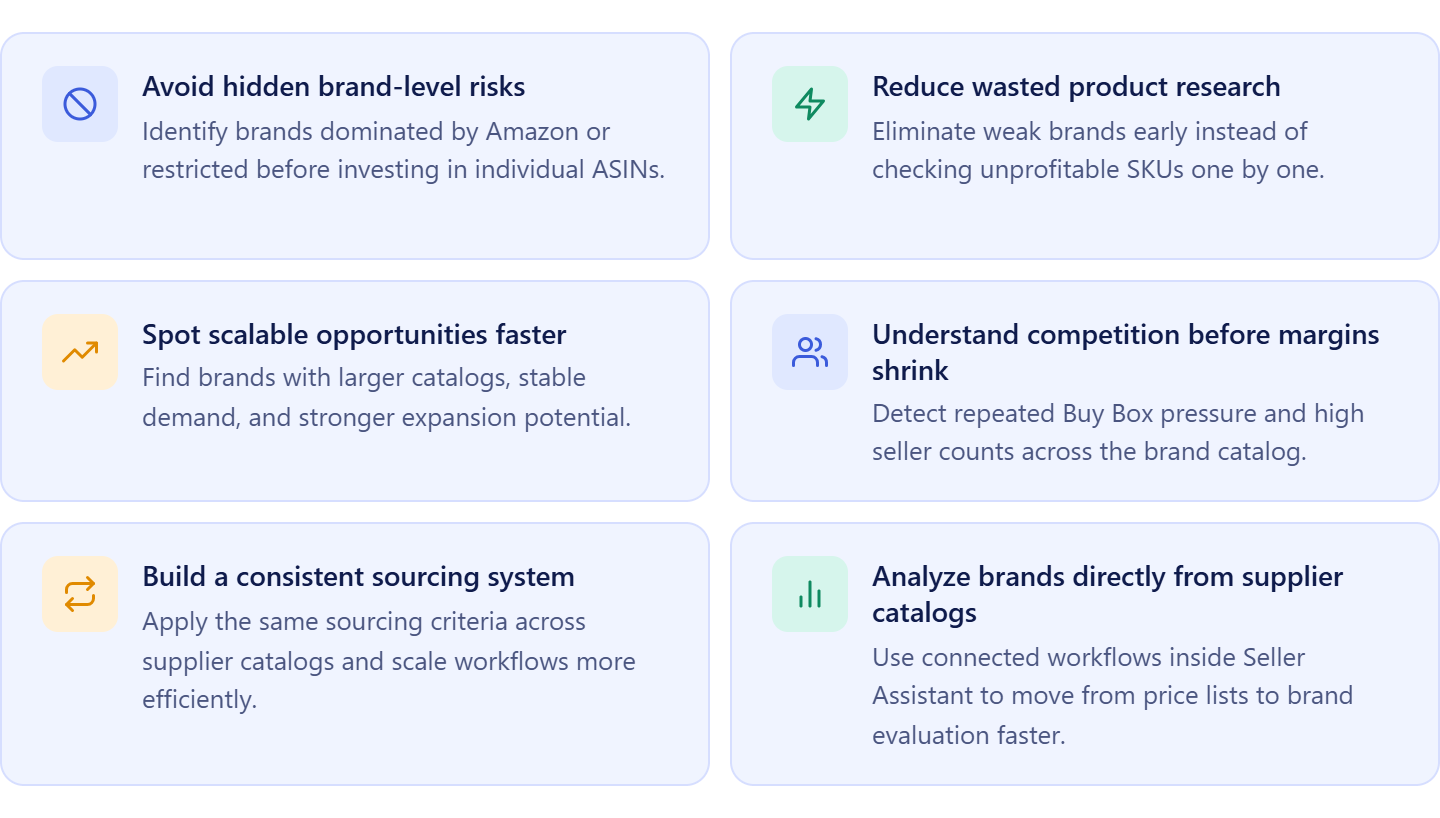
Avoid hidden brand-level risks
Product-level analysis often hides bigger problems. You might find a profitable ASIN, only to realize later that the entire brand is restricted or dominated by Amazon. When you analyze brands early, you eliminate these risks before investing time or capital.
Reduce wasted product research
Checking SKUs one by one slows down your sourcing process. If a brand is not viable, every product you analyze within it is wasted effort. Brand-level filtering helps you cut entire sections of a price list instantly.
Spot scalable opportunities faster
Not all brands support growth. Some have limited catalogs or inconsistent demand. By evaluating brands directly from the price list, you can identify those with enough depth, stable sales, and expansion potential.
Understand competition before it affects margins
Competition is rarely isolated to one product. High seller counts and Buy Box pressure usually repeat across a brand’s catalog. Brand-level analysis reveals these patterns early, helping you avoid price wars.
Build a consistent sourcing system
Wholesale sourcing works best as a repeatable process, not a series of one-off decisions. Integrating brand analysis into your price list workflow – especially with tools like Seller Assistant – allows you to apply the same criteria across every supplier and scale without losing control.
What Seller Assistant’s Tools Help Analyze Brands from Supplier Lists?
Analyzing brands from supplier price lists is often fragmented – you review spreadsheets, check products manually, and try to piece together whether a brand is worth sourcing. Seller Assistant simplifies this by letting you analyze brands directly within your bulk workflow.
Instead of switching between tools and checking products one by one, you move from raw supplier data to brand-level decisions in a few steps, keeping your sourcing fast and consistent.
This process is powered by two core tools: Seller Assistant’s Price List Analyzer and Seller Assistant’s Brand Analyzer.
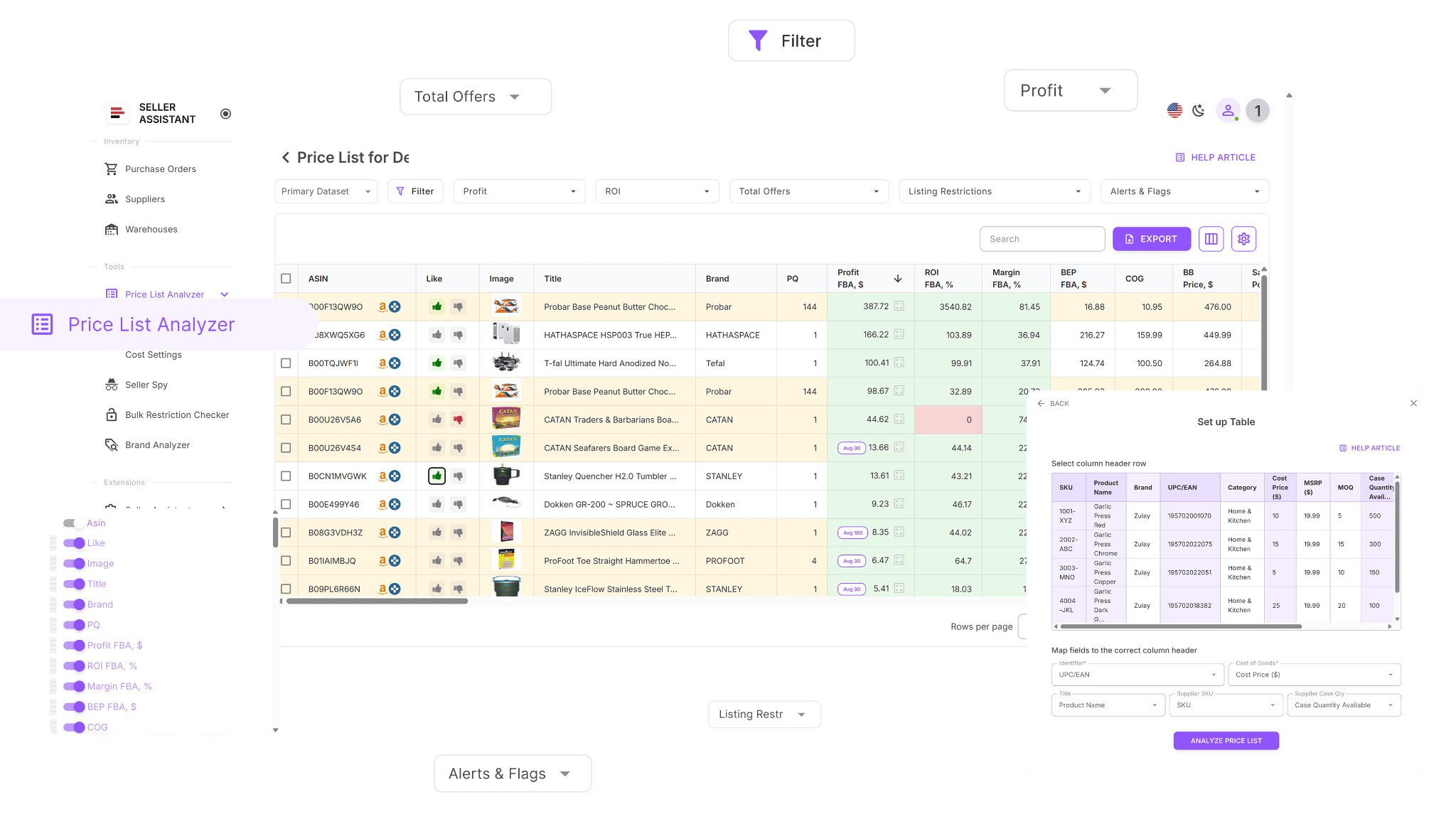
Price List Analyzer
Price List Analyzer is where supplier data becomes structured and ready for analysis. You upload your supplier list, and the tool matches products to Amazon ASINs while calculating profitability, demand, competition, and risks. This creates a full dataset where you can review products and identify patterns across brands without manual research.
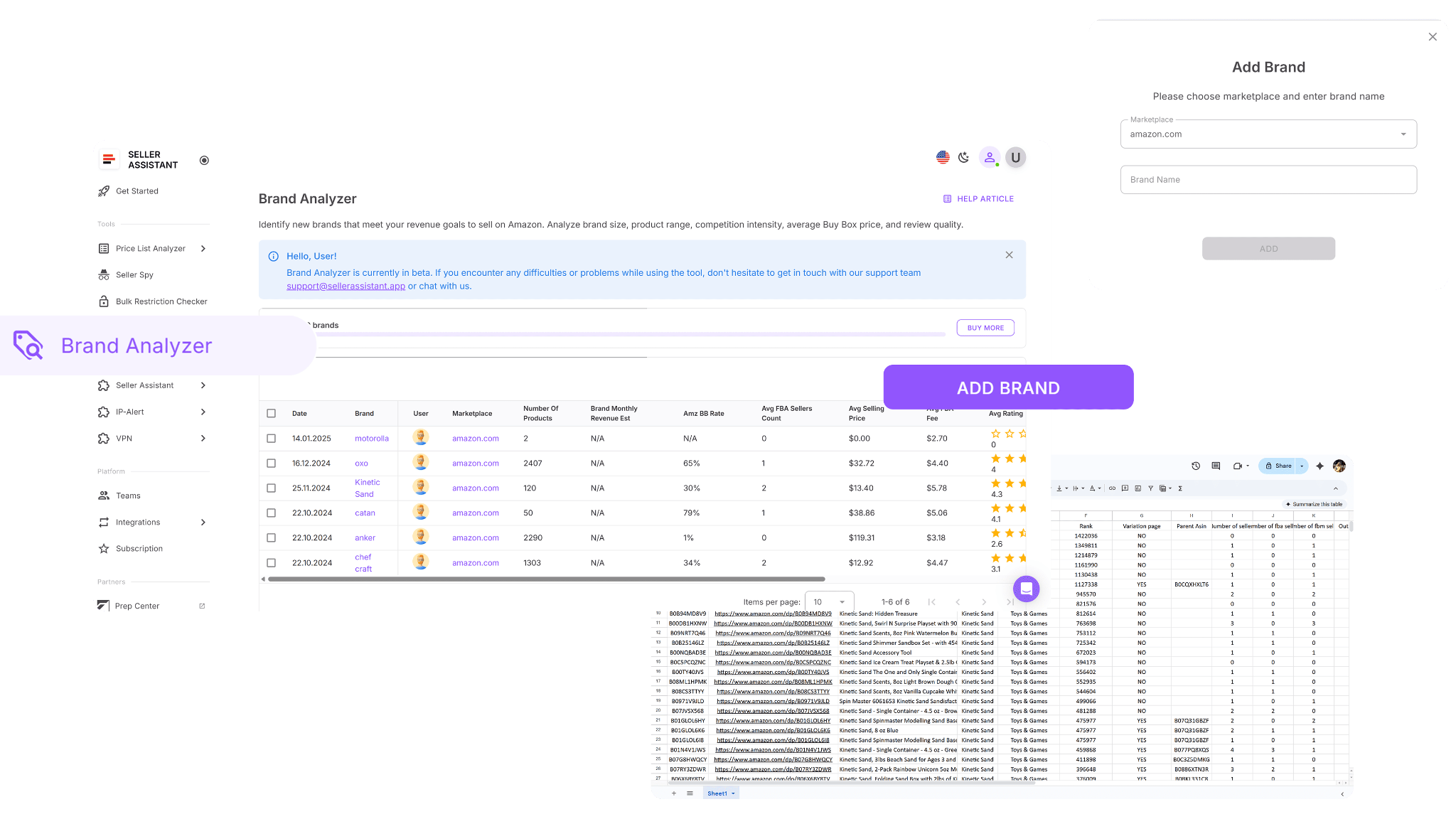
Brand Analyzer
Brand Analyzer is the tool that validates brands based on real Amazon data. It shows metrics like revenue, seller count, Amazon Buy Box share, and catalog size, helping you understand whether a brand is competitive, scalable, or risky before you invest time in product-level analysis.
How it works together
Once your supplier list is processed in Price List Analyzer, you can analyze brands directly from the dataset. When you spot a brand, you launch Brand Analyzer in one click to validate it at the catalog level. This allows you to move from product data to brand decisions instantly, without breaking your workflow.
How brand analysis fits into your workflow
Brand analysis from supplier lists is part of Seller Assistant’s connected wholesale workflow. After identifying potential brands, you validate them before filtering products, contacting suppliers, or placing orders. Each step is linked, so you avoid wasted effort and focus only on brands that support profitable, scalable sourcing.
Note. Seller Assistant is an end-to-end Amazon workflow management platform that integrates 15+ wholesale-focused solutions into one connected system. It combines sourcing workflow automation, bulk research and intelligence tools, and integrated Chrome extensions – giving you everything you need to streamline finding deals, managing suppliers, and creating purchase orders.

The platform aggregates: workflow management tools – Purchase Orders Module, Suppliers Database, Product DB, Warehouses Database, FBA Shipments to organize, automate, and scale every step of your wholesale and arbitrage operations; bulk research & sourcing tools – Price List Analyzer, Bulk Restriction Checker, AI Supplier Finder, Brand Analyzer, Seller Spy to evaluate supplier price lists, verify selling eligibility and restrictions, open new brands, and discover winning product ideas from competitors to expand your product catalog; Chrome extensions – Seller Assistant Browser Extension, IP-Alert Extension, and built-in VPN by Seller Assistant to deep-research products, check IP claims and compliance, and access geoblocked supplier sites directly within your browser; and integrations & team access features – seamless API connectivity and integrations with Zapier, Airtable, and Make, plus Virtual Assistant Accounts for secure, scalable team collaboration.
With Seller Assistant, every step of your Amazon wholesale and arbitrage workflow is automated and connected.
What Is Brand Analyzer?
Brand Analyzer is Seller Assistant’s brand research tool that lets you evaluate entire brands before you invest time in product sourcing. Instead of manually checking dozens of ASINs, Brand Analyzer aggregates data across a brand’s catalog and shows revenue, competition, pricing behavior, and reseller viability in one place. It’s designed to help you decide whether a brand is worth working with – before you request supplier lists or analyze individual products.
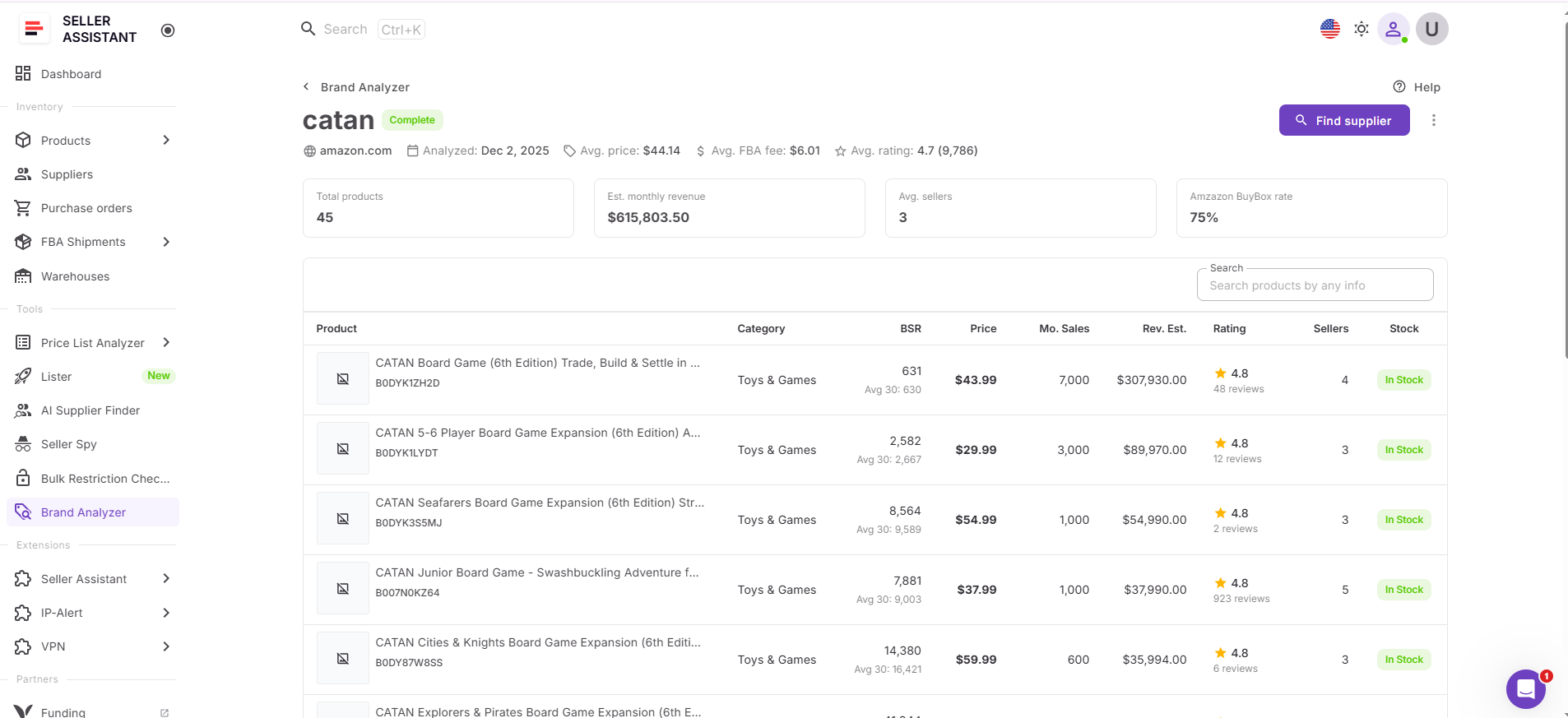
What you can do with Brand Analyzer
Brand Analyzer helps you make fast, structured decisions about which brands to pursue. It brings all key brand-level signals into one workflow so you can qualify or reject opportunities without manual research.
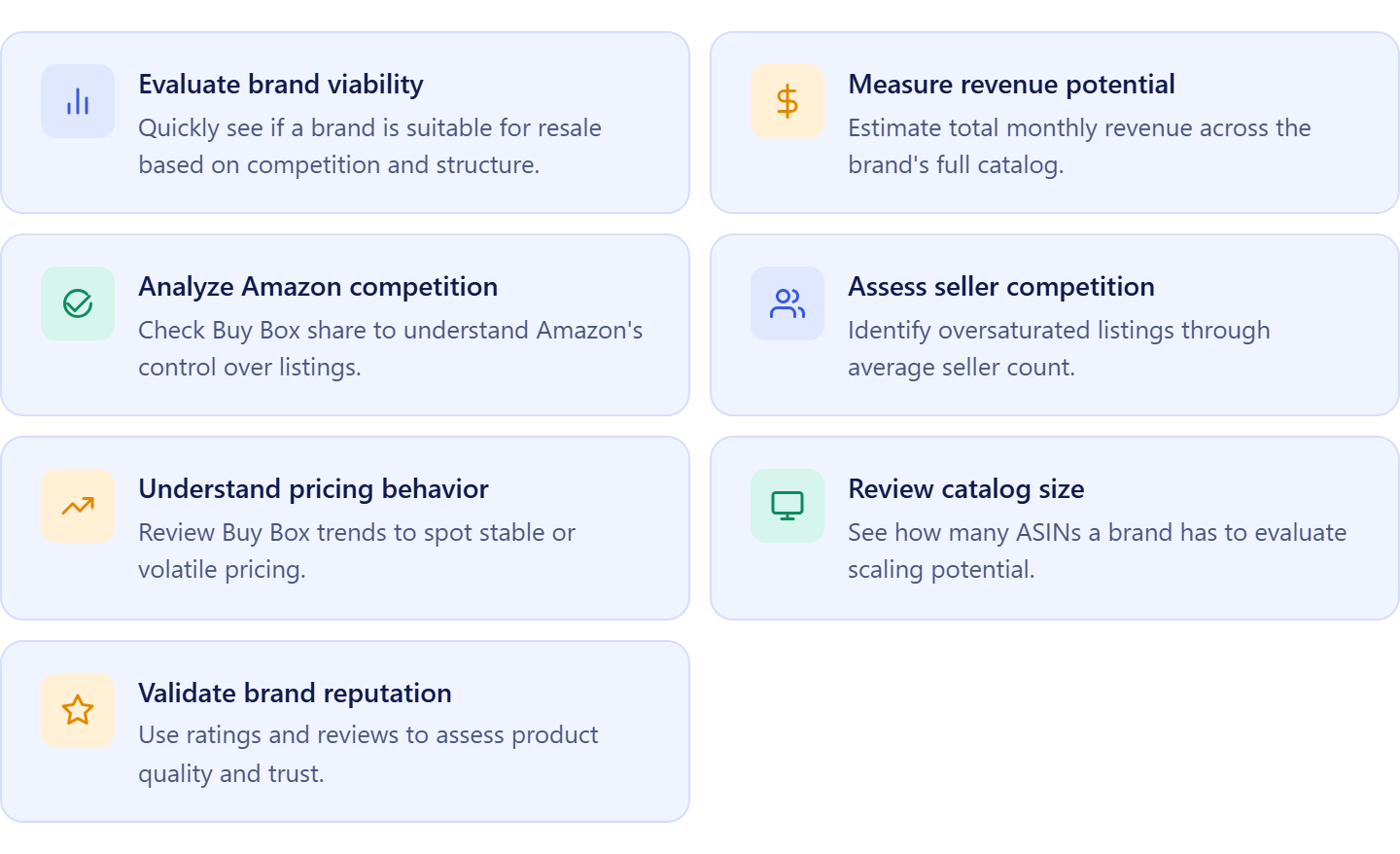
- Evaluate brand viability quickly
See if a brand is suitable for resale by reviewing competition, Amazon presence, and catalog structure in one view.
- Measure total revenue potential
Analyze estimated monthly revenue across the full catalog to understand if the brand supports scalable sourcing.
- Analyze Amazon competition
Check Amazon Buy Box share to determine how often Amazon controls listings and how difficult it will be to compete.
- Assess seller competition levels
Review average seller counts to identify whether listings are manageable or oversaturated.
- Understand pricing behavior
Analyze Buy Box prices and historical averages to see if pricing is stable or highly competitive.
- Review catalog size and scalability
Check how many ASINs the brand has to evaluate expansion potential and long-term growth.
- Validate brand reputation
Use ratings and review volume to assess product quality and customer trust.
How Brand Analyzer supports your sourcing workflow
Brand Analyzer turns brand research into a structured step inside your workflow. You enter a brand or launch it directly from tools like Price List Analyzer or Seller Assistant Extension, and the system builds a complete overview of its performance on Amazon.
Instead of jumping between product pages, you get a full catalog view with all key metrics in one place. This allows you to spot patterns across listings – such as consistent demand, high competition, or Amazon dominance – without analyzing each product individually.
Brand Analyzer connects with other Seller Assistant tools like AI Supplier Finder, Product Database, Bulk Restriction Checker, Price List Analyzer, and Purchase Orders Module so once a brand is validated, you can move directly into supplier search, bulk product analysis, and purchasing. It keeps your sourcing process focused on brands that are actually worth scaling, reducing wasted effort and improving decision quality.
What Is Price List Analyzer?
Price List Analyzer is Seller Assistant’s bulk product research tool designed to turn supplier price lists into structured, Amazon-ready data. Instead of checking products one by one, it automatically matches supplier SKUs to ASINs, calculates profitability, and adds demand, competition, and risk insights. This allows you to evaluate large catalogs quickly and make consistent sourcing decisions based on real data, not assumptions.
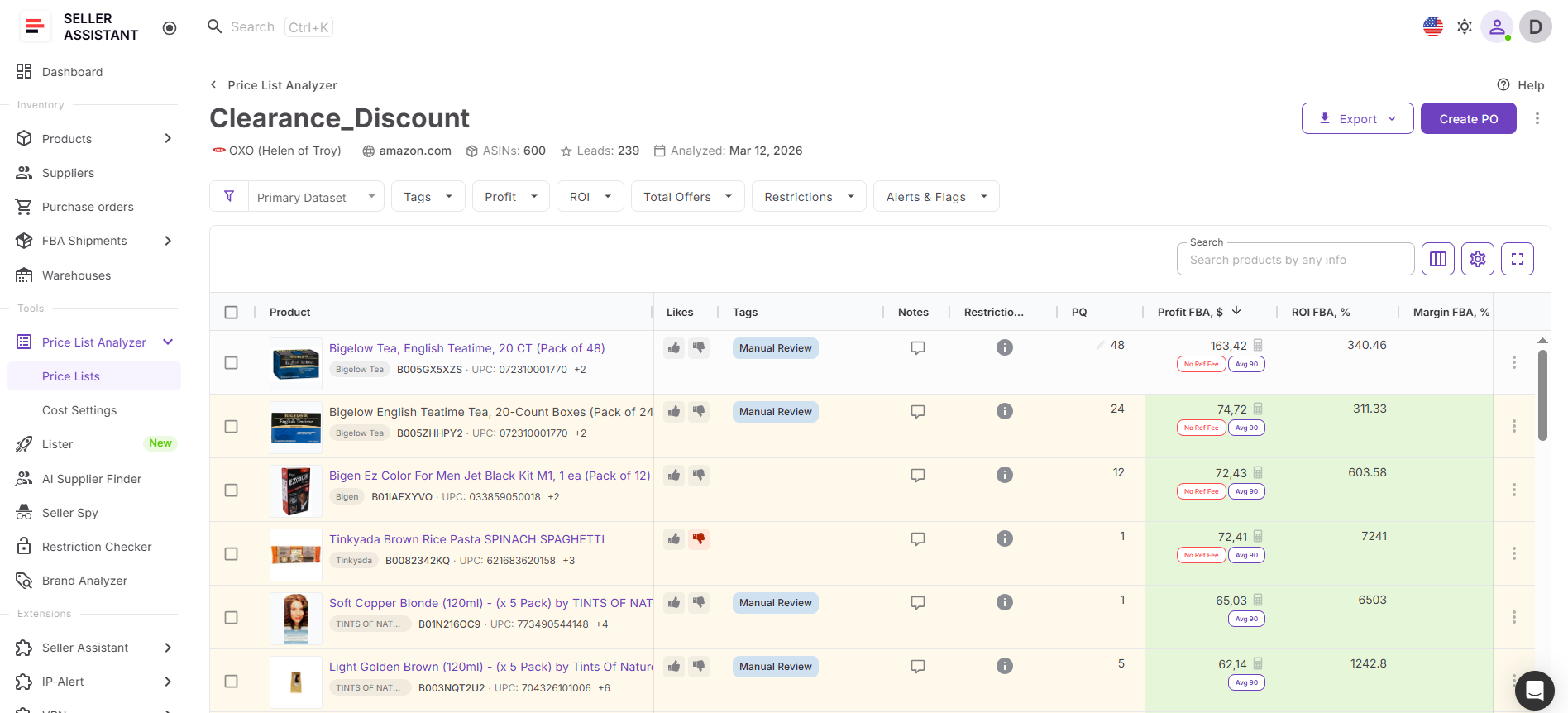
What you can do with Price List Analyzer
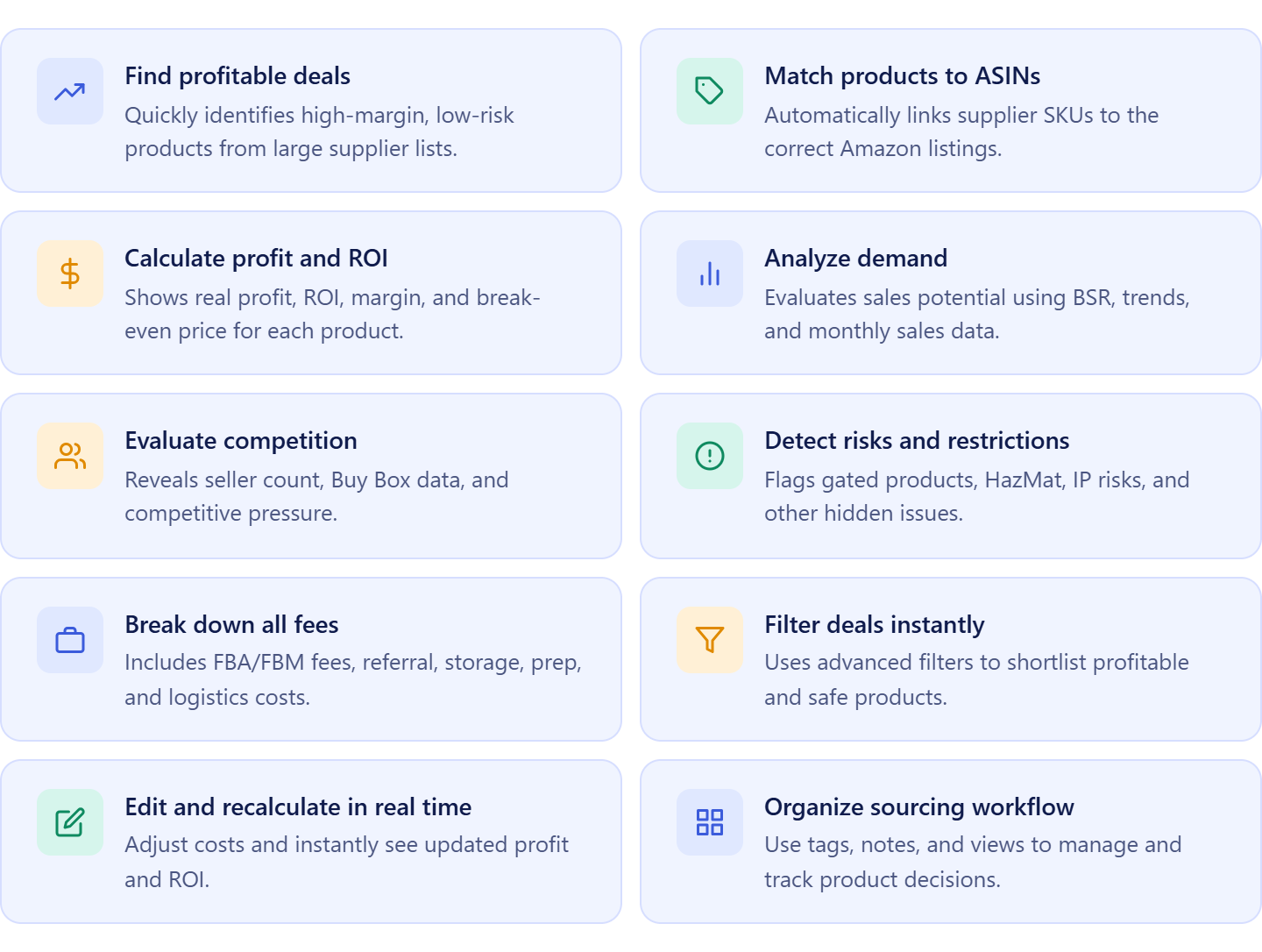
Price List Analyzer gives you a structured way to process supplier catalogs without manual product checks or scattered tools. It turns bulk supplier data into organized, decision-ready insights, helping you evaluate profitability, demand, competition, and risks in one workflow so every sourcing decision follows consistent criteria.
- Analyze entire supplier lists at once
Upload bulk price lists and evaluate hundreds or thousands of products in minutes.
- Match products to Amazon listings
Automatically link supplier SKUs to correct ASINs without manual search.
- Calculate profit and ROI instantly
See margin, ROI, break-even price, and max COG with built-in fee calculations.
- Evaluate demand and sales performance
Use BSR, sales estimates, and trends to identify products with consistent demand.
- Analyze competition and Buy Box
Check seller count, Buy Box price, and competition intensity across listings.
- Detect restrictions and risks early
Flag gated products, HazMat, IP risks, and other issues before sourcing.
- Filter products by your criteria
Apply filters for profit, ROI, demand, competition, and risk to find the best deals.
- Adjust costs and recalculate in real time
Edit COG, shipping, and prep costs to instantly validate product profitability.
- Identify brand-level patterns
Group products by brand to spot competition, pricing, and demand trends.
- Shortlist and organize products
Use tags, notes, and likes to track decisions and build sourcing lists.
- Export analyzed data
Download full or filtered results to share, review, or continue analysis externally.
How Price List Analyzer fits into your sourcing workflow
Price List Analyzer turns supplier sourcing into a structured, repeatable process inside Seller Assistant. You upload a supplier list, map key fields, and start analysis, which automatically enriches each product with Amazon data and calculations.
Products can be reviewed directly in the table while analysis is still running. You filter results, adjust assumptions, and identify viable deals without switching tools. When needed, you can launch Brand Analyzer directly from the price list to validate brands before going deeper.
Because Price List Analyzer connects with tools like Product Database, Brand Analyzer, AI Supplier Finder, Suppliers Database, Bulk Restriction Checker, Lister, Warehouses Database, Purchase Orders Module, and FBA Shipments, your data flows through the entire workflow. This lets you move from supplier list to product validation and purchasing without re-entering information, while keeping sourcing fast, accurate, and scalable.
How to Turn a Supplier Price List into Brand Decisions
The process starts with your supplier price list. After receiving a catalog, you upload it into Price List Analyzer, where products are matched to Amazon ASINs and enriched with profitability, demand, competition, and risk data. At this stage, your raw supplier data becomes a structured dataset, but in a traditional workflow, you would still need to analyze products and brands separately.
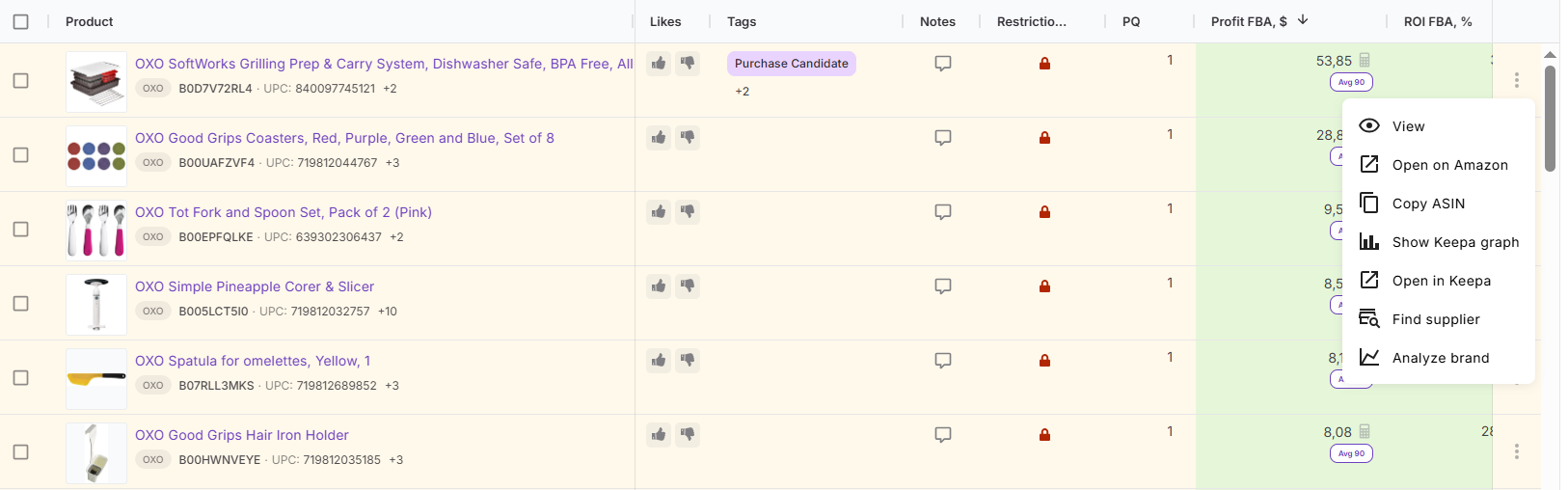
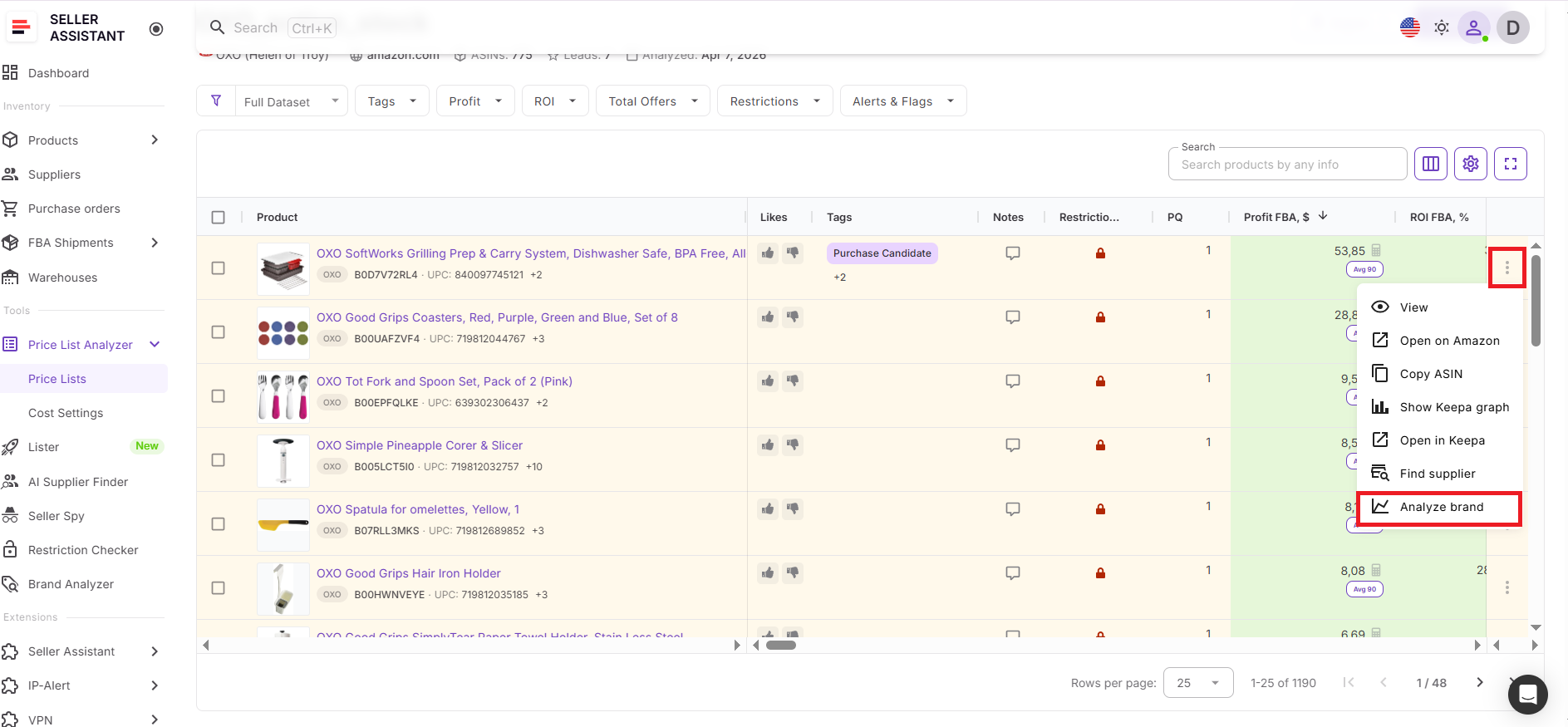
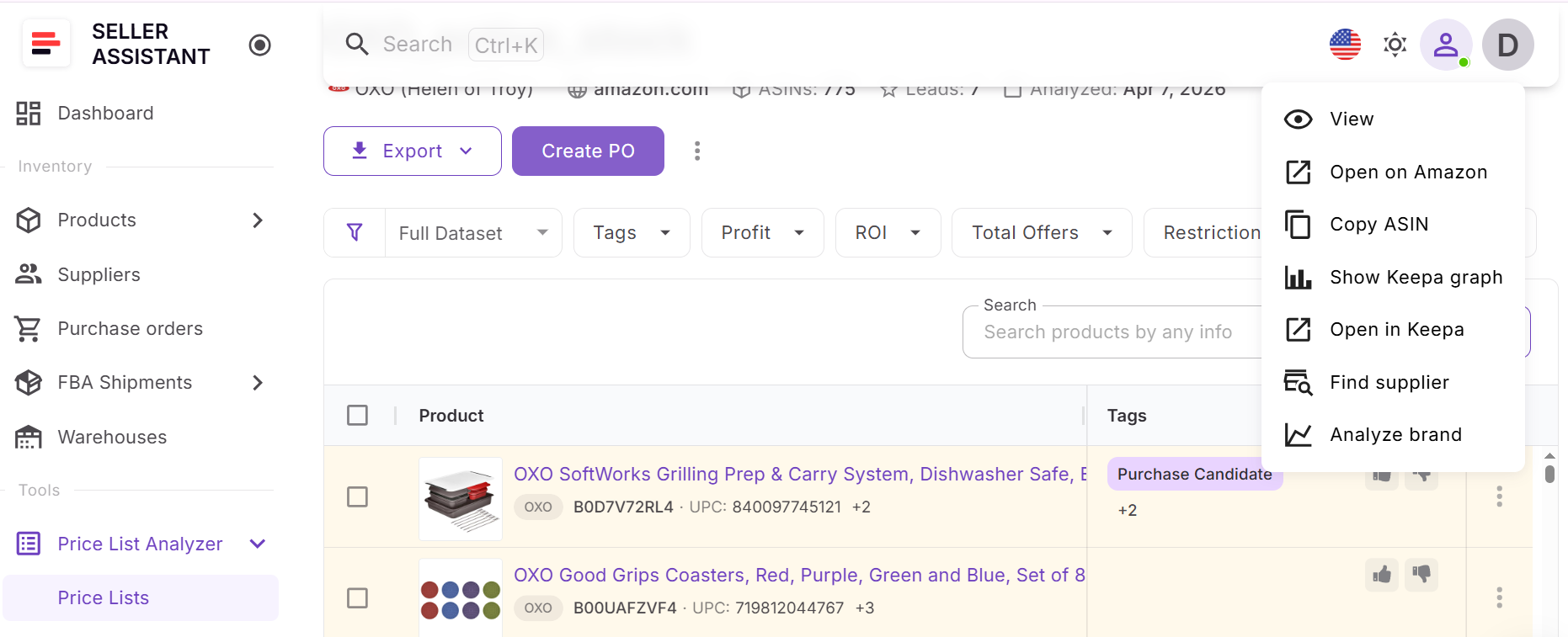
Instead of switching tools, you use Brand Analyzer directly from your analyzed price list. For any product, open the three-dot menu, select analyze brand, and launch a full brand-level evaluation instantly. You don’t need to search for the brand manually or rebuild your research – the system carries context from the price list into brand analysis.
Once validated, you move from supplier data to clear sourcing decisions in one flow. This keeps your analysis consistent, eliminates wasted product checks on weak brands, and allows you to focus only on brands that support profitable, scalable sourcing.
How to Analyze a Brand From a Supplier Price List Step by Step
Step 1. Upload your supplier price list
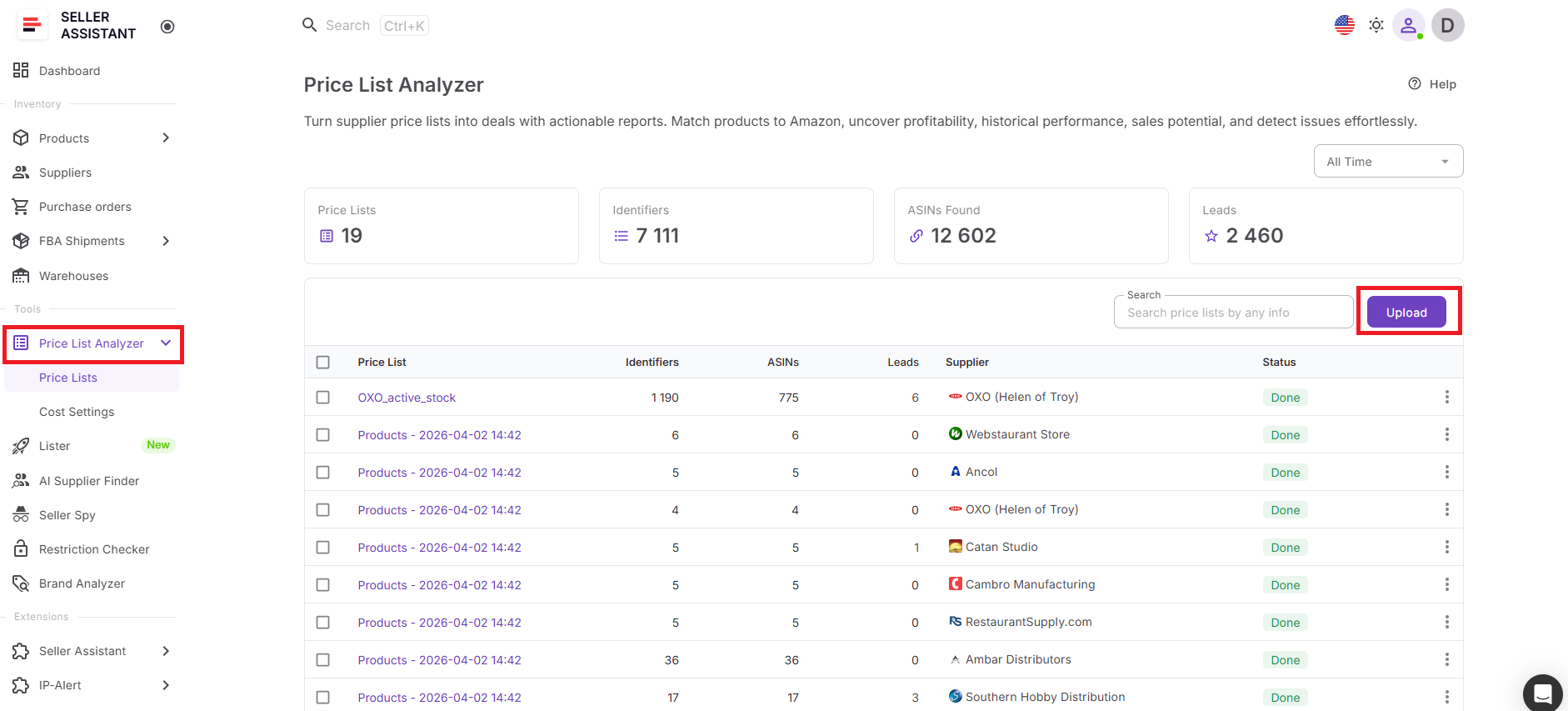
Start by uploading your supplier file to Seller Assistant’s Price List Analyzer. Map the required fields, such as UPC, EAN, or ASIN and cost of goods, so the system can process the file correctly. Once the analysis starts, the tool matches products to Amazon listings and adds key data like profitability, demand, competition, and risks.
Step 2. Review the analyzed product list
After processing begins, open the analyzed price list and review the product table. At this stage, you can already see how products are distributed across different brands and start spotting patterns in competition, pricing, and product quality.
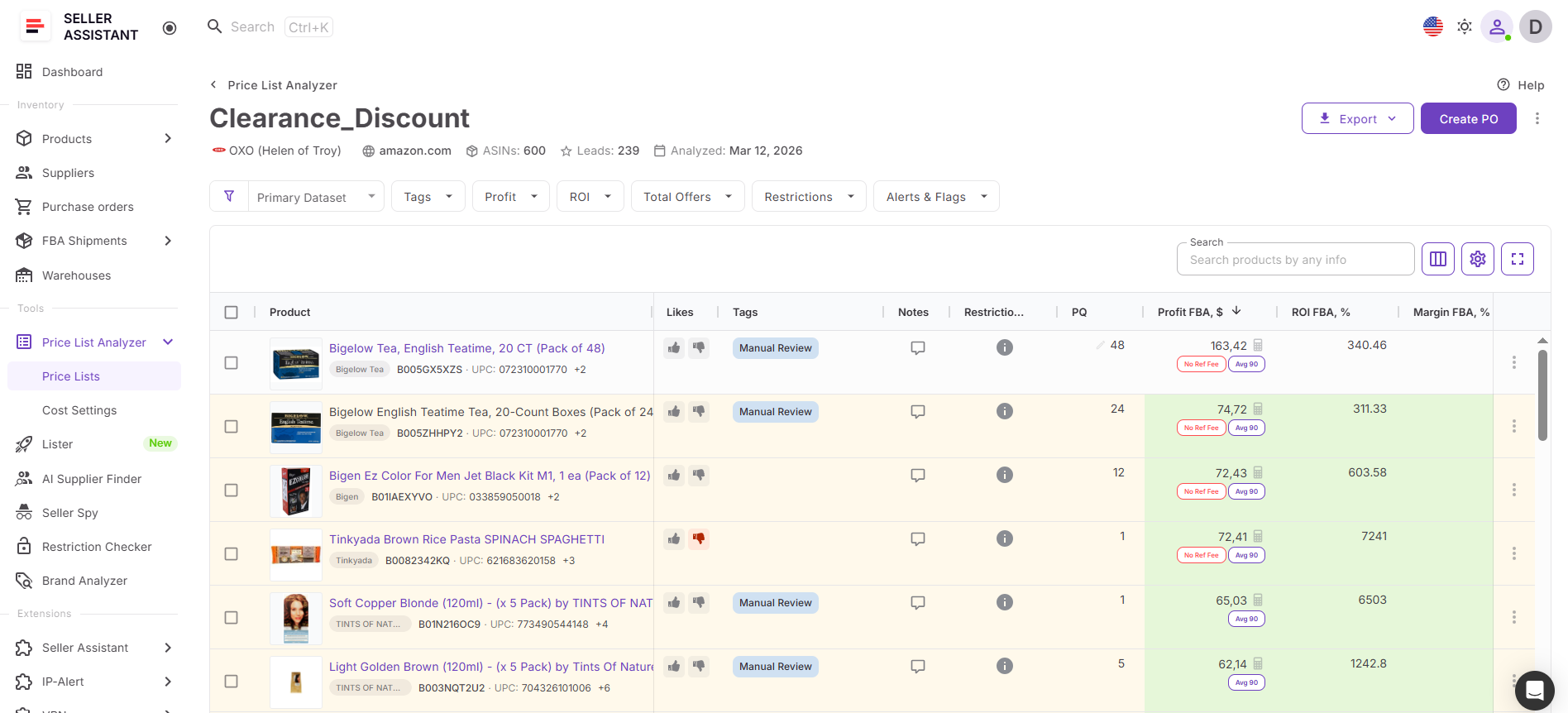
Step 3. Open brand analysis from a product row
To analyze a specific brand, go to any product in the analyzed price list and click the three-dot menu on the right side of the row. In the dropdown, select Analyze brand. This opens Brand Analyzer for the brand linked to that product, without requiring a separate search.
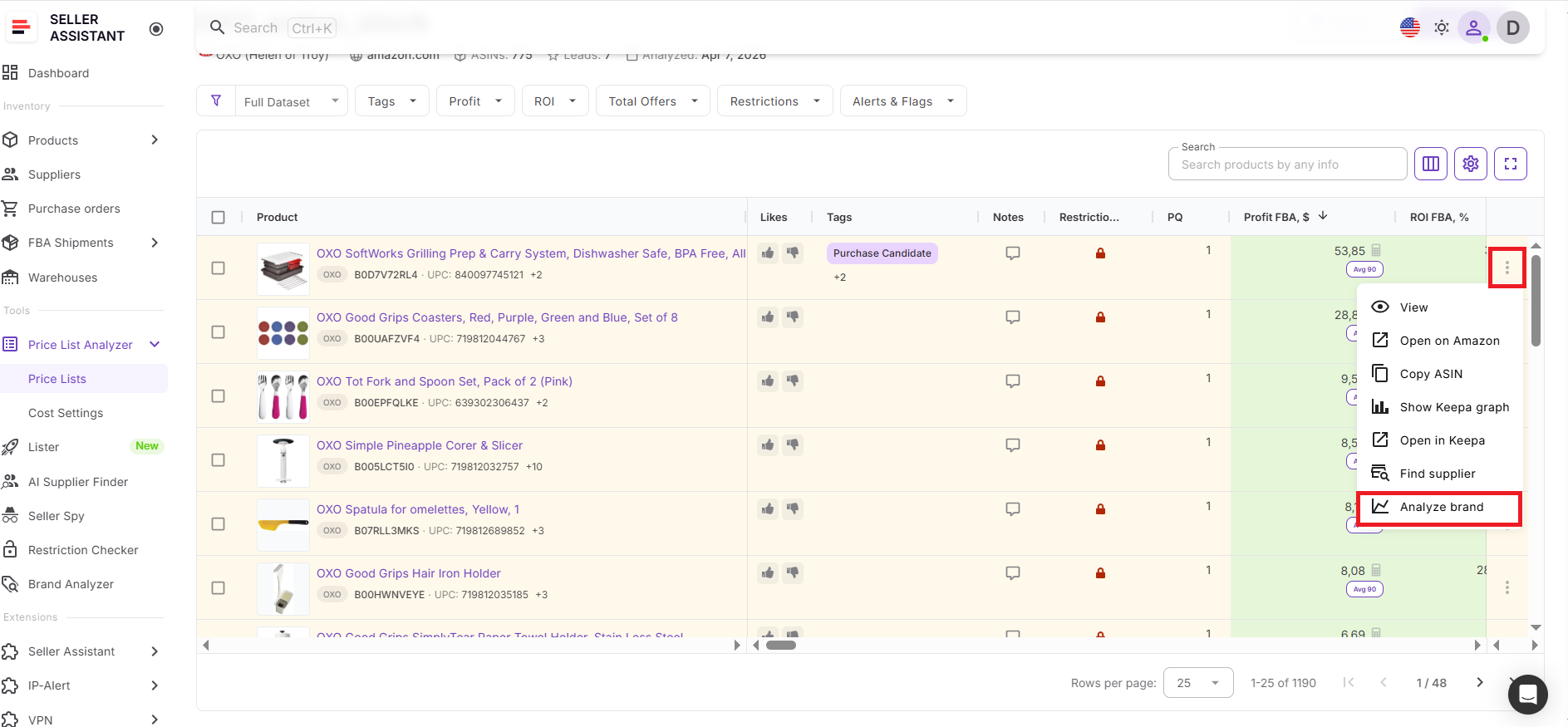
Step 4. Evaluate the brand-level metrics
In Brand Analyzer, review the metrics that show whether the brand is worth sourcing. Focus on estimated monthly revenue, catalog size, average seller count, Amazon Buy Box share, Buy Box pricing, ratings, and review volume. These signals help you understand if the brand is scalable, competitive, and reseller-friendly.
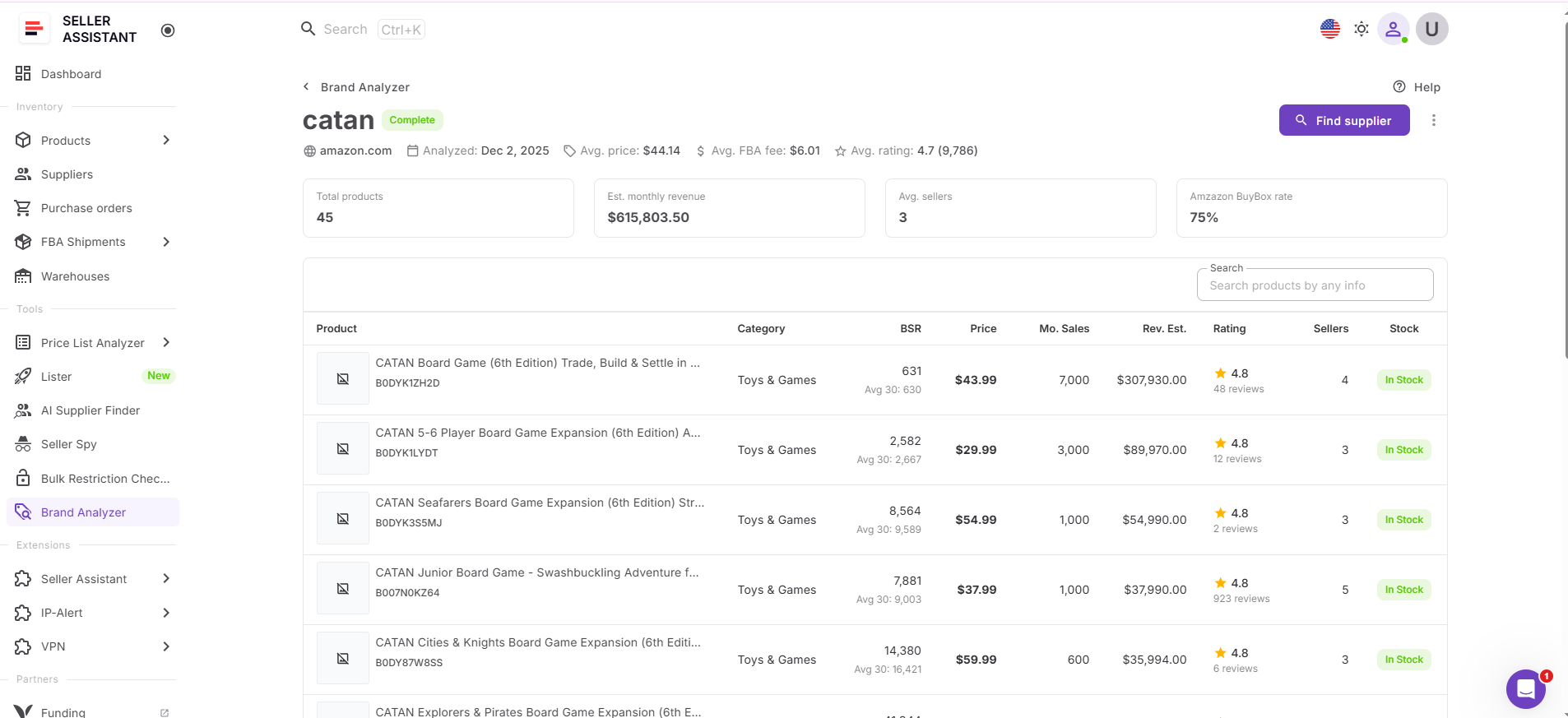
Step 5. Check the full product catalog inside the brand
Open the Brand Details Page to review the products that belong to the brand. You can search, sort columns, and inspect the catalog directly inside the tool. This helps you confirm whether the brand has enough depth, stable demand, and multiple viable products instead of just one attractive ASIN.
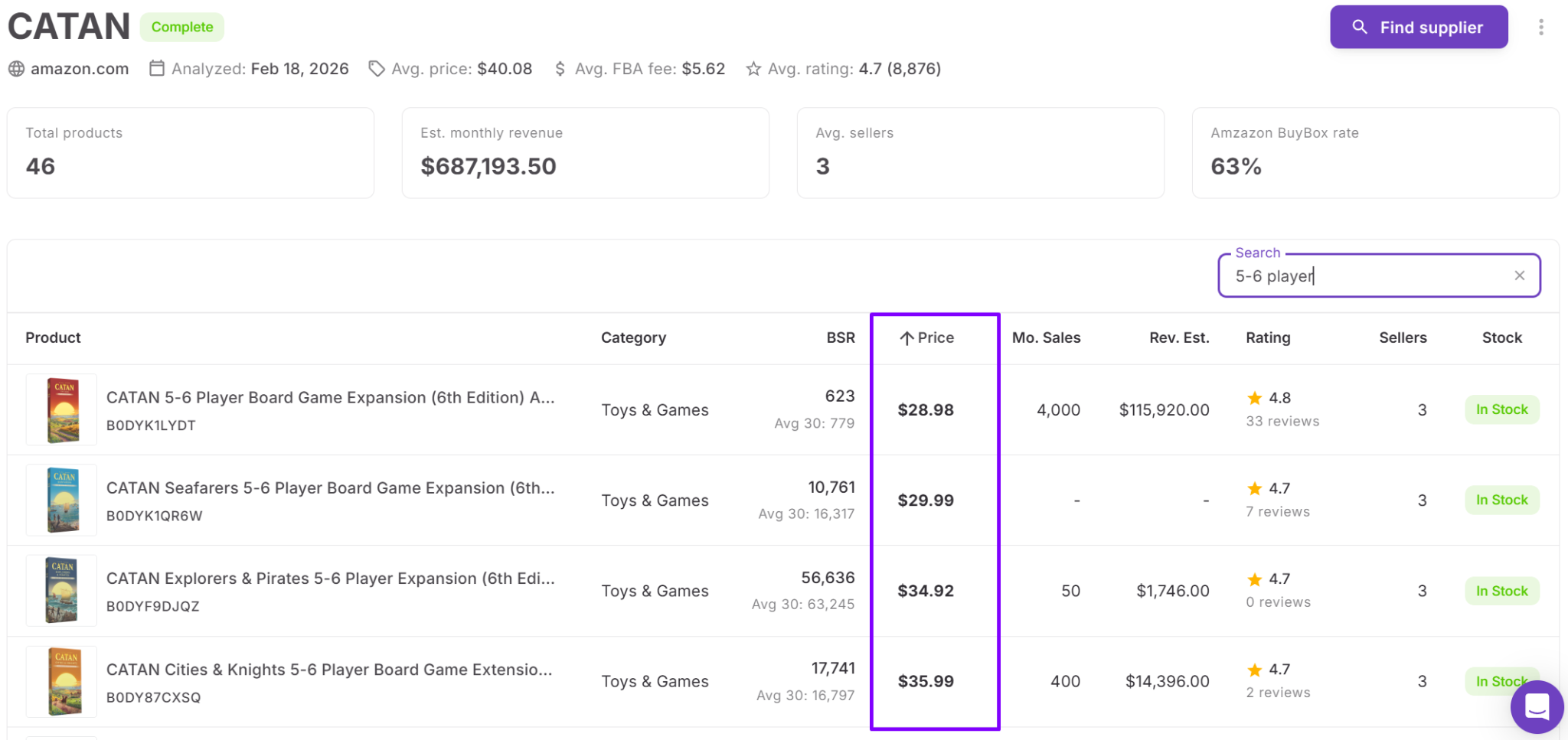
Step 6. Decide whether to keep or reject the brand
Use the brand-level findings to decide how to proceed. If the brand is oversaturated, dominated by Amazon, too small, or weak in demand, you can stop early and avoid wasting time on product-level checks. If the brand looks strong, continue filtering products in Price List Analyzer and move forward with sourcing.
FAQ
Can I analyze a brand without a supplier price list?
Yes, you can analyze any brand directly using Brand Analyzer by entering the brand name. However, analyzing brands from a supplier list gives more context because you see actual products and costs you can source.
What makes a brand worth analyzing further?
A strong brand typically shows stable demand, moderate competition, and limited Amazon Buy Box dominance. If these signals look healthy across multiple products, the brand is worth deeper product-level analysis.
How do I know if a brand is too competitive?
Check average seller count and Amazon Buy Box share across the catalog. High seller density or strong Amazon presence usually means tighter margins and harder competition.
Should I analyze brand before or after filtering products?
You should do both, but starting with brand analysis helps you avoid wasting time on weak brands. Then you can refine your selection by filtering profitable products within validated brands.
Can this workflow be used for online arbitrage and dropshipping?
Yes, the same process applies as long as you have bulk product data to analyze. Brand-level validation helps reduce risk and improve sourcing decisions across all reselling models.
Final Thoughts
Analyzing brands from supplier price lists changes how you approach Amazon sourcing. Instead of reacting to individual products, you build a system where brands are qualified first and only the best opportunities move forward. This reduces wasted effort, helps you avoid hidden risks, and improves the quality of every sourcing decision.
With Seller Assistant, this process becomes part of a connected workflow. You move from bulk supplier data to brand validation and product selection without switching tools or repeating work. As your business grows, this structured approach allows you to scale sourcing faster, stay consistent, and focus only on brands that support long-term profitability.
Seller Assistant automates and connects every stage of your Amazon wholesale and arbitrage workflow. It brings together in one platform: workflow management tools – Purchase Orders Module, Suppliers Database, Warehouses Database, FBA Shipments, bulk research & sourcing tools – Price List Analyzer, Bulk Restriction Checker, Sourcing AI, Brand Analyzer, Seller Spy, Chrome extensions – Seller Assistant Browser Extension, IP-Alert Extension, and built-in VPN by Seller Assistant, and integrations & team access features – seamless API connectivity, integrations with Zapier, Airtable, and Make, and Virtual Assistant Accounts.