


Selling without inventory is a great way to start on Amazon or grow your existing business. This approach offers many benefits, such as no need to invest in inventory or warehouse space and the ability to scale your sales more efficiently.
In this post, we will discuss the methods of selling on Amazon without inventory, the pros and cons of each method, and provide tips to reach success with all of them.
Why Selling on Amazon Without Inventory?
If you’re considering selling on Amazon, selling without inventory is a great option. You might want to sell on Amazon without inventory for many reasons.
Most often, sellers prefer to sell on Amazon without inventory because they would like to avoid the hassle of inventory management, which can be a challenging task. Additionally, this approach involves lower startup costs since you don’t have to invest in inventory or warehouse space.
To sell without inventory, you can use several methods, such as Amazon FBA, dropshipping, using 3PL company, and selling digital products. The method you will prefer depends on your custom needs and goals. Dropshipping may be a good option if you are new to selling on Amazon. If you want to sell products that are not physical, selling digital products is the best choice.
Related: Seller Assistant Extension Review
Seller Assistant — the Ultimate Tool for Amazon Online Arbitrage
Amazon FBA
Amazon FBA (Fulfillment by Amazon) is a method of selling where Amazon stores, packages, and ships your products for you. That is a popular option for sellers who want to focus on sales without dealing with fulfillment and logistics.
Amazon FBA allows sellers to store their products in Amazon’s warehouses and have Amazon handle the shipping and customer service for them. That can be an excellent way for sellers to save time and money and improve their customer experience.
Related: Amazon FBA vs Dropshipping: which model to choose for a successful business
Online Arbitrage vs Dropshipping: Which Business Model Is Best For You?
Pros and cons of Amazon FBA
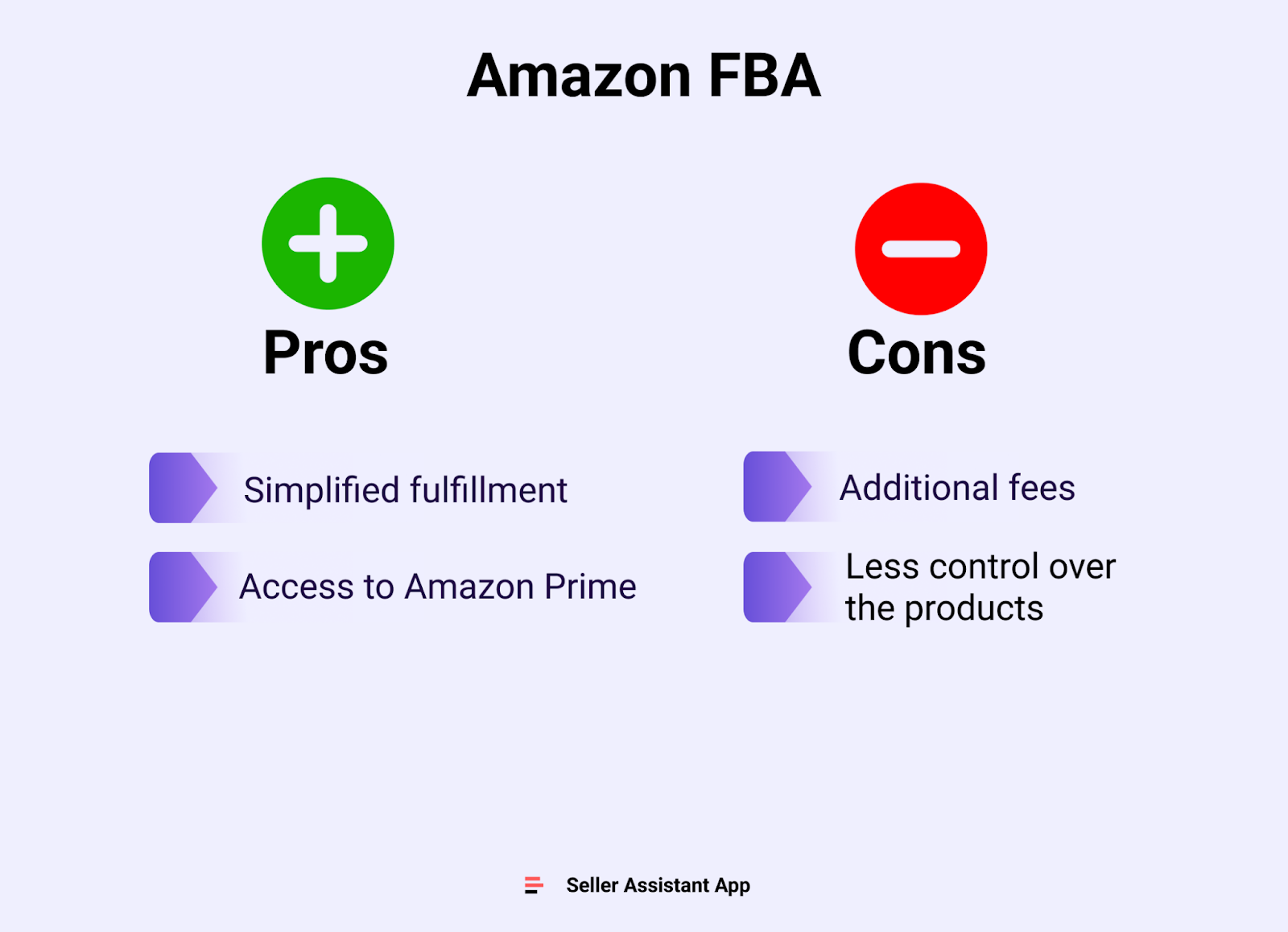
FBA can be an efficient and convenient method to sell products on Amazon. However, it is important to weigh the pros and cons carefully before deciding whether or not to use the service.
Pros of Amazon FBA
Simplified fulfillment
Amazon takes care of everything for you, from storing your products to shipping them to your customers. That can save you a lot of time and money, especially if you are selling a large volume of products.
Access to Amazon Prime
The products enrolled in FBA are eligible for Amazon Prime, meaning they can be shipped for free two-day shipping to Prime members. That can give your products a competitive edge and attract more customers.
Cons of Amazon FBA
Cost
There are fees associated with using Amazon FBA, such as storage fees, fulfillment fees, and long-term storage fees. These fees can add up, so it is important to factor them into your overall costs when deciding whether or not to use FBA.
Less control
When you use Amazon FBA, you give up some control over your products. Amazon will handle the shipping and customer service, but you will not be able to control how your products are packaged or handled by Amazon employees.
Related: 500+ USA Suppliers For Online Arbitrage And Dropshipping On Amazon
Best Product Ideas for Amazon FBA in 2024
Pros and cons of Amazon FBA
Related: 13 Rules of OA Product Research Tested by Pain and Gain of Amazon Seller
Amazon Online Arbitrage: How to Make Money
Tips for Amazon FBA
When using Amazon FBA, it’s essential to follow the tips below.
Consider the type of products you sell
Some products can be a better fit for FBA compared to others. For example, perishable, bulky, or heavy products may not fit FBA well.
Accurately calculate FBA fees
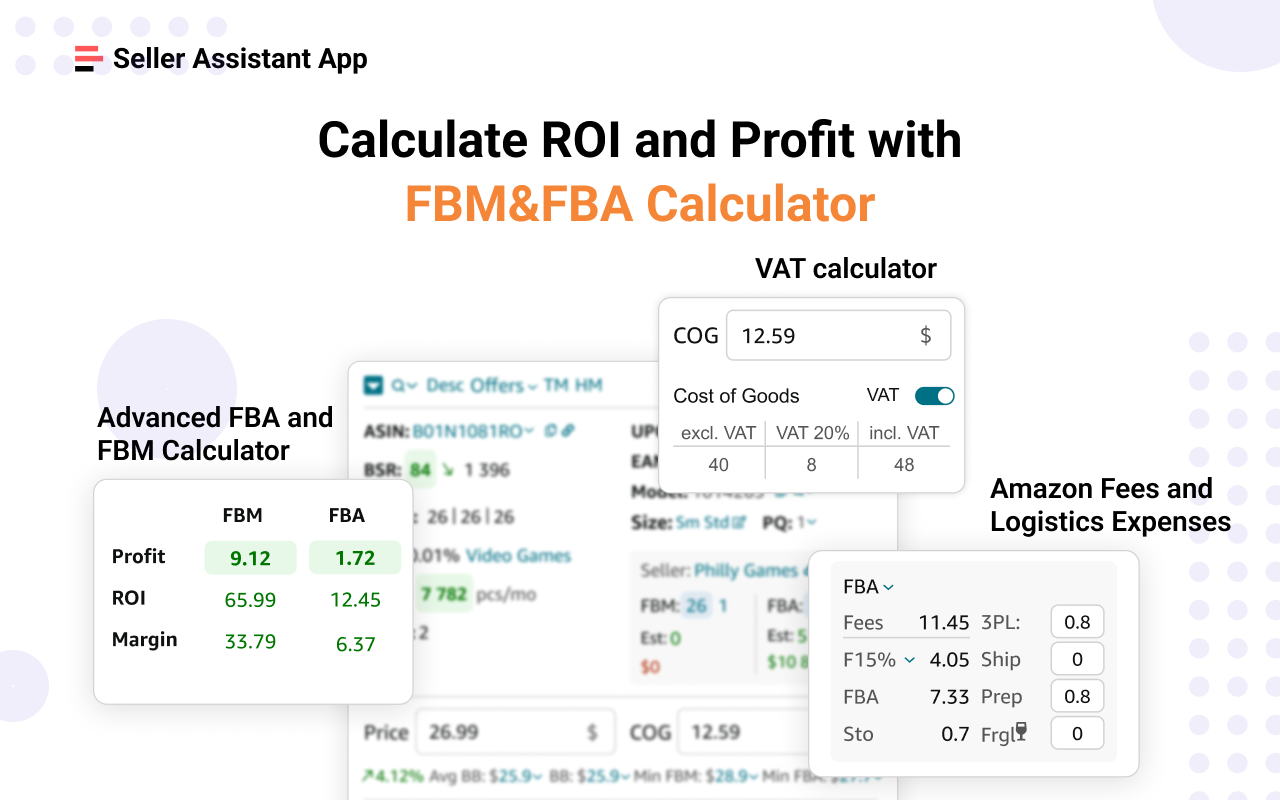
The cost of Amazon FBA can be high. It is important to make sure that you can afford the fees before you start using the service. You can use Seller Assistant’s FBM&FBA profit calculator to accurately calculate all your costs. This tool allows Amazon sellers to calculate all FBA costs, including Сost of Goods, Amazon referral fees, FBA fees, monthly storage costs, and third-party logistics costs. It conveniently shows all fees, ROI, profit margin, and other metrics right on the Amazon product and search pages.
Related: Seller Assistant Extension Review
Seller Assistant’s FBM&FBA profit calculator
Related: The Most Important Amazon Seller Metrics for FBA Businesses
5 Strategies To Increase Amazon FBA Sales
Dropshipping
Dropshipping is a business model where the seller doesn’t keep the products it sells in stock. Instead, when a customer places an order, the seller purchases the item from a third-party supplier and has it shipped directly to the customer. That means the seller never touches and handles the physical product.
Dropshipping can be a good option for businesses that want to start selling online without having to invest in inventory or warehouse space. Also, it can be an excellent way to test new products or markets without having to commit to a significant investment.
Pros and Cons of Dropshipping
Pros and cons of dropshipping
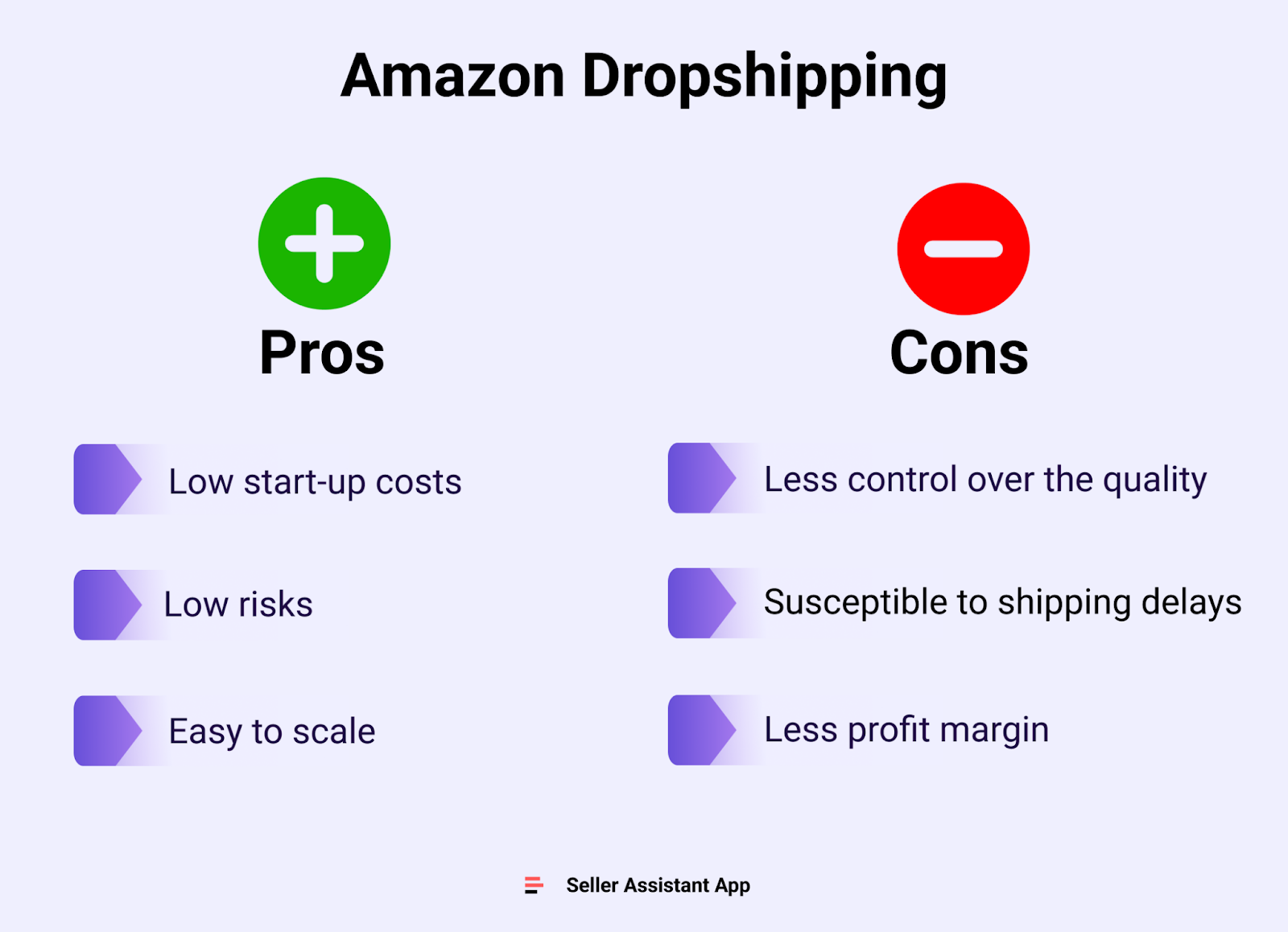
Dropshipping can be a good business model for people who want to start selling on Amazon. However, it is crucial to be aware of the risks and challenges involved before you get started.
Pros of dropshipping
Easy and low-cost
Dropshipping is a relatively easy business model to start, even if you don’t have any prior experience. Also, you don’t need to invest in inventory or warehouse space.
No need to manage inventory
You don’t need to worry about storing or shipping products because your supplier will do it for you.
Cons of dropshipping
Low profit margins
Dropshipping profit margins can be low because you typically only make a small markup on the products you sell.
Limited control
You don’t have control over the shipping or customer service experience, which can impact your customer satisfaction ratings. Also, you depend on your suppliers to deliver the products on time and in good condition. If they fail to do so, you will be responsible for dealing with customer complaints.
Related: What Are the Funding Options for Amazon Sellers?
Do You Need a Business License to Sell on Amazon?
Tips for dropshipping
Below, you can find some essential tips for dropshippers.
Choose the right products
Not all products have equal value for dropshipping. You want to choose products that are in high demand, have a good margin, and will not create problems when you sell them. You can use a product research tool like Seller Assistant to help you find the right products.
Seller Assistant immediately shows you if a product is suitable for dropshipping. It displays product profit, ROI, margin, IP complaints, restrictions, and alerts, their type and date. You can also quickly save results to Google Sheets.
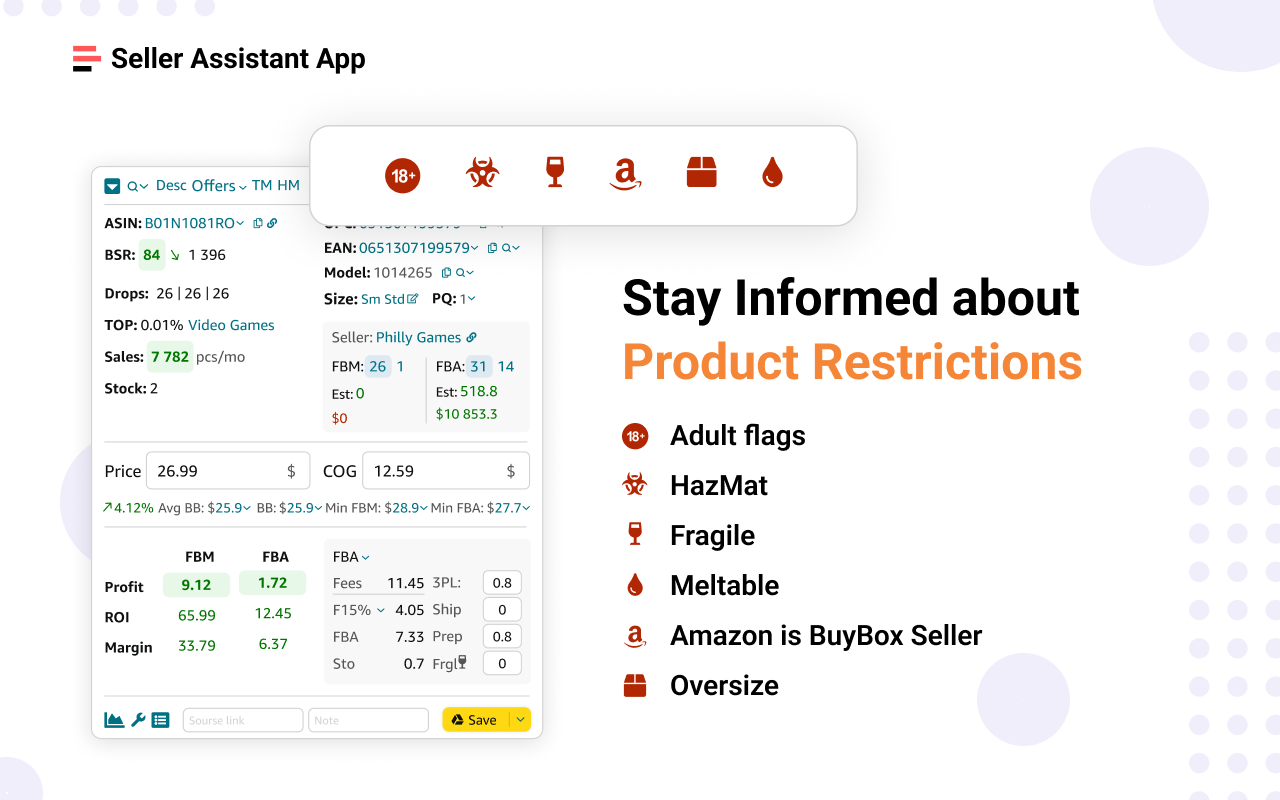
Seller Assistant immediately shows you if a product is suitable for dropshiping
Find reliable suppliers
Once you choose the products you want to sell, you must find reliable suppliers. You can find suppliers on dropshipping platforms like AliExpress or Oberlo. It’s vital to verify supplier and check their reviews and references to make sure they are legitimate and reliable.
Related: Amazon Seller Compliance Documents
How to become an Amazon Top Rated Seller?
3PL Company
A 3PL company, or third-party logistics provider, is a company that provides logistics services to other businesses. These services can include warehousing, picking and packing, shipping, and returns.
For Amazon sellers, a 3PL company can be a valuable partner. There are many different 3PL companies available, so it is important to do your research and choose one that is right for your business. It is important to look at your business size, product types, and budget.
Related: Best AI Tools for Amazon Sellers
How to leverage AI to optimise your products
Pros and cons of 3PL company
The decision of whether or not to use a 3PL company is complex and depends on your business’s specific needs. If you are considering using a 3PL company, you must weigh the pros and cons carefully and choose a company that fits your business well.
Pros of 3PL company
Expertise
3PL companies have the expertise and experience to handle the logistics of your business. That can be especially beneficial for businesses that are new to Amazon or do not have the time or resources to manage their logistics operations.
Increased efficiency
A 3PL company can help you improve your efficiency by handling the logistics of your business. It minimizes hassle with inventory management and returns by providing warehousing, picking and packing, shipping services, and handling returned items. That can be especially beneficial for businesses that are growing rapidly and need to scale their operations quickly.
Cons of 3PL company
Cost
3PL services can be expensive, especially for businesses that need a lot of warehouse space or need to ship their products to many different locations.
Extra communication
It is important to have good communication with your 3PL company to ensure that your orders are being handled correctly and that your customers are receiving the best possible service.
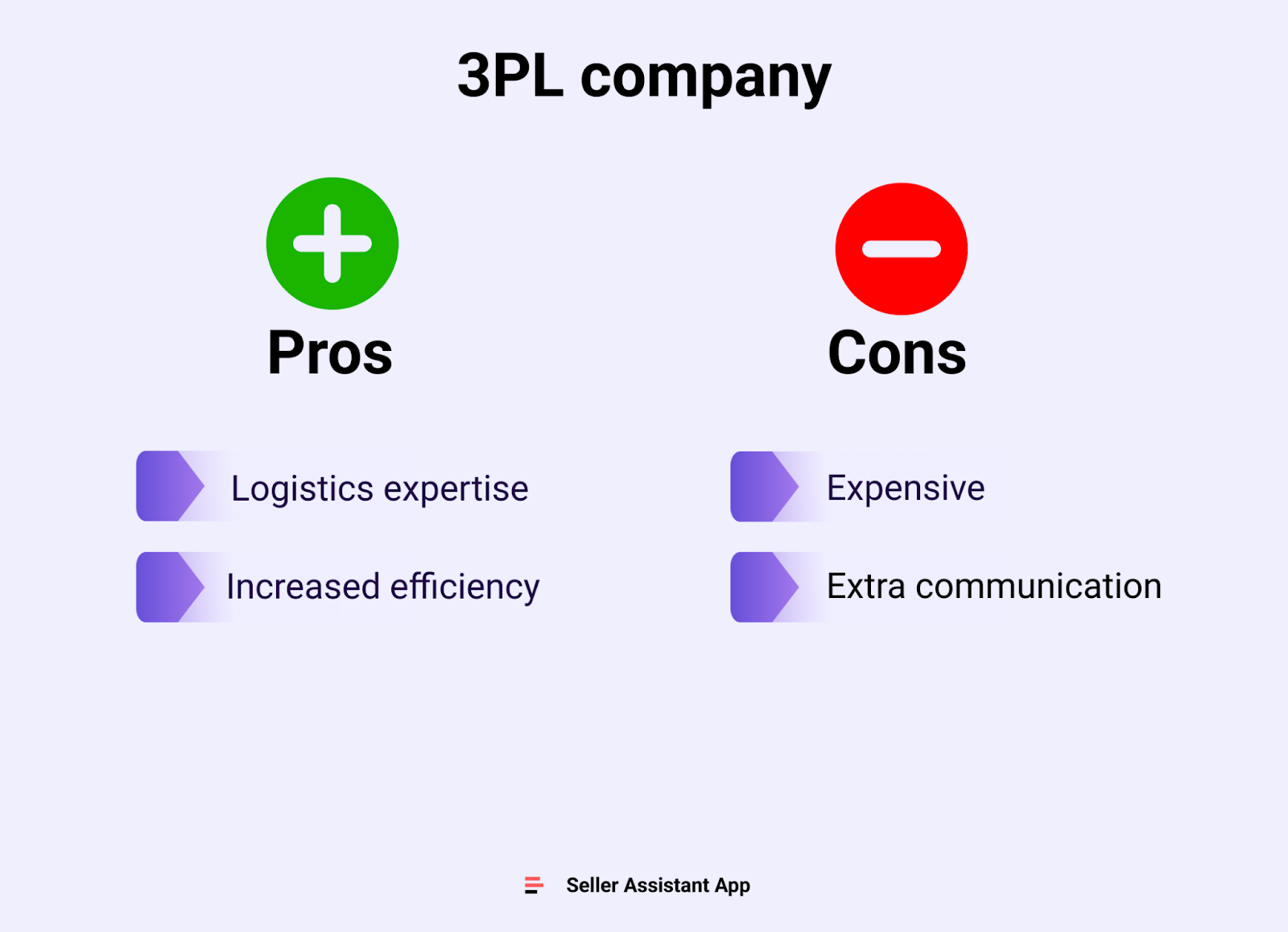
Pros and cons of 3PL company
Related: 15 Best Amazon Online Arbitrage Tools for 2023
Amazon Seller Central: Complete Guide
Tips for using 3PL company
Below, you can find some tips to get the most out of using a 3PL company.
Choose a 3PL near Amazon fulfillment center
That will help reduce shipping costs and improve delivery times.
Choose a 3PL with a good service track record
Good references prove that your customers have a positive experience receiving their orders. Also, choose a 3PL company willing to work with you to customize their services. That will help ensure you get the best possible solution for your business.
Related: How to Sell on Amazon as an Individual Seller - Complete Guide
Amazon Global Selling: How to Sell Internationally
Selling Digital Products
Selling digital products on Amazon is a great way to start an online business or to grow your existing business. Digital products, such as ebooks, software, or music, are not physical. You can sell digital products on Amazon without worrying about inventory or shipping.
There are many digital products you can sell on Amazon. A few examples include ebooks that you can sell via Amazon’s Kindle Direct Publishing program, t-shirts or mug designs with Merch by Amazon, your services on Mechanical Turk, or your music on Amazon with TuneCore.
Pros and cons of selling digital products
Selling digital products can be a great way to start a business or monetize your skills on Amazon. However, it is vital to understand the challenges of selling digital products before you start.
Pros of selling digital products
No physical products to manage
There are no physical products to manage, which can reduce your risk of loss or damage. There’s no need for you to worry about storing or shipping inventory.
Easy to create and distribute
Digital products are easy to create and distribute, which can save you time and money.
Cons of selling digital products
Competition
There is a lot of competition in the digital product market, so it can be challenging to stand out.
Digital product piracy
Digital products can be easily pirated, which can hurt your sales.
Related: Amazon Product Hunting Tips in 2024
2024 Important Dates Amazon FBA: Key Dates for Amazon Sellers
Tips for selling digital products
By following the tips below, you can increase your chances of success in selling digital products.
Choose the right product
The key step is to choose the right product to sell. You need to find a product you are passionate about and believe people will want to buy. You should also make sure that your product is of high quality and that it is unique.
Set a competitive price
You need to set a competitive price for your digital products. That means you shouldn’t price your products too high, but also it mustn’t be too low. You should research to see what other people are charging for similar products.
Related: 7 Amazon Product Research Tactics You Need in 2024
5 Ways to Find Amazon Online Arbitrage Leads
FAQ
Can I create a listing on Amazon without inventory?
Yes, you can create a listing and sell on Amazon without inventory. The most popular methods you can use are Amazon FBA, dropshipping, using 3PL company, and selling digital products.
How to make money on Amazon without products?
Affiliate marketing and Amazon services are the ways to make money on Amazon without products. Affiliate marketing allows you to promote other people’s products on Amazon and earn a commission on each sale. You can offer Amazon services to Amazon sellers, such as product photography, listing optimization, or customer service.
Is dropshipping 100% free?
Amazon dropshipping is not free; there are fees involved. The fees depend on your account type, product category, fulfillment method, and other criteria.
What is the best dropshipping research tool?
The best dropshipping research tool is Seller Assistant. This effective and convenient product research extension allows you to see all essential product parameters at a glance and estimate if it is suitable for selling.
Final Thoughts
In conclusion, selling on Amazon without inventory is a low-cost business model that can be scalable and profitable. However, it is important to be aware of the challenges involved.
If you consider selling on Amazon without inventory, you must do your research and choose a method that is right for you. There are several different methods available, so you can select one of those described in our post to fit your budget and needs.
With any of these methods, finding the right product to sell is important. Seller Assistant Аpp is the best tool to help you. This product research extension highlights all necessary product metrics and the profit you will get. It also shows if a product has any restrictions or has created problems in the process of sales. It unifies an FBM&FBA profit calculator, Quick View, Stock Checker, and Restrictions Checker in one tool.