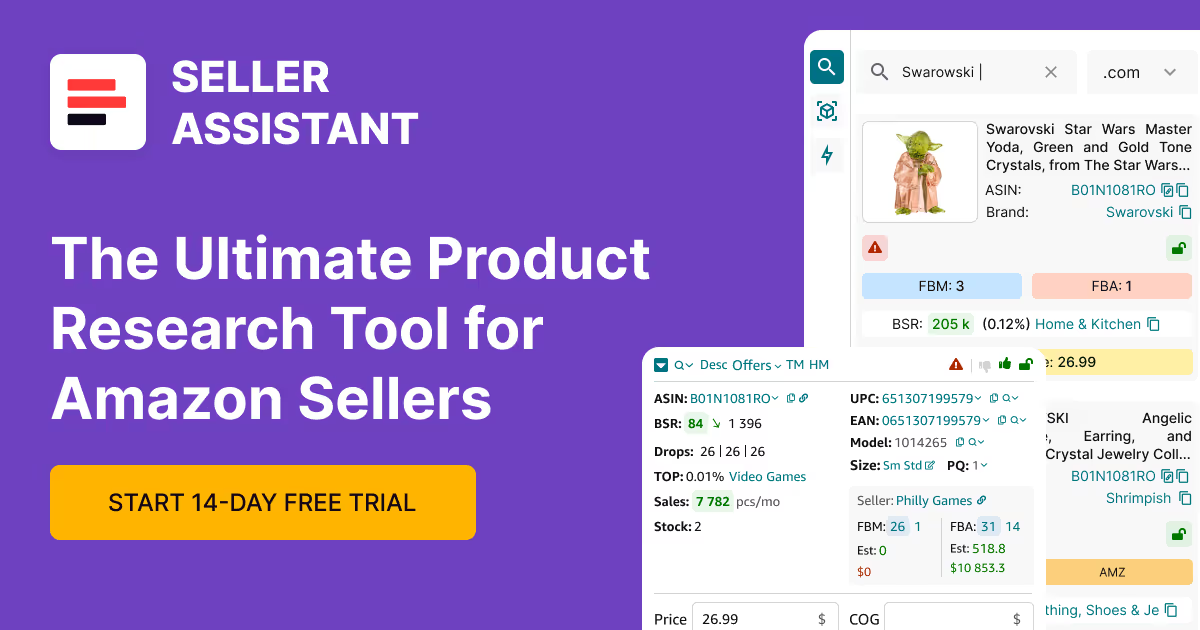



Building a purchase order from scratch – picking a supplier, adding products one by one, entering quantities and costs, confirming a warehouse – takes several screens even when you already know exactly what you want to order.
Seller Assistant’s Purchase Orders Module already handles supplier and warehouse data automatically; its MCP Server lets an AI assistant do the actual building – “create a purchase order for [supplier] with these products and quantities” – turning a several-step form into one message.
What Makes Even a Simple Purchase Order Slow to Create
Creating a Purchase Order is often straightforward in theory: choose a supplier, add the products you want to buy, enter quantities and costs, select the destination, and review the order. The problem is that each piece of information still has to make its way into the PO, even when the seller has already decided exactly what to purchase.
For Amazon resellers managing multiple supplier orders, these small actions add up. Creating the PO becomes a separate administrative step between making the buying decision and actually placing the order – with product searches, data entry, navigation, and repeated edits taking time without adding anything to the sourcing decision itself.
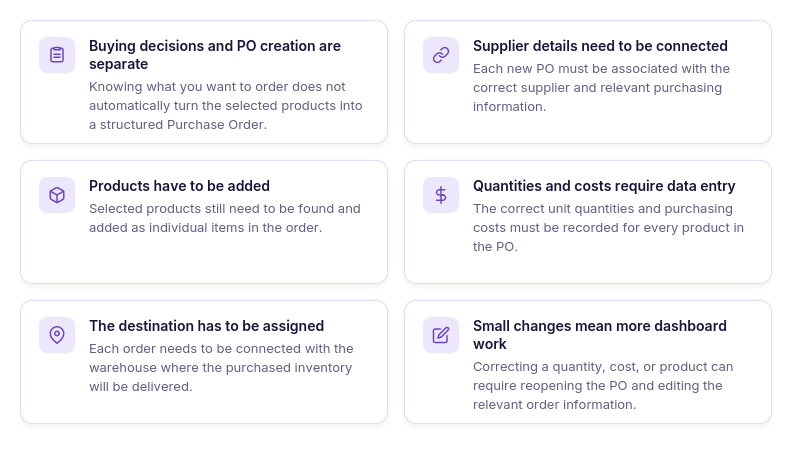
The buying decision and PO creation are separate tasks
Knowing which products you want to source does not automatically create the supplier order. The selected products still need to be transferred into a structured PO before purchasing can move forward.
Supplier details still need to be connected
Every order needs to be associated with the correct supplier and relevant purchasing information. Even when the supplier is already stored in the system, it still has to be selected for the new PO.
Products have to be added to the order
The products you have decided to purchase need to become individual items in the PO. Building an order manually means finding and adding those products before quantities and costs can be finalized.
Quantities and costs require another round of data entry
Knowing how many units to buy and what each unit costs is different from having those numbers recorded in the order. Each product needs the correct purchasing data before the PO accurately represents the planned investment.
The destination has to be assigned
The order also needs to connect with the warehouse where the inventory will be delivered. This adds another piece of operational information that must be entered or selected during PO creation.
Small changes create additional dashboard work
A quantity change, corrected unit cost, or additional product can mean reopening the order and editing the relevant line. Even simple corrections add more interaction after the initial PO has already been created.
Why a Chatbot Can Explain a PO but Can’t Build One
A general AI assistant can explain what information belongs in a purchase order, suggest how to structure supplier orders, or walk you through the steps of creating one. But that knowledge exists outside your actual purchasing workflow. The chatbot does not automatically have access to the suppliers, products, warehouses, or existing purchase orders stored in your seller account.
That distinction matters when the goal is not to learn how to create a purchase order, but to actually create one. Without access to the purchasing tools where the order lives, AI can tell you what to enter but cannot perform the operational steps itself. The seller still has to take the instructions, open the dashboard, find the relevant data, and build the order manually.
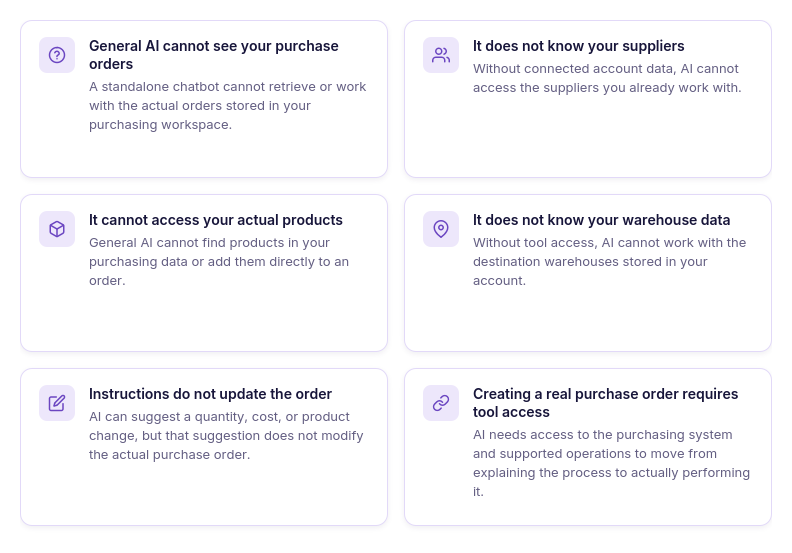
General AI cannot see your purchase orders
A standalone chatbot does not know which orders already exist in your purchasing workspace. It cannot retrieve or work with an actual purchase order unless it has access to the system where that order is stored.
It does not know your suppliers
AI may understand what supplier information a purchase order requires, but it cannot automatically access the suppliers saved in your account. Without connected data, the seller still needs to identify and select the correct supplier manually.
It cannot access your actual products
Knowing that a purchase order needs products is different from being able to find the products you want to order. A general chatbot cannot search your purchasing data or connect specified products with the actual order.
It does not know your warehouse data
The destination is part of the operational context of a purchase order. Without tool access, AI cannot work with the warehouses already stored in your Seller Assistant account.
Instructions do not update the order
A chatbot can suggest changing a quantity from 20 to 50 or correcting a product cost, but the suggestion does not modify the actual purchase order. Someone still has to open the order and make the change in the purchasing system.
Creating a real purchase order requires tool access
For AI to move from explaining purchase orders to working with them, it needs a connection to the system that stores the purchasing data and performs the supported operations. That changes the workflow from ask → get instructions → enter manually to ask → perform supported action → confirm → review.
How Seller Assistant Makes AI-Assisted Purchase Order Creation Possible
Building a purchase order with AI requires two things working together: a structured purchasing system that holds the actual order data and a way for the AI assistant to interact with that system. Seller Assistant connects these layers through Purchase Orders Module and Seller Assistant MCP Server, turning AI chat from a source of instructions into an interface for supported purchasing operations.
Purchase Orders Module provides the workspace where suppliers, warehouses, products, quantities, costs, and order details are managed. Seller Assistant MCP Server connects supported data and operations from that workspace with AI assistants such as ChatGPT and Claude. Together, they let sellers move from describing what they want to order in natural language to creating and working with the actual purchase order, while supported write actions remain subject to seller confirmation.
How Purchase Orders Module supports faster purchase order creation
Seller Assistant’s Purchase Orders Module provides a centralized workspace for creating and managing supplier orders. When a seller already knows what they want to buy, the module brings the information required to build the purchase order – supplier, warehouse, products, quantities, costs, and other order details – into one structured workflow instead of managing the order across separate spreadsheets or documents.
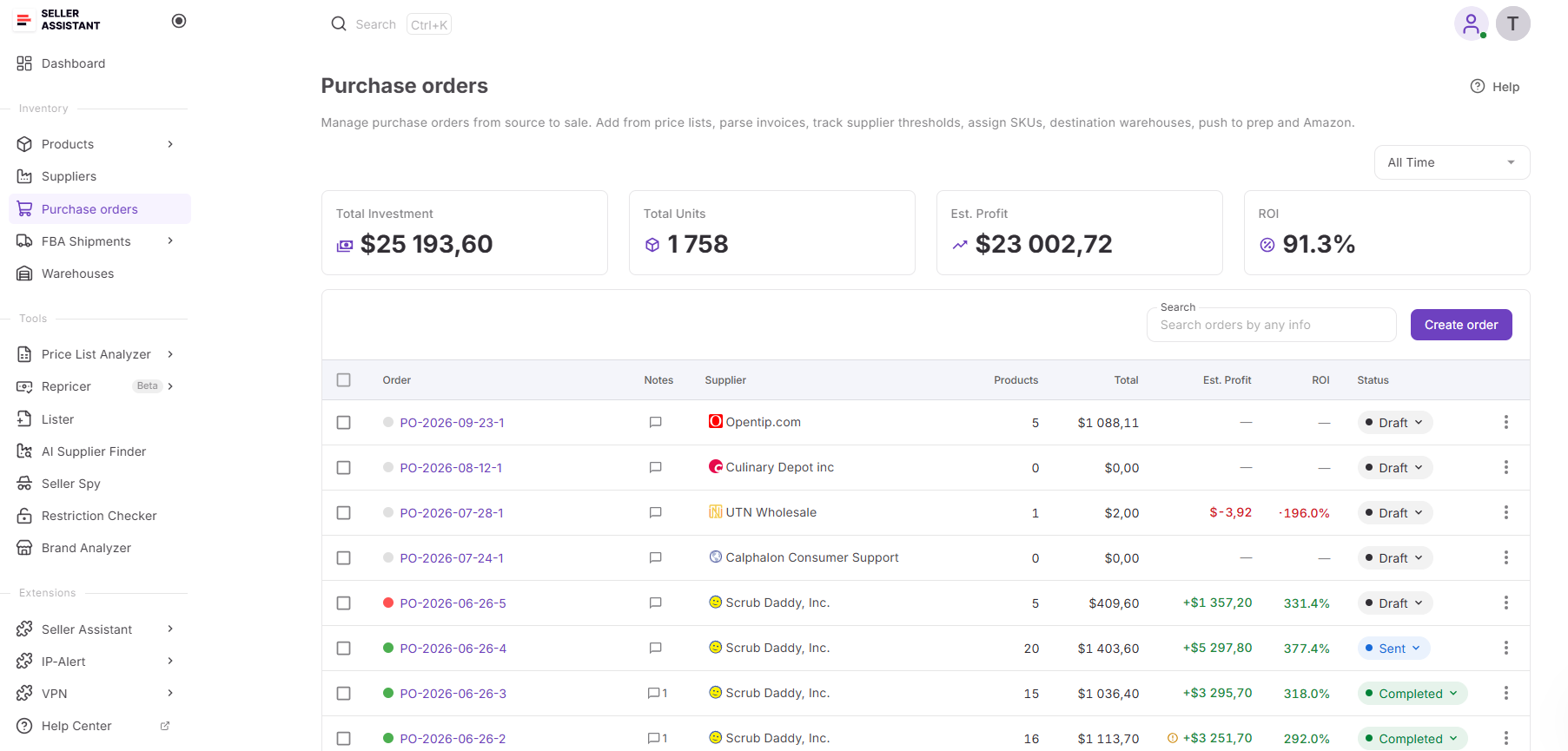
For Amazon wholesale sellers, online arbitrage sellers, and dropshippers, Purchase Orders Module handles more than the initial order setup. Sellers can add and edit products, calculate purchasing costs, review expected profitability, manage supporting documents, track order status, and keep previous purchase orders accessible from the same workspace. This structured purchasing environment is also what allows AI-assisted workflows to move beyond generating a PO template and work with actual order data.
What you can do with Purchase Orders Module
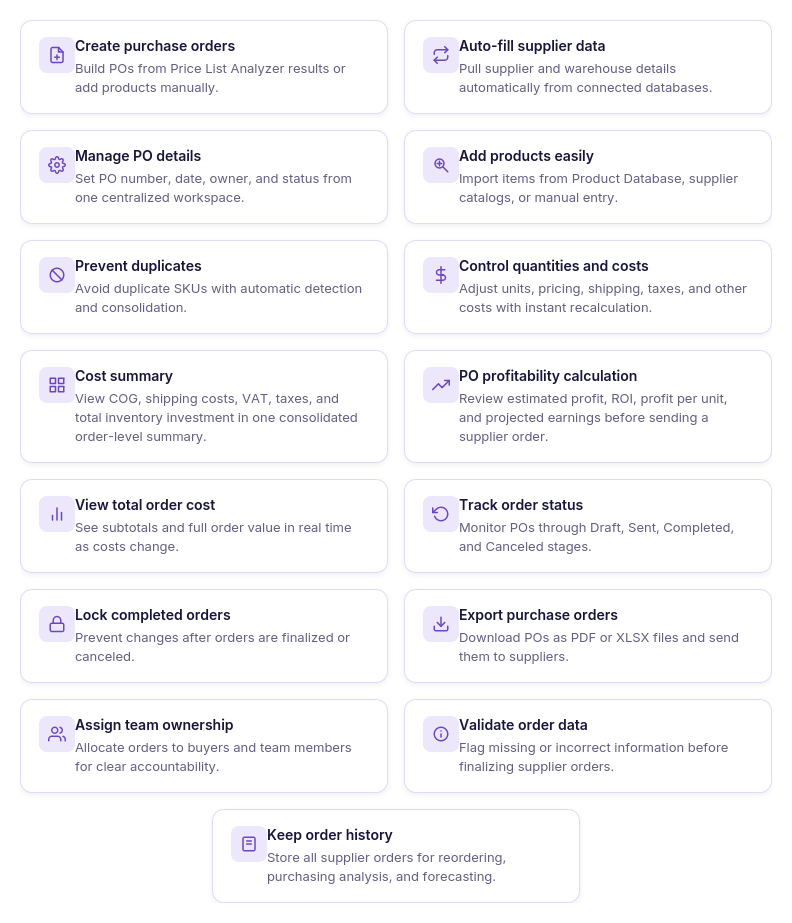
- Create purchase orders efficiently
Create structured supplier orders manually or from products already researched in Seller Assistant without rebuilding purchasing information from scratch.
- Connect suppliers and warehouses
Assign the appropriate supplier and destination warehouse so essential purchasing and fulfillment information stays connected to the order.
- Add and organize products
Bring products into an order from supplier price lists, analyzed data, product search, or manual entry while preventing duplicate product lines.
- Set quantities and unit costs
Enter and update order quantities, unit costs, supplier SKUs, and other product-level purchasing details.
- Update purchasing expenses
Add shipping costs, taxes, and other expenses while order totals recalculate as purchasing information changes.
- Review total order costs
See subtotal, shipping, taxes, miscellaneous expenses, and total investment together in the purchase order.
- Monitor purchase order profitability
Track estimated profit, ROI, profit per unit, and total investment to understand the expected economics of the complete order.
- Adjust the product mix
Change quantities, costs, or included products when you need to optimize the order before committing purchasing capital.
- Store purchasing documents
Keep invoices, packing slips, supplier correspondence, and other relevant documents attached to the appropriate purchase order.
- Work with your team
Assign orders to team members, add notes, and keep purchasing information accessible within a shared workflow.
- Track purchase order status
Manage orders through Draft, Sent, Completed, and Canceled stages while preserving purchasing history.
- Export purchase orders
Generate PDF or Excel versions of purchase orders for supplier communication and internal workflows.
How Purchase Orders Module provides the foundation for AI-assisted PO creation
For AI to build a real purchase order, there needs to be an actual purchasing environment behind the conversation. Purchase Orders Module provides that structure: products belong to an order, the order is connected to a supplier and warehouse, and quantities, costs, expenses, profitability, and status remain part of the same purchasing record.
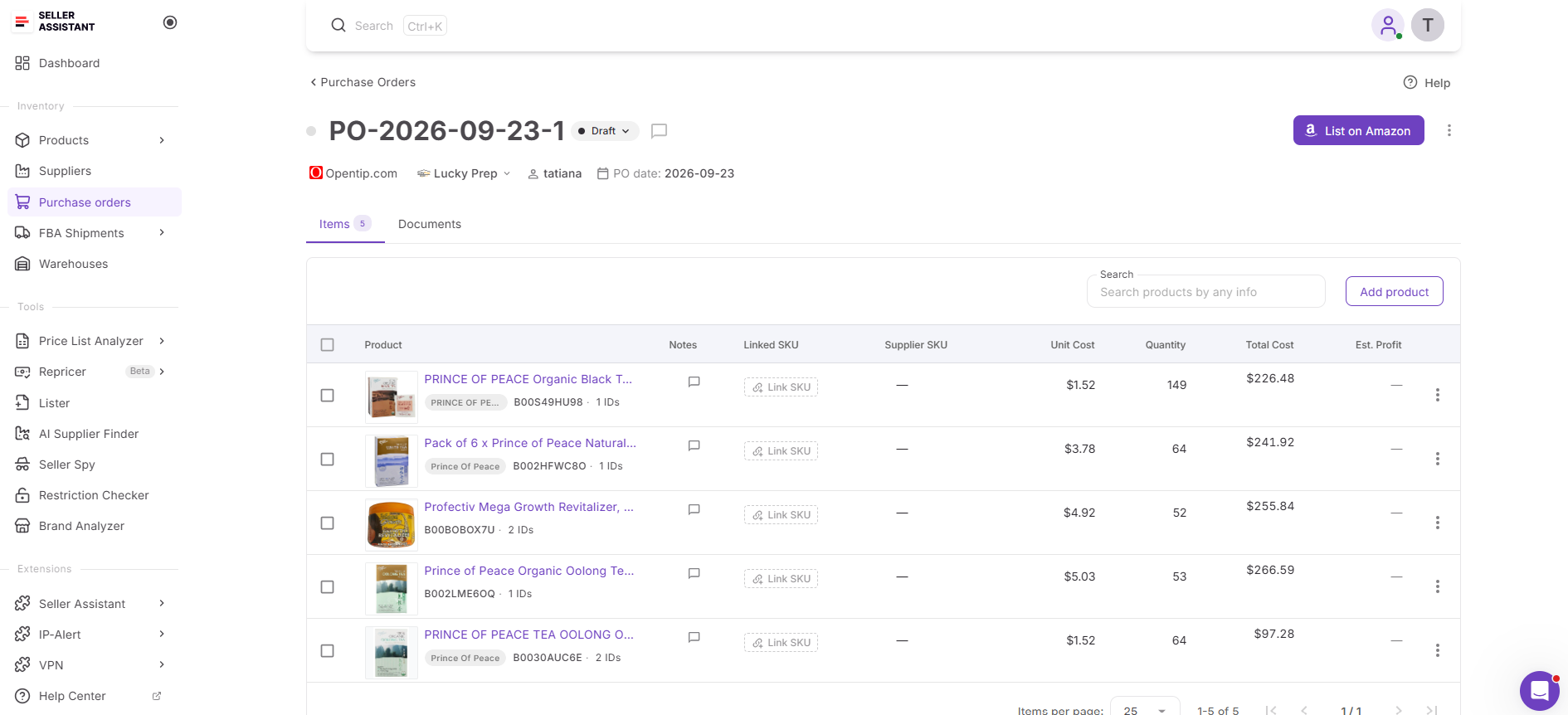
That means an AI-assisted workflow does not have to generate a standalone PO document that the seller then recreates inside their purchasing system. When connected through Seller Assistant MCP, supported operations can work with the Purchase Orders Module itself, allowing the conversation to become another way to interact with the purchasing workflow.
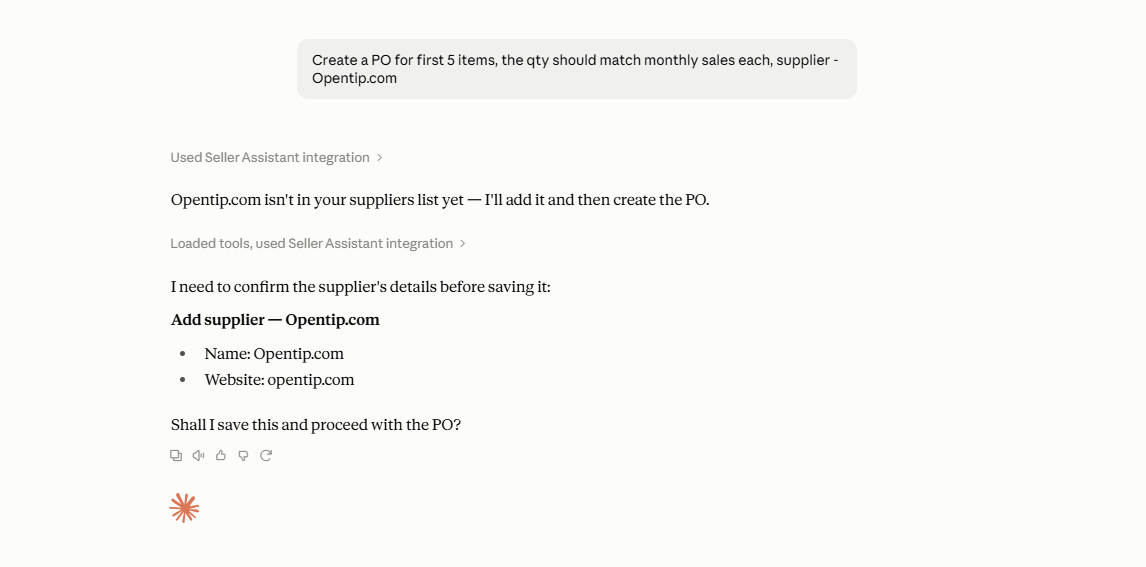
Purchase Orders Module therefore remains the system where purchase orders are created, reviewed, updated, tracked, and managed, while MCP Server provides the connection that allows supported parts of that workflow to be handled through AI chat.
How Seller Assistant MCP turns AI chat into a purchase order interface
Seller Assistant MCP Server connects AI assistants with Seller Assistant tools and account data, allowing sellers to work with supported purchase order operations through natural-language requests. Instead of asking ChatGPT or Claude how to create an order and then repeating those instructions manually in the dashboard, MCP gives the assistant a way to interact with the actual purchasing workflow.
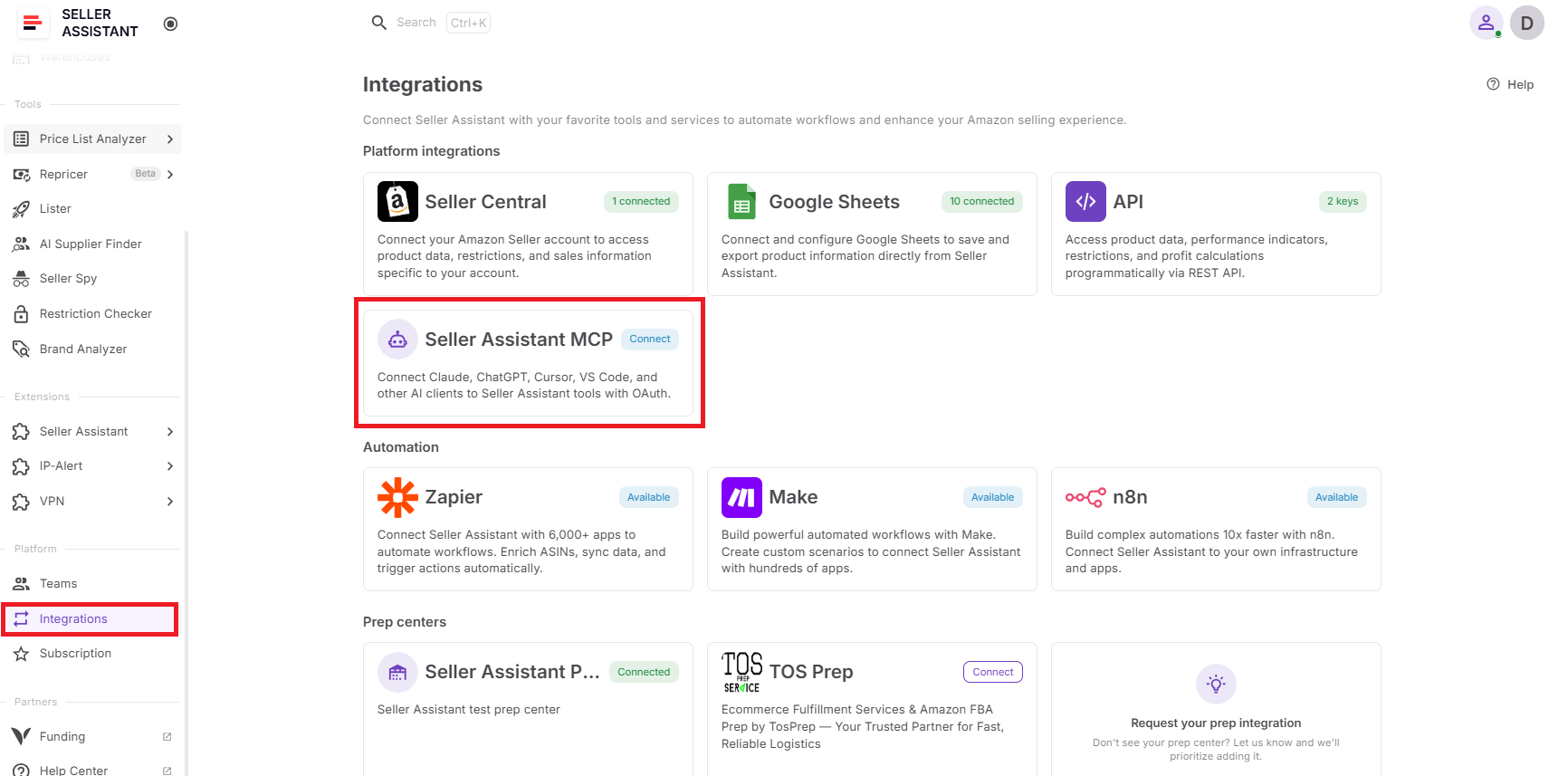
For purchase order creation, this changes the role of AI from advisor to working interface. Sellers can describe what they need in conversational language, use supported operations to find or create purchase orders, work with products and order details, and make supported changes through follow-up requests. Purchase Orders Module remains the system where the order is stored and managed, while MCP provides the connection between that system and the AI assistant.
What you can do with Seller Assistant MCP for purchase orders
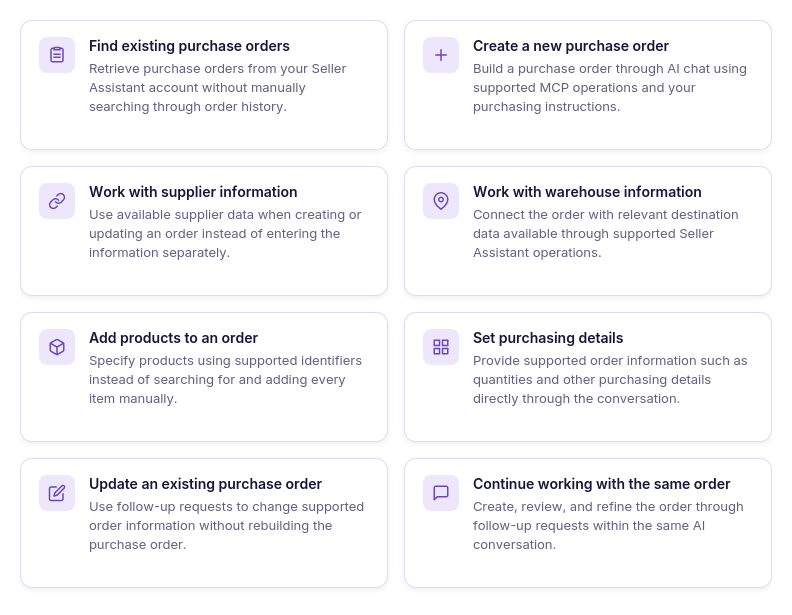
- Find existing purchase orders
Ask AI to retrieve purchase orders from your Seller Assistant account instead of manually searching through order history.
- Create a new purchase order
Describe the order you need and use supported MCP operations to create it directly in your Seller Assistant purchasing workflow.
- Work with supplier information
Use the supplier context available through supported Seller Assistant operations when building or working with an order instead of treating supplier information as disconnected text.
- Work with warehouse information
Connect the purchase order with the relevant destination information available through supported Seller Assistant operations.
- Add products to an order
Specify the products you want to purchase using supported product identifiers and continue building the order without searching for every item manually in the dashboard.
- Set purchasing details
Provide supported order information such as quantities and other purchasing details as part of the conversation instead of entering each value through separate interface fields.
- Update an existing purchase order
Use follow-up requests to make supported changes to an order when quantities or other editable information need to be corrected.
- Continue working with the same order
Move from creating the purchase order to reviewing and refining it through follow-up requests without restarting the workflow in a new interface.
How MCP turns purchase order creation into a conversation
MCP replaces part of the navigation and repetitive data entry involved in building a purchase order with natural-language requests. Instead of opening the purchasing dashboard, moving through multiple fields, finding the required records, and entering each piece of information separately, the seller can describe the intended order and continue refining it through the conversation.
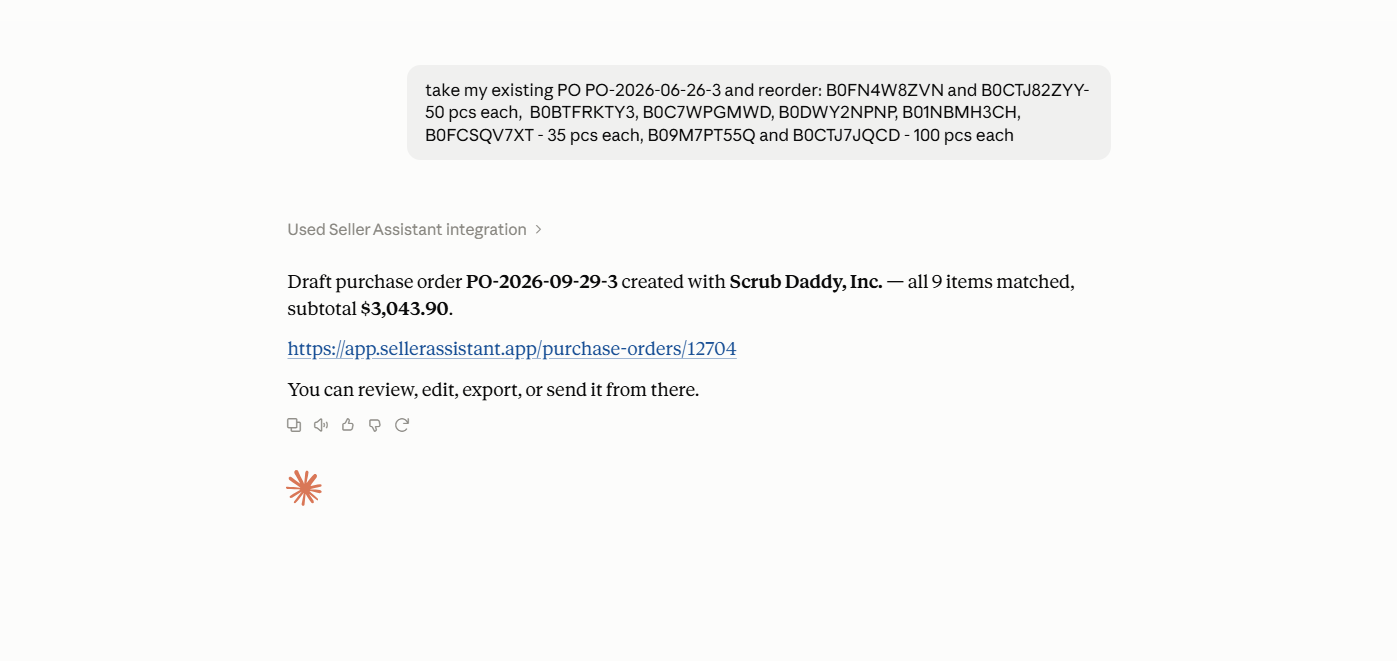
Purchase Orders Module still provides the underlying purchasing structure and stores the actual order. MCP gives the AI assistant access to supported Seller Assistant data and operations, while the seller provides the purchasing instructions and confirms supported write actions before they are executed.
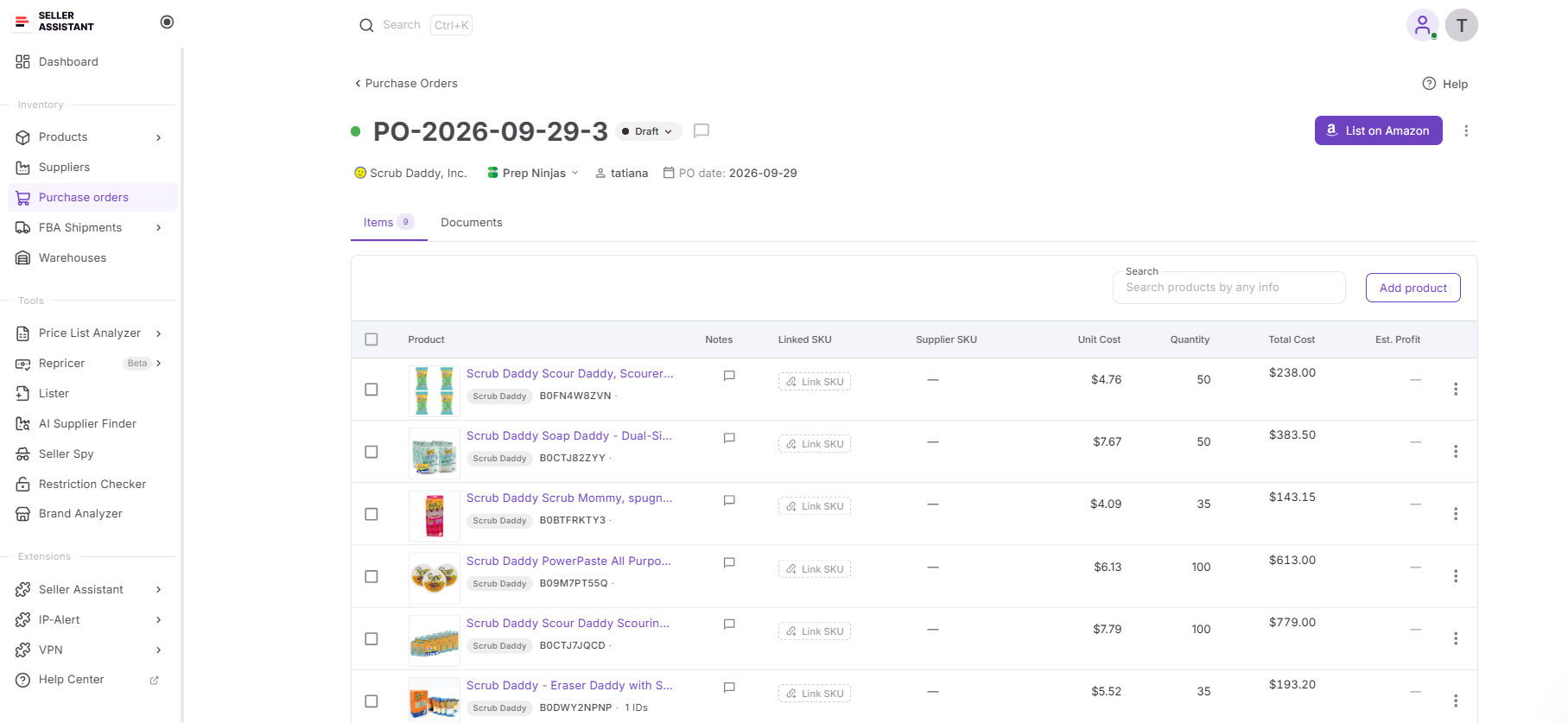
The result is a shorter describe → build → confirm → review → adjust workflow. Rather than simply explaining how a purchase order should be created, the AI assistant can participate in supported steps of creating and managing the actual order in Seller Assistant.
Practical Tips to Build and Manage Purchase Orders with AI
AI is most useful for purchase order creation when each request corresponds to a specific purchasing action. Instead of asking how to create a PO and then following the instructions manually, sellers can use supported MCP operations to create an order, add products, work with purchasing details, find existing orders, and make supported changes through follow-up requests.
The seller still determines what to order, from which supplier, and in what quantities. AI reduces the operational work required to turn those instructions into an actual purchase order in Seller Assistant.
| Purchase Order Task | How AI Helps | Prompt Example |
|---|---|---|
| Create a new purchase order | Turn the order instructions into a structured purchase order using supported MCP operations. | ”Create a new purchase order for [supplier].” |
| Add products to the order | Work with supported product identifiers instead of searching for each product manually. | ”Add these ASINs to the purchase order: [ASINs].” |
| Set product quantities | Provide quantities for products through the conversation instead of editing each line separately. | ”Set 40 units for [product] and 25 units for [product].” |
| Update an existing order | Make supported changes through a follow-up request after the purchase order has been created. | ”Change the quantity for [product] in this order to 50 units.” |
| Find an existing purchase order | Retrieve an order using available order information rather than searching the purchase order history manually. | ”Find my recent purchase order for [supplier] and reorder.” |
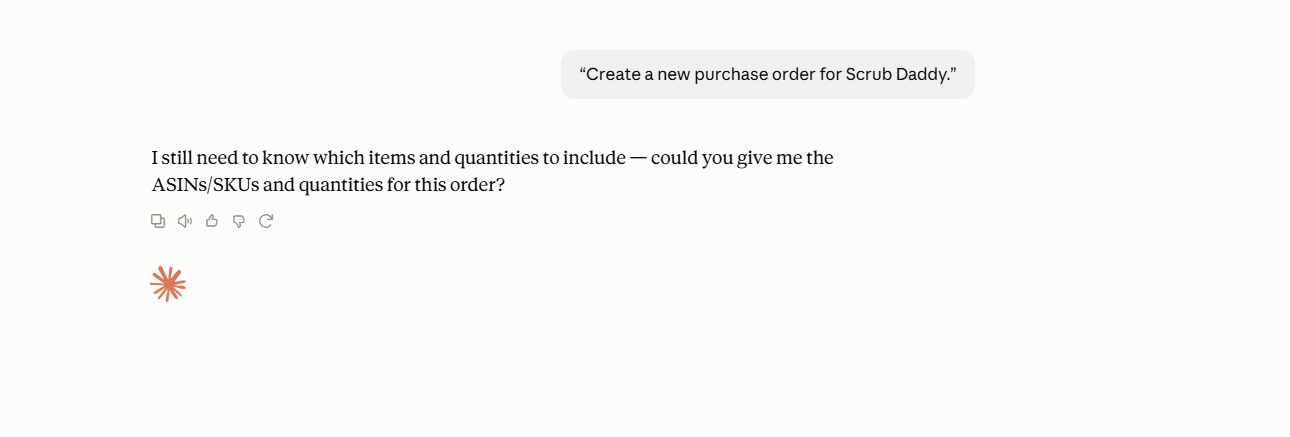
Create a new purchase order from chat
When you already know which supplier you are ordering from, the first request can focus directly on creating the order. Instead of starting in the Purchase Orders dashboard and moving through the initial setup manually, describe the purchase order you need to the AI assistant.
Prompt example
“Create a new purchase order for [supplier].”
Why it matters
The seller already knows the intended order, so there is little value in repeating the same information across multiple interface steps. AI chat provides a faster starting point for turning those purchasing instructions into a structured order.
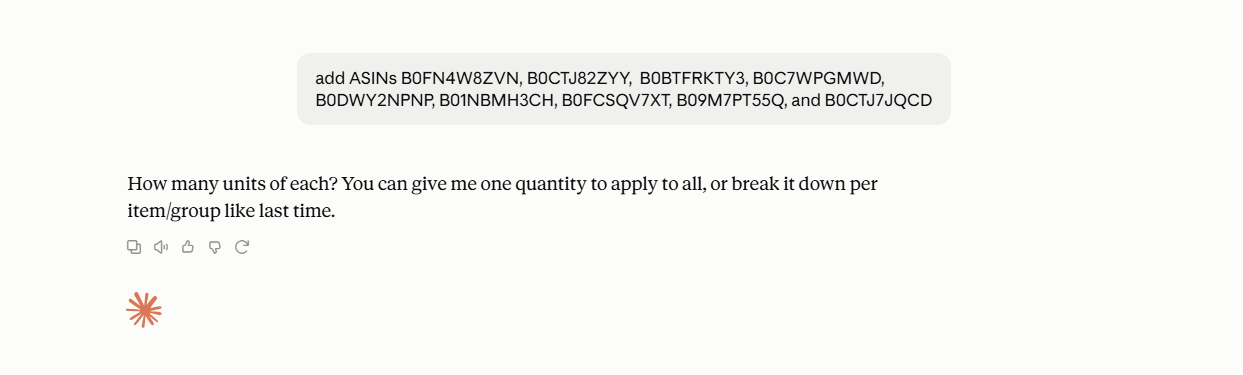
Add products without searching for them manually
Once the purchase order exists, specify the products you want to include using supported product identifiers. This avoids searching for each product individually before adding it to the order.
Prompt example
“Add these products to the purchase order: [ASIN 1], [ASIN 2], and [ASIN 3].”
Why it matters
Adding products can become repetitive when an order contains multiple SKUs. Providing the product list in one request reduces the navigation between product search and the order itself.
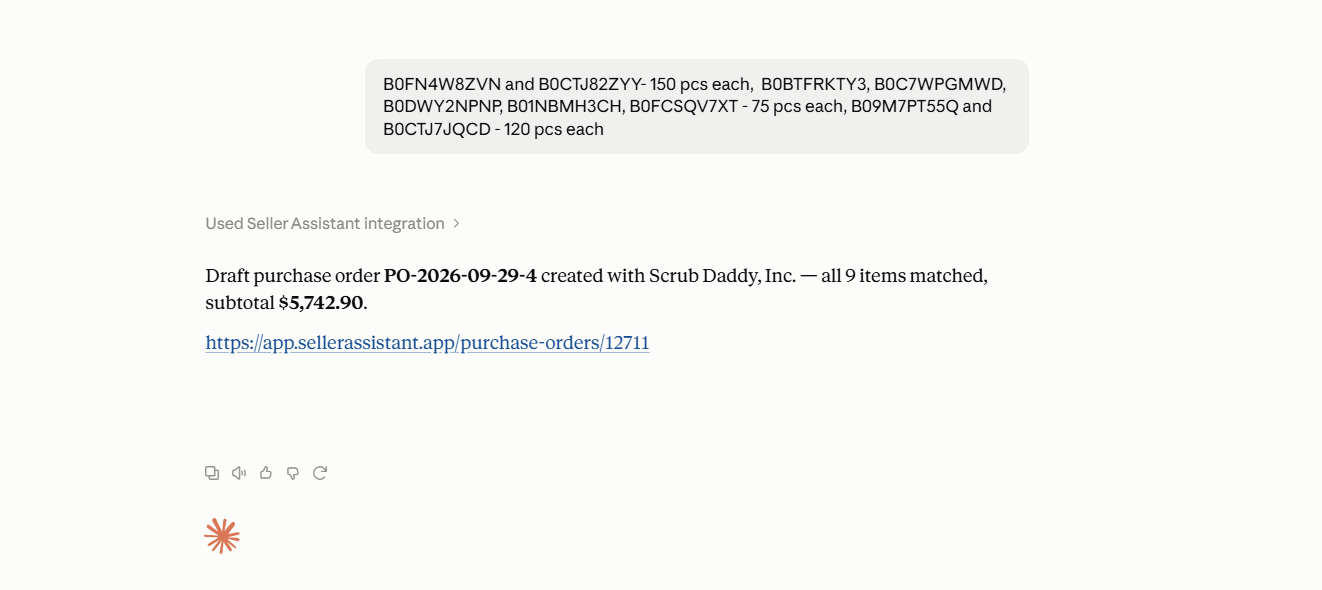
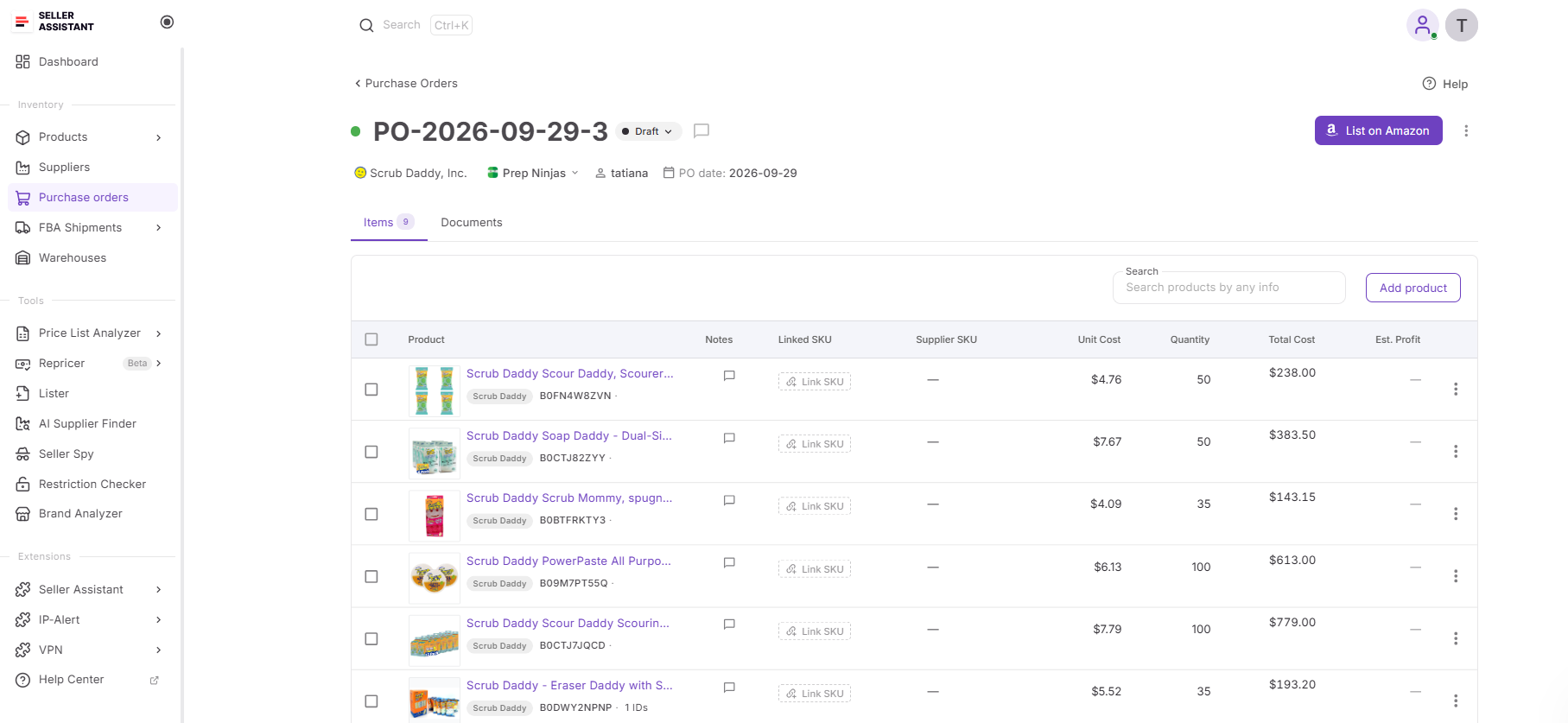
Set quantities through the conversation
After adding the products, tell the assistant how many units you intend to purchase. Quantities can be provided as part of the purchasing instructions rather than treated as a separate manual editing task.
Prompt example
“Set the order quantity to 30 units for [product 1], 50 units for [product 2], and 20 units for [product 3].”
Why it matters
When quantities are already known, entering them product by product adds administrative work without changing the buying decision. A conversational request lets the seller communicate the intended quantities together.
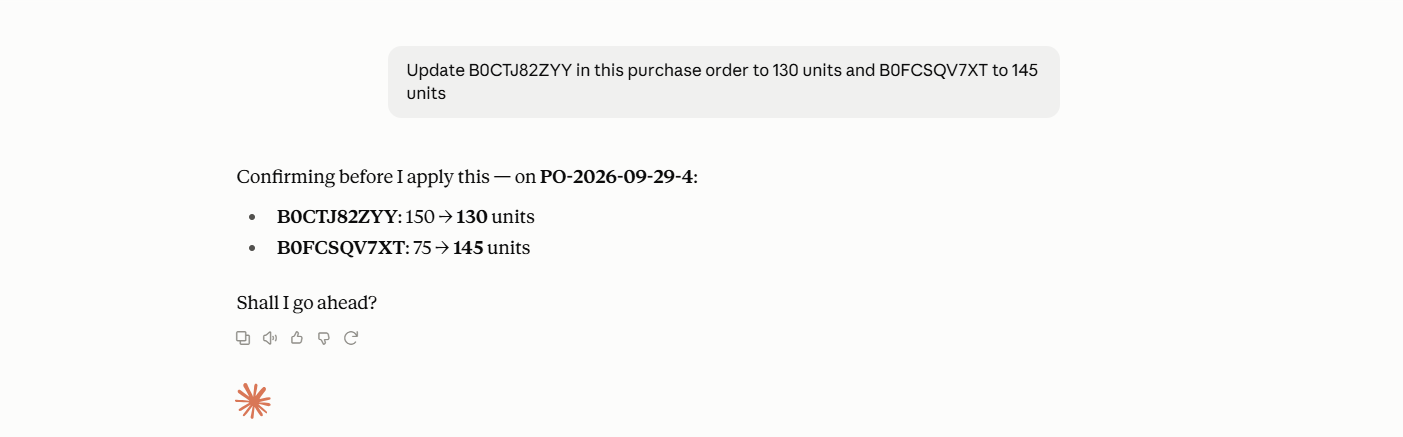
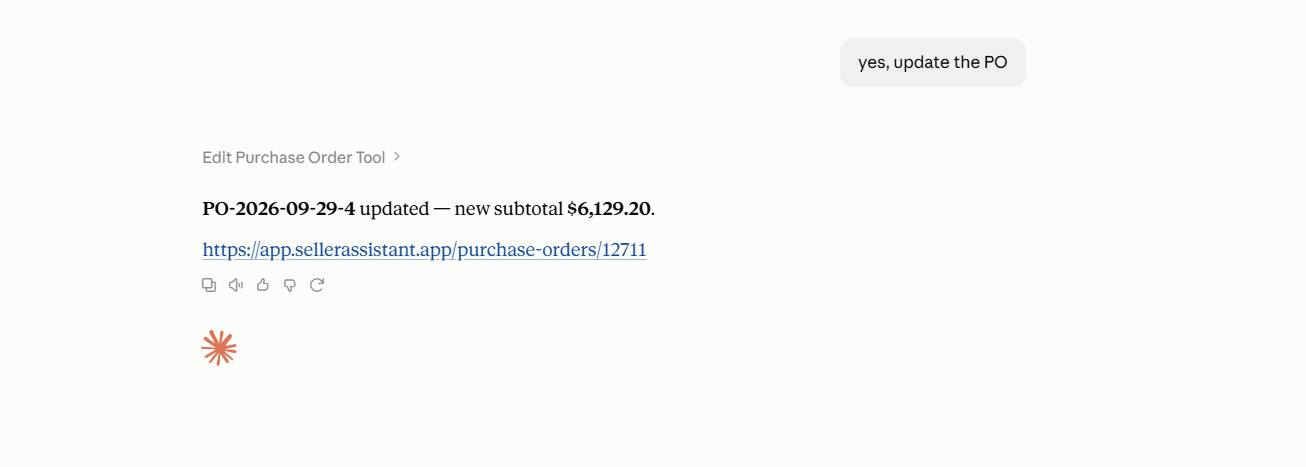
Update an order with a follow-up request
Purchase orders often change before they are finalized. If a supported order detail needs to be corrected, continue working with the existing purchase order rather than rebuilding it or navigating back to the relevant field manually.
Prompt example
“Update [product] in this purchase order from 30 units to 45 units.”
Why it matters
Small corrections should not require restarting the purchasing workflow. Follow-up requests make it easier to refine the same order as quantities or other supported purchasing details change.
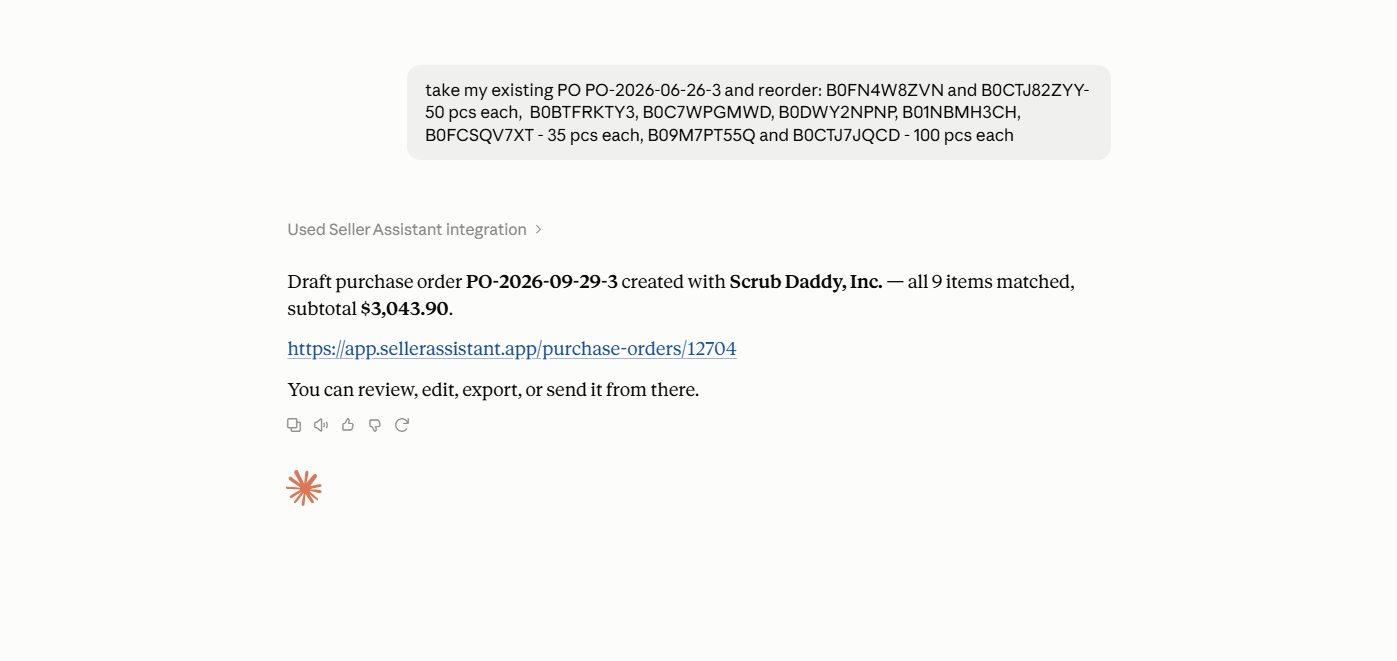
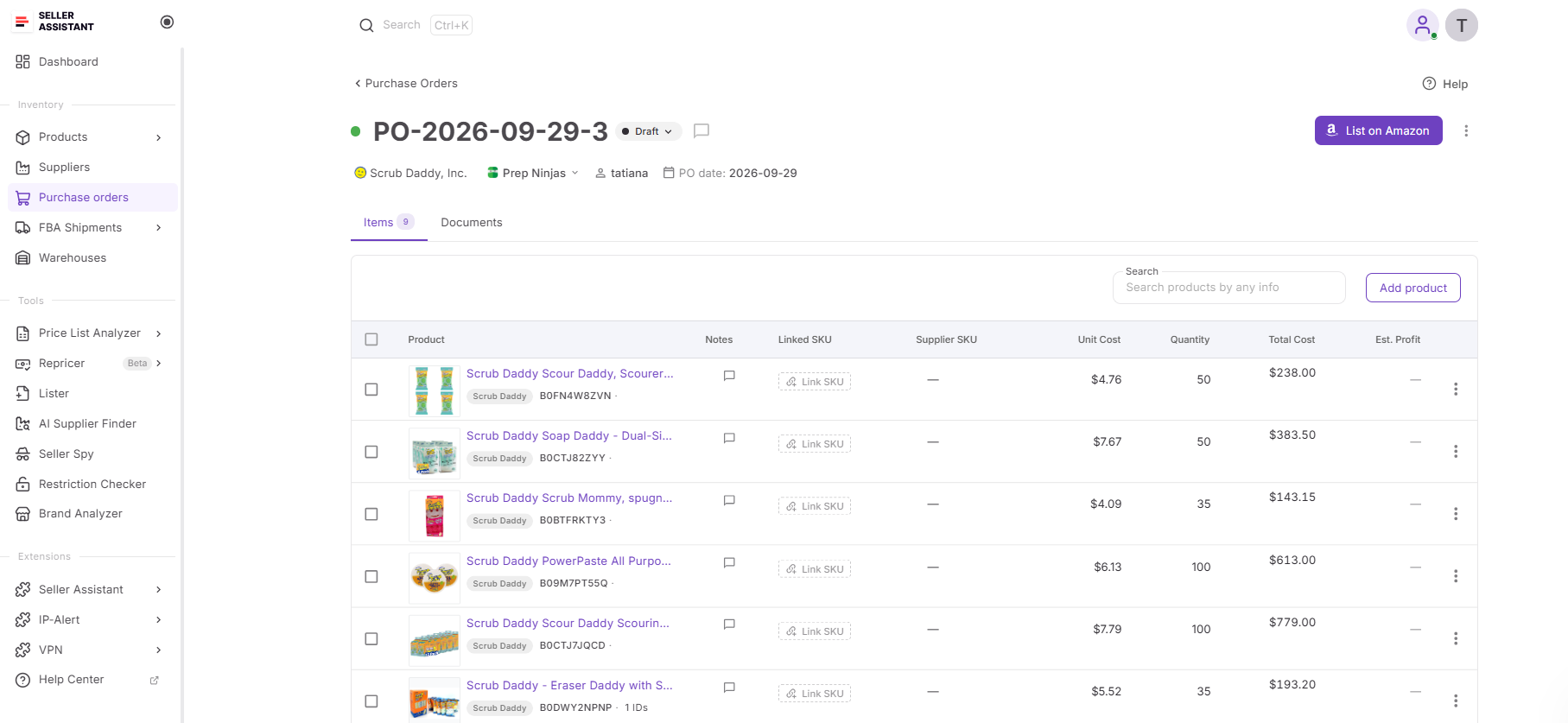
Find a purchase order you already created and reorder
When you need to purchase the same products again, start by asking AI to find the existing purchase order. You can use the previous order as a reference for the new purchase instead of searching for the products and rebuilding the order details from the beginning.
Prompt example
“Find my previous purchase order for [supplier] and create a new order with the same products and quantities.”
Why it matters
Repeat orders should not require repeating the original setup work. Using an existing purchase order as the starting point helps reduce product search and data entry when replenishing inventory from the same supplier.
How to Create a Purchase Order with AI Step by Step
Step 1. Connect Seller Assistant MCP to your AI assistant
Connect Seller Assistant MCP Server to a supported AI assistant such as ChatGPT or Claude and authorize access to your Seller Assistant account. This allows the assistant to work with supported purchase order data and operations through natural-language requests.
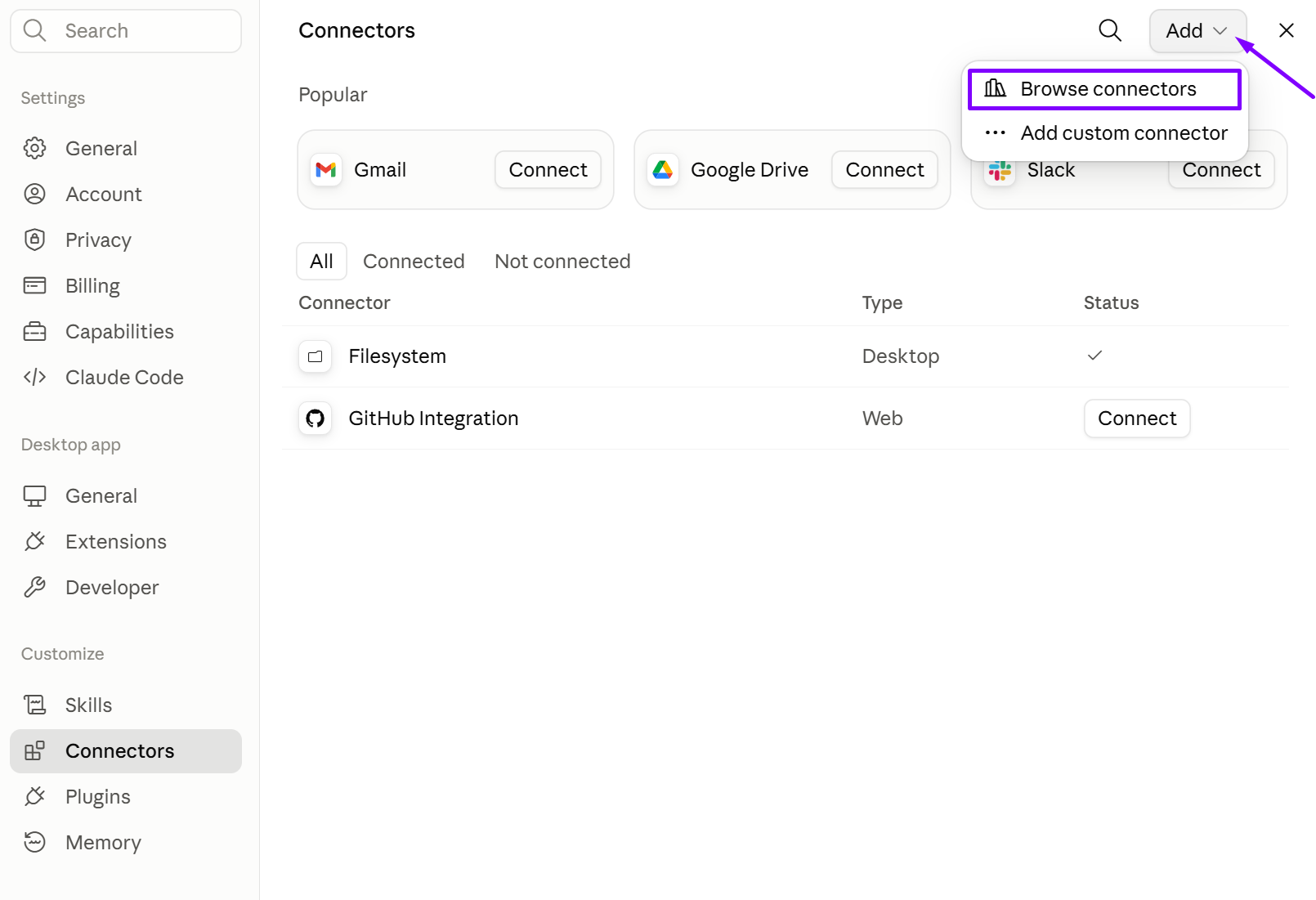
Without the MCP connection, AI can explain how to build a purchase order but cannot perform supported actions in your actual Seller Assistant account.
Step 2. Tell AI which purchase order you want to create
Start by describing the order you need, including the supplier and other relevant order information. You can give the assistant the purchasing context directly instead of navigating through the initial purchase order setup manually.
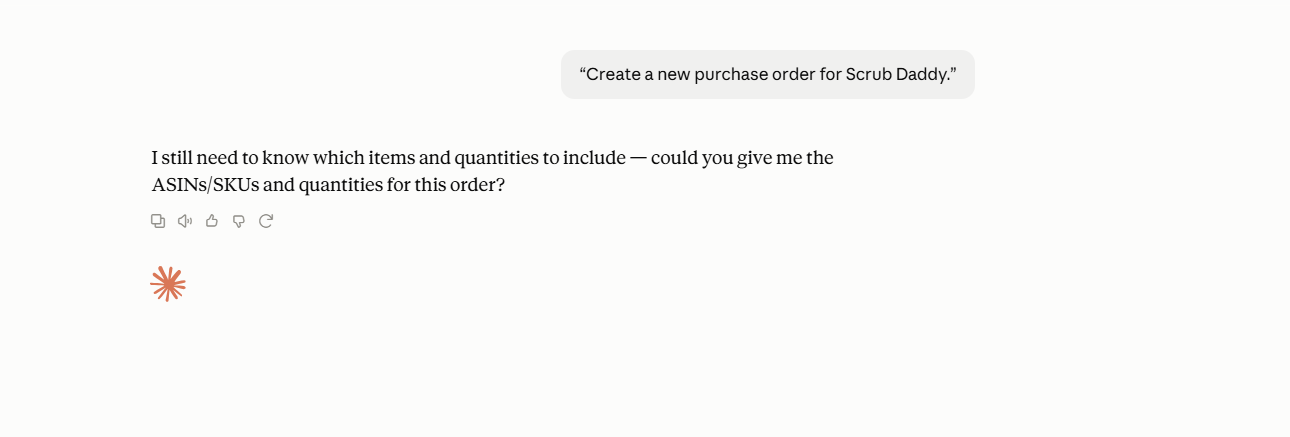
This gives AI the information it needs to begin building the actual order rather than generating a generic PO template.
Step 3. Add the products to the order
Provide the products you want to purchase using supported identifiers such as ASINs or SKUs. If you already have the complete product list, include multiple products in the same request instead of searching for them individually.
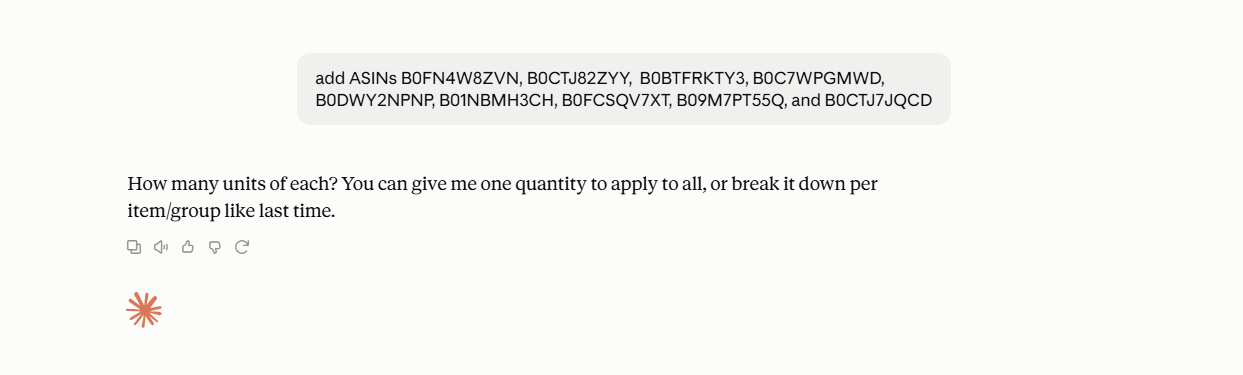
This reduces repetitive product search and keeps the order-building process inside the conversation.
Step 4. Specify quantities and purchasing details
Tell AI how many units you want to order for each product and provide other supported purchasing information needed for the order. You can continue with follow-up requests if different products require different quantities or details.
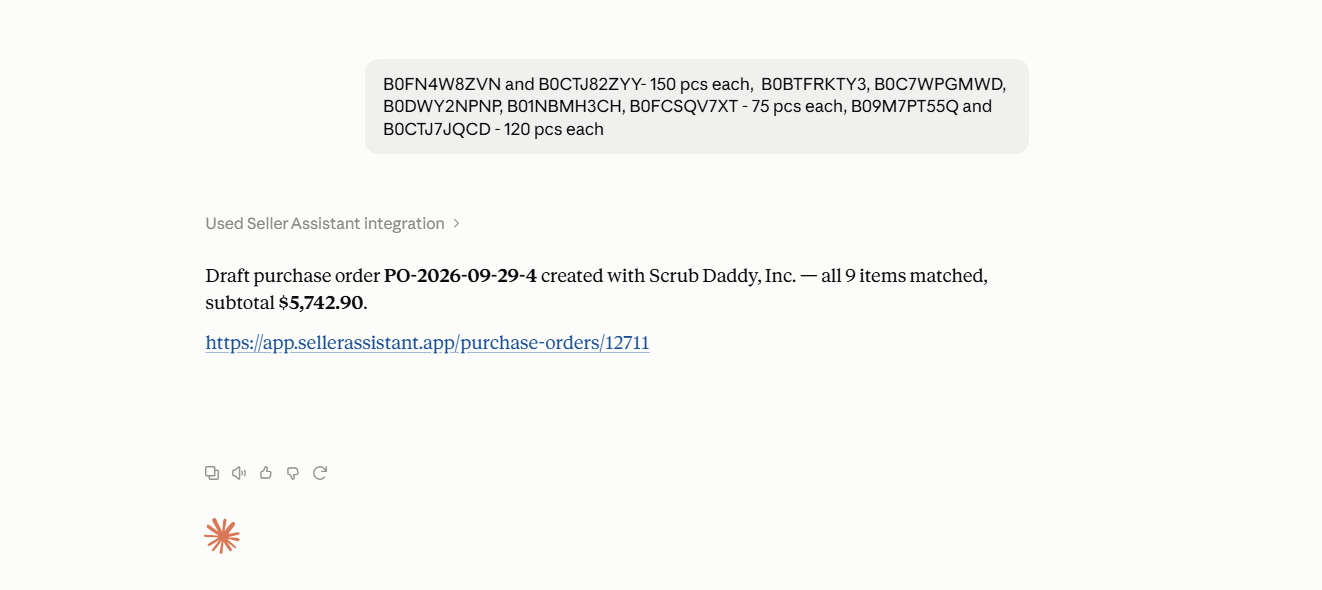
The purchase order needs to reflect the actual buying plan, not simply contain a list of products.
Step 5. Confirm the purchase order creation
Review the requested action and confirm it before the supported MCP write operation runs. Seller confirmation keeps the actual creation or modification of purchasing data under your control.
“Update [product] in this purchase order from 30 units to 45 units.”
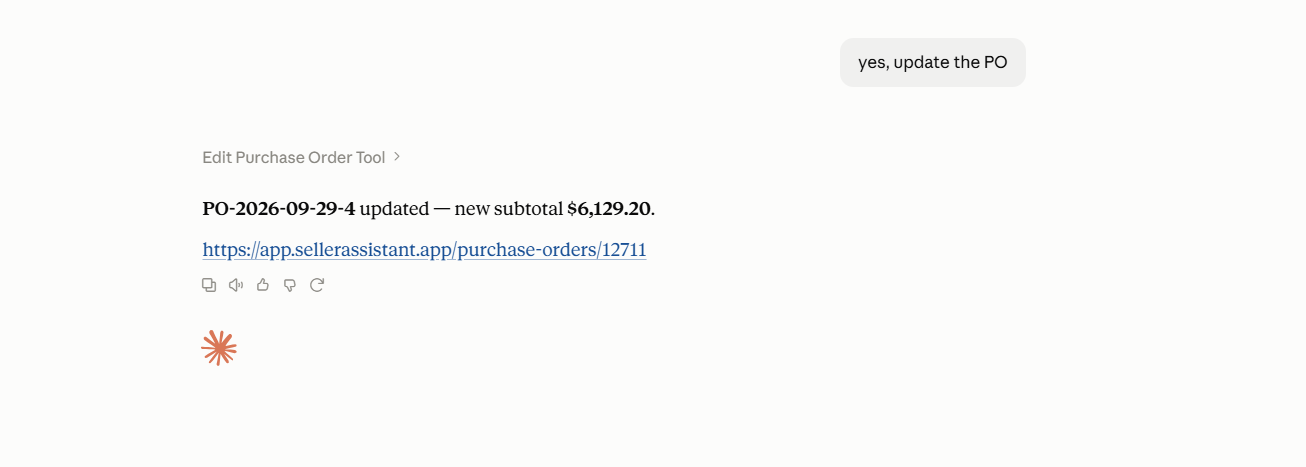
This creates a checkpoint between describing what you want and writing those changes to your Seller Assistant account.
Step 6. Review the created purchase order
Check the resulting order to make sure the correct supplier, warehouse, products, quantities, costs, and other relevant information are in place. Review the complete order before continuing with the supplier purchase.
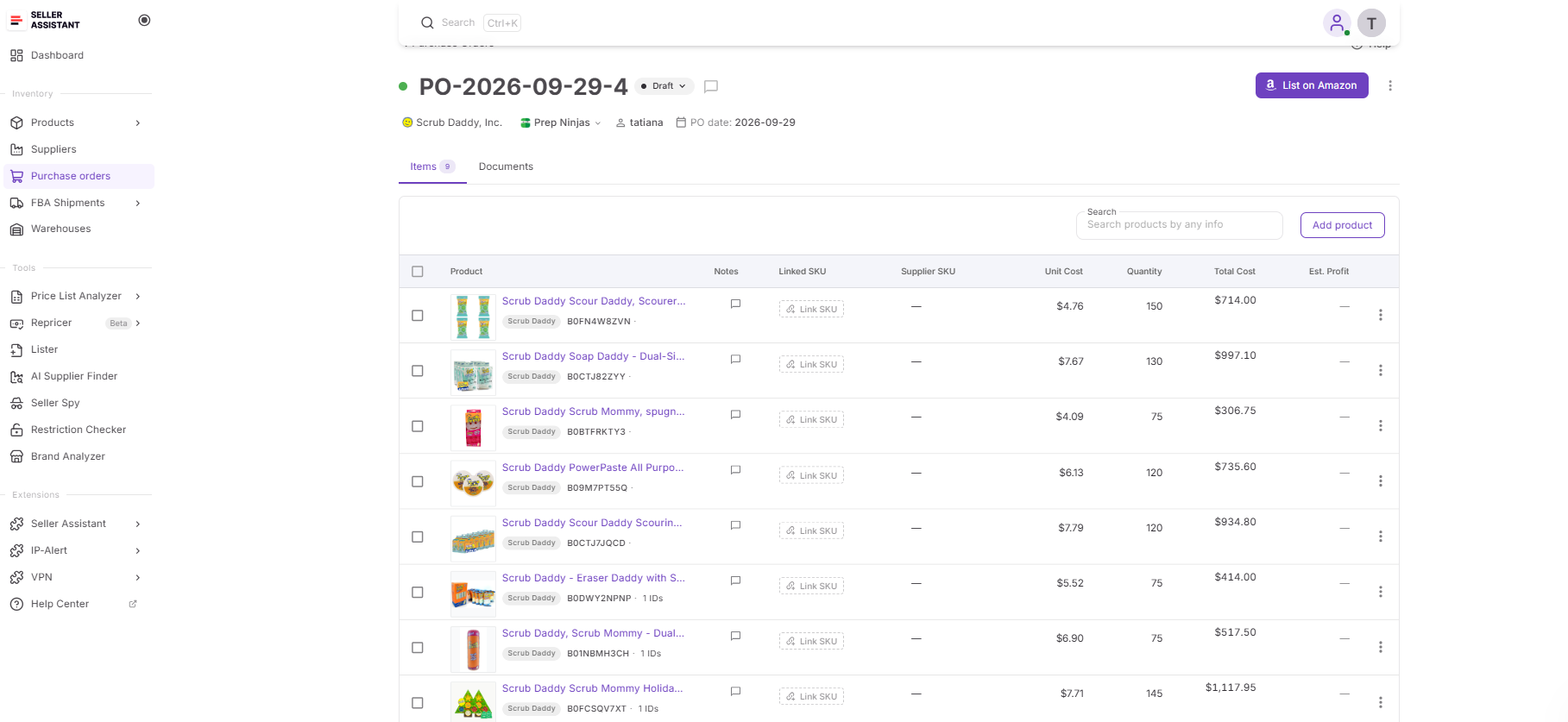
AI can speed up the building process, but the seller should still verify that the resulting purchase order matches the intended order.
Step 7. Adjust the order if needed
If something needs to change, use a follow-up request for supported edits or continue working with the purchase order in Seller Assistant. For example, you may need to change a quantity, correct purchasing information, or add another product.
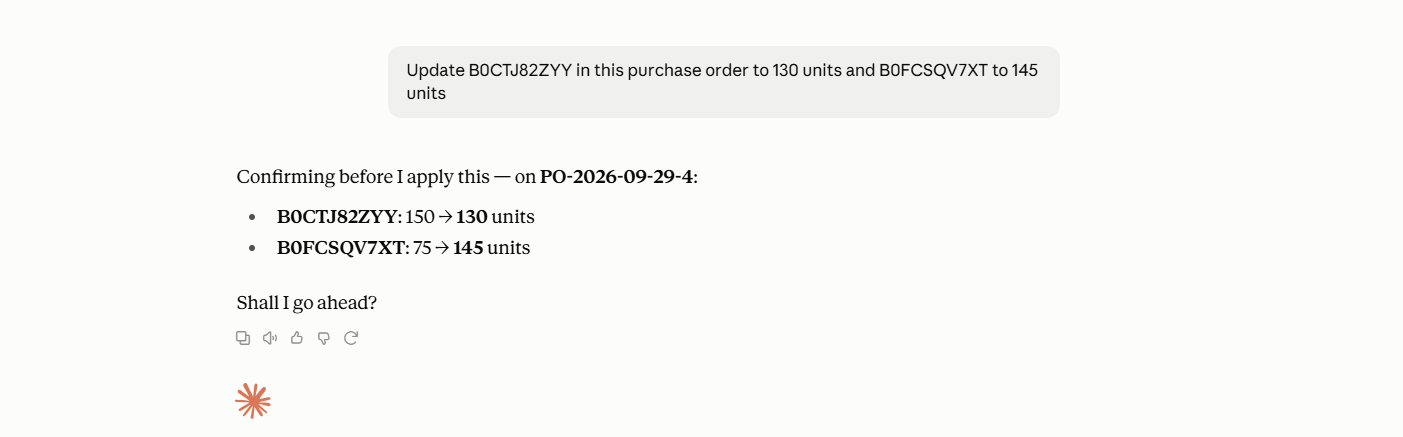
This creates a short describe → build → confirm → review → adjust workflow instead of rebuilding or manually editing the purchase order from the beginning.
FAQ
Can AI build a purchase order for me?
Yes. With Seller Assistant MCP connected, an AI assistant can use supported purchase order operations to create an actual order in Seller Assistant rather than simply generating a PO template. Write actions require your confirmation before they are executed.
Can I create a purchase order without opening the dashboard?
Supported purchase order creation and editing tasks can be handled through AI chat using Seller Assistant MCP. You may still need the Purchase Orders dashboard for operations that are not exposed through MCP or for a detailed visual review of the order.
Can AI add multiple products to the same purchase order?
Yes, you can provide multiple supported product identifiers and purchasing details when building an order. This is especially useful when you already know which products and quantities you want to purchase and do not want to search for each item separately.
Can I reorder products from an existing purchase order?
You can retrieve an existing purchase order and use its product information as the basis for a repeat order through supported MCP operations. This can reduce repeated setup when replenishing the same products from a supplier.
Do I have to approve changes AI makes to my purchase orders?
Yes. Supported MCP operations that write or delete Seller Assistant data require confirmation before they run, so creating or changing an order remains under the seller’s control.
Final Thoughts
Creating a purchase order should not require several rounds of manual data entry when the seller already knows what to buy, where to source it, and how many units to order. AI-assisted PO creation shortens the operational work between the buying decision and the finished supplier order, while leaving the seller in control of what is created or changed.
Seller Assistant combines Purchase Orders Module as the structured purchasing workspace with Seller Assistant MCP as the conversational layer for supported operations. Together, they let Amazon wholesale sellers, online arbitrage sellers, and dropshippers move from describing the order → create → confirm → review → adjust, turning AI chat into a practical way to build and manage purchase orders rather than simply explain how to create them.
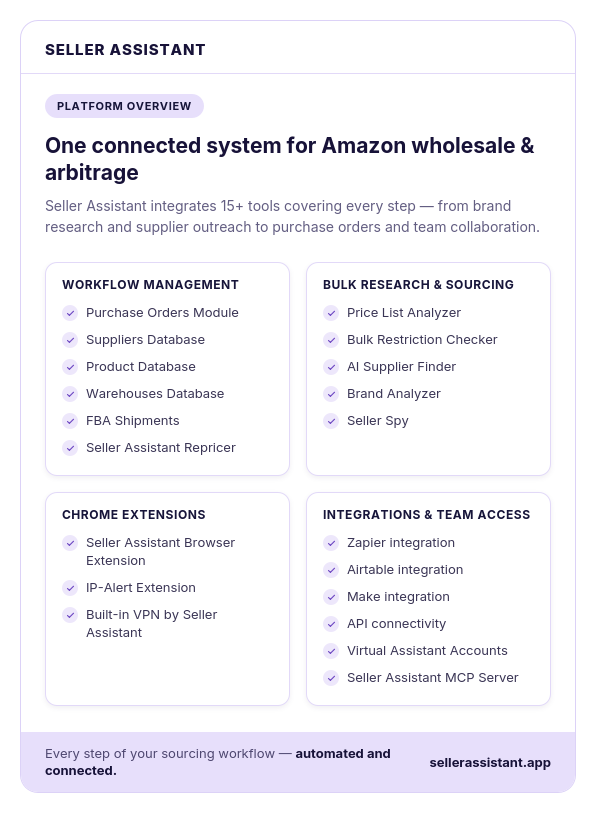
Seller Assistant automates and connects every stage of your Amazon wholesale and arbitrage workflow. It brings together in one platform: workflow management tools – Purchase Orders Module, Suppliers Database, Product Database, Warehouses Database, FBA Shipments, bulk research & sourcing tools – Price List Analyzer, Bulk Restriction Checker, AI Supplier Finder, Brand Analyzer, Seller Spy, Amazon repricing tool – Seller Assistant Repricer, Chrome extensions – Seller Assistant Browser Extension, IP-Alert Extension, and built-in VPN by Seller Assistant, and integrations & team access features – Seller Assistant MCP Server, seamless API connectivity, integrations with Zapier, Airtable, and Make, and Virtual Assistant Accounts.