

Wholesale grocery distributors for Amazon sellers are the brands, authorized distributors and wholesalers that sell packaged food and drinks by the case to resellers. You find them brand by brand. Pick the grocery brands you can sell, find who distributes each one, verify the company, and check its price list against Amazon before you order. Grocery is worth the work. According to Seller Assistant’s State of Amazon Wholesale (Q3 2026), 38.1% of grocery listings with Buy Box history are locked by one Buy Box seller, against 49.3% overall. That makes grocery the second most open category in the report.
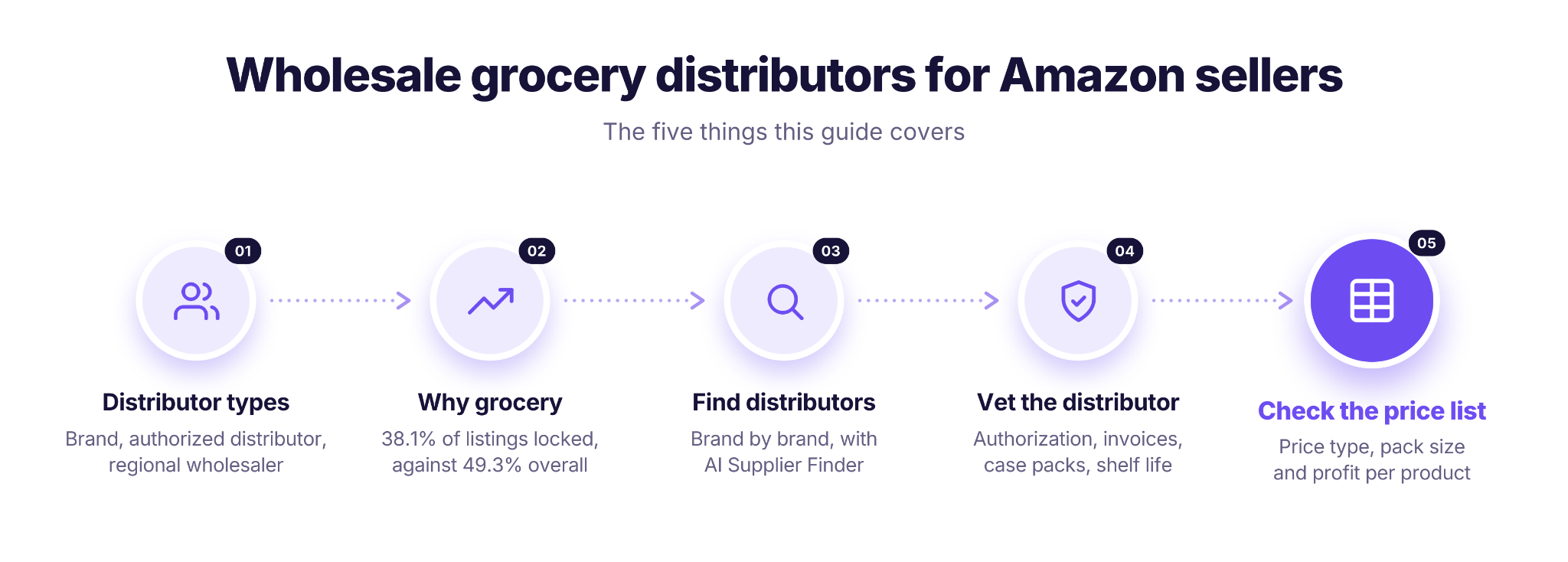
Most lists of grocery store distributors online are written for store owners who stock their shelves. This post is for Amazon wholesale resellers. It covers who the distributors are, how to find them for a brand, and how to check a price list before you buy.
What a Wholesale Grocery Distributor Is for an Amazon Seller
A wholesale grocery distributor buys packaged food and drinks from brands and resells them by the case to retailers. For an Amazon seller, the supplier is usually one of three types.
Types of grocery suppliers
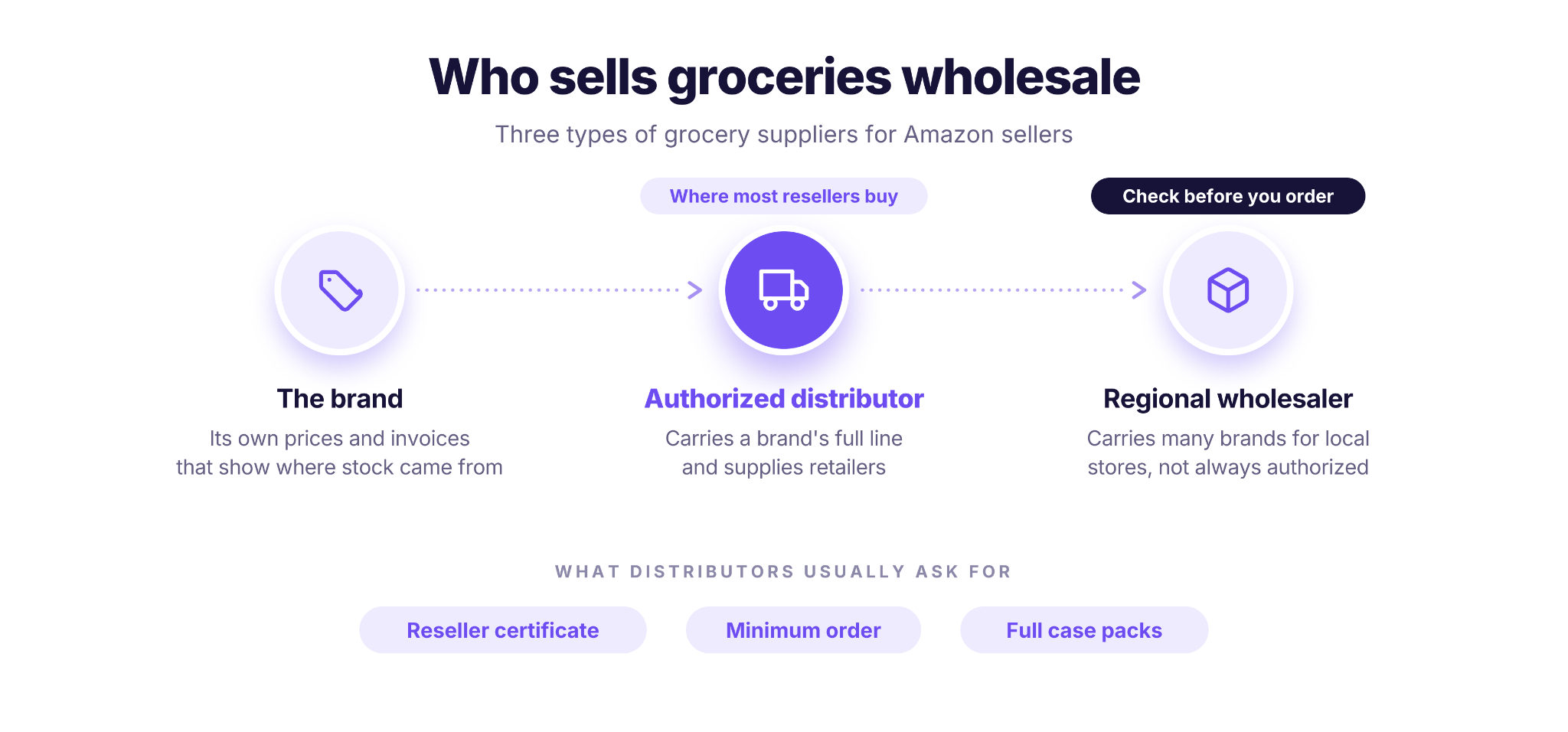
- The brand itself. Some food and drink brands sell direct to resellers. You get the brand’s own prices and invoices that clearly show where the products came from.
- Authorized distributors. These grocery store wholesale distributors carry a brand’s full line and supply retailers in a region or across the country. Most grocery brands sell through them, so this is where many resellers buy.
- Regional wholesalers. These wholesale grocery store suppliers carry many brands for local stores. Some aren’t authorized by every brand they stock, so check before you order.
Many large supermarket wholesale suppliers work only with grocery stores and chains. Expect some of them to decline an online reseller.
What distributors ask for
Before a distributor opens an account, it usually asks for:
- a reseller certificate or sales tax ID
- a minimum order, per order or per delivery
- orders in full case packs, for example 6, 12 or 24 units per case
Tip
Ask about the case pack and the shelf life before your first order. Both affect your cost per unit and how long you have to sell.
Why Grocery Is Worth Sourcing in 2026
Grocery gives Amazon resellers more room to win the Buy Box than most categories, and estimated sales on the same products is growing.
Grocery vs. all categories
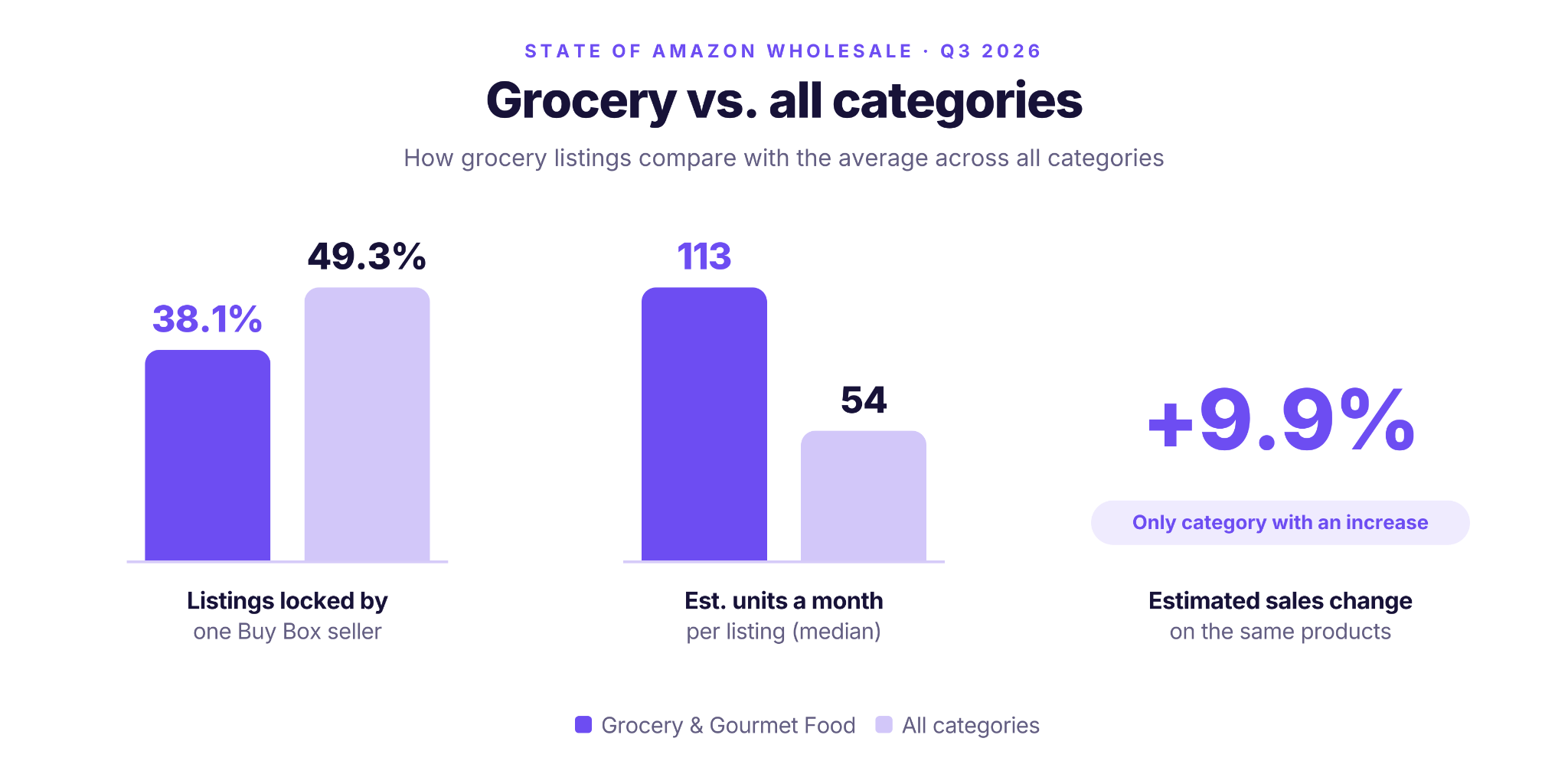
According to Seller Assistant’s State of Amazon Wholesale (Q3 2026), 38.1% of grocery listings with Buy Box history are locked, meaning one seller wins the Buy Box 80% of the time or more. Across all categories, it’s 49.3%. Only Video Games is lower, at 35.4%.
| Measure | Grocery & Gourmet Food | All categories |
|---|---|---|
| Listings locked by one Buy Box seller | 38.1% | 49.3% |
| Est. units a month per listing (median) | 113 | 54 |
| Estimated sales change, same products | +9.9% | Grocery is the only category with an increase |
The median grocery listing sells about twice as many estimated units as the median listing across all categories. Grocery is also the only category where estimated sales on the same products went up year over year.
More demand, more sellers
Competition grew too. Grocery is also the only category where the number of offers per listing increased, by 2.8% on the same products. Grocery products sell well, but expect more offers on each listing, so check the Buy Box before you order.
How to Find Grocery Distributors for a Brand
Grocery distributors are easiest to find one brand at a time. Start with the brands you can sell, then look for who supplies each one. For the general method, see our guide on how to find Amazon FBA wholesale distributors.
Start from brands you can sell
Grocery & Gourmet Food needs Amazon’s approval for many accounts, and some brands are restricted even after you’re approved for the category. Check this first, so you don’t spend time on suppliers for brands you can’t list. Our guide explains how to get approved to sell groceries on Amazon.
What makes a good grocery brand to resell
- Several third-party sellers already sell it on Amazon, which suggests resellers can get the stock.
- Your account can sell it, or can get approved for it.
- Its products have a long shelf life and aren’t meltable, so they’re easier to store and ship.
Find who distributes the brand with AI Supplier Finder
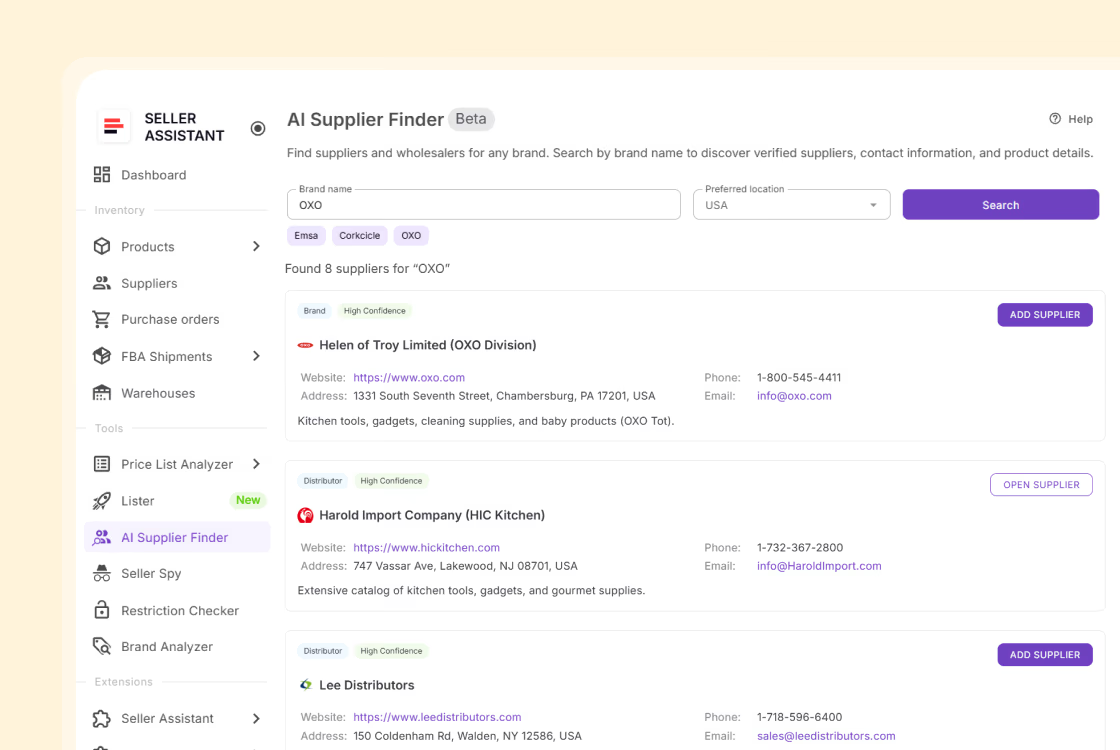
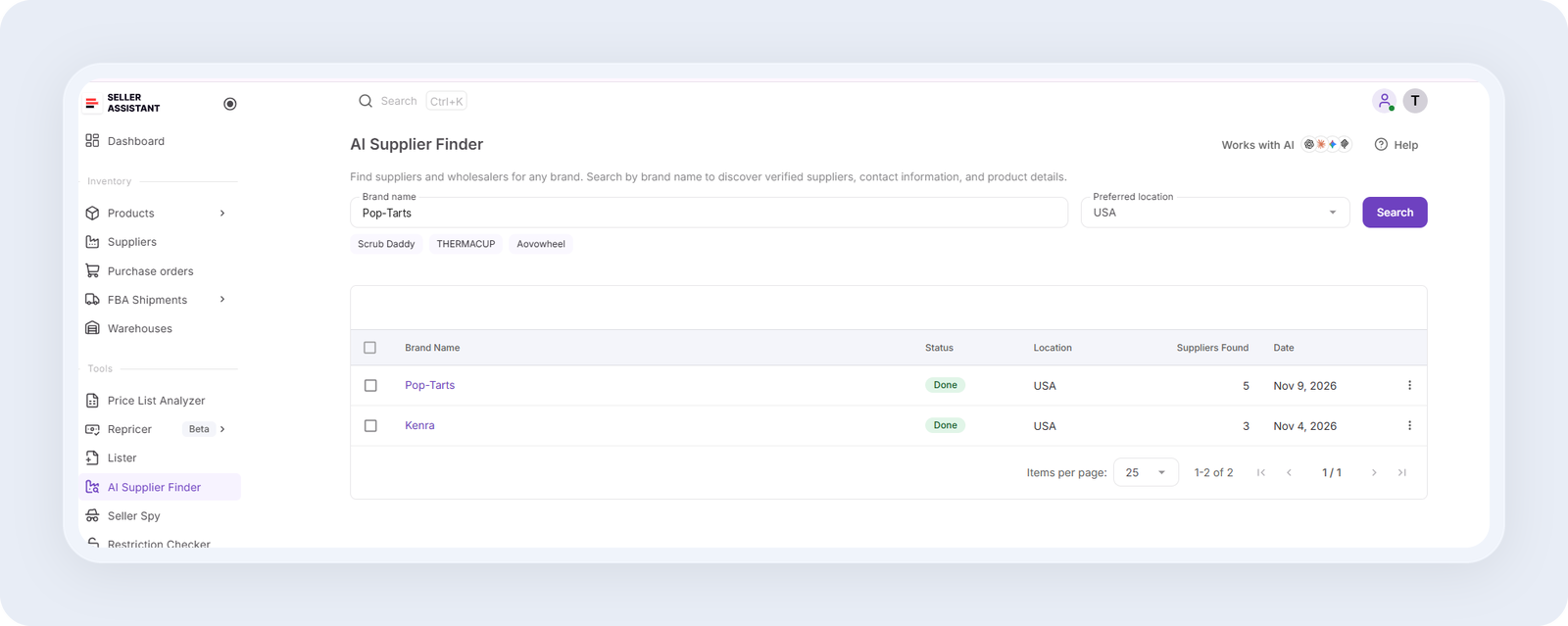
AI Supplier Finder searches for wholesale suppliers and authorized distributors that may carry a brand. Enter the brand name and your preferred location, and it groups the results as Brand, Distributor or Wholesaler, each with High, Medium or Low match confidence.
How to read the results
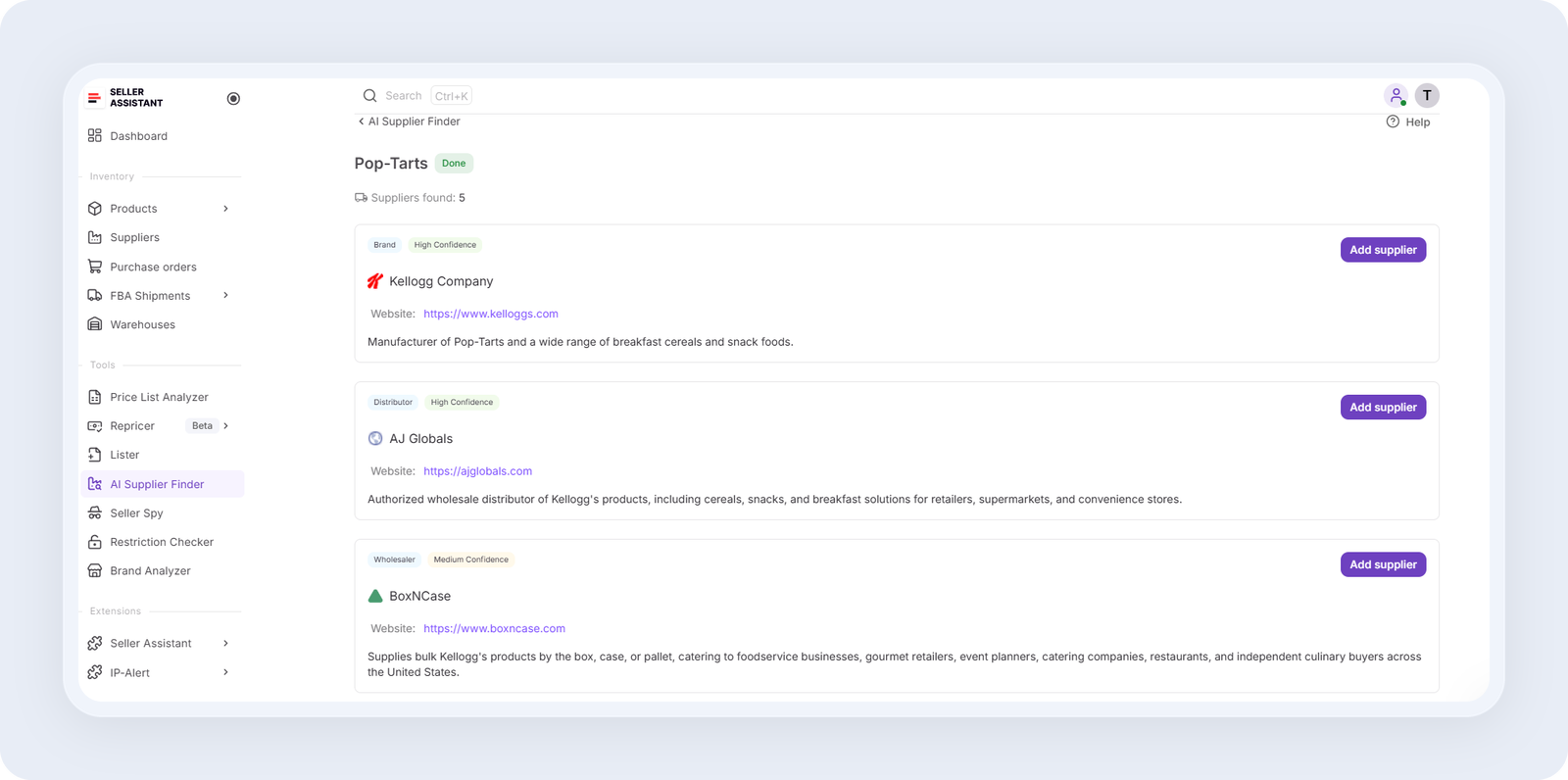
A search for Pop-Tarts in the USA returns five suppliers:
- A brand result, Kellogg Company: described as the maker of Pop-Tarts.
- A distributor, AJ Globals: described as an authorized wholesale distributor that supplies retailers, supermarkets and convenience stores.
- Three wholesalers, BoxNCase, Warehouse 115 and Round Eye Supply: they sell the brand in bulk, two of them mainly to restaurants, hotels and other foodservice buyers.
The descriptions help you sort the results. A wholesale grocery supplier that serves retailers is a better fit for an Amazon reseller than one built for foodservice. Click “Add supplier” to save a promising result to your Suppliers list.
These are examples from one searcH. Every result is a candidate until you verify that the company is real and authorized for the brand.
Ask the brand for its authorized distributors
The brand is the most reliable source for its own distributor list. Look for a “Where to buy,” “Wholesale” or “Become a retailer” page on its website, or contact its sales team. Ask which grocery store distributors are authorized to supply online resellers in your region, and whether the brand sells direct.
Keep the first message short and professional: who you are, that you sell on Amazon, and which products and volumes you’re interested in. For ready-made messages, see how to email a wholesale distributor.
How to Vet a Grocery Distributor
Before you send documents or pay for a first order, check that the distributor can supply what Amazon expects. A good grocery distributor passes three checks. For the full process, see how to verify a wholesale supplier.
What to check
- Authorization for the brand. Ask the brand to confirm that the company is one of its authorized distributors, or ask the distributor for proof that it buys direct. A company that sells many brands may be authorized for some and not others.
- Invoices that Amazon accepts. If you need approval for a brand or category, Amazon asks for invoices from a manufacturer or distributor. They should show your business name and address, the supplier’s details and the products you bought. Retail receipts and price quotes don’t count.
- Case pack and expiry terms. Ask how many units come in a case, the minimum order, and how much shelf life is left on products when they ship. Short-dated stock leaves you less time to sell and can fail Amazon’s FBA rules for expiration-dated products.
Start small
Place a small first order to test delivery times, packaging and paperwork before you commit more money. Keep every invoice, because Amazon may ask you to prove where your products came from.
Check a Grocery Price List Before You Order
Once a distributor approves you, it sends a price list. Bulk grocery suppliers often list hundreds of products, priced by the case. Grocery is a low-margin category: according to Seller Assistant’s State of Amazon Wholesale (Q3 2026), Amazon’s cut of the sale price is 45.3% in grocery, and for the median seller only 39.0% of matched grocery lines break even, so margins are thin.
How to check a grocery price list with Price List Analyzer
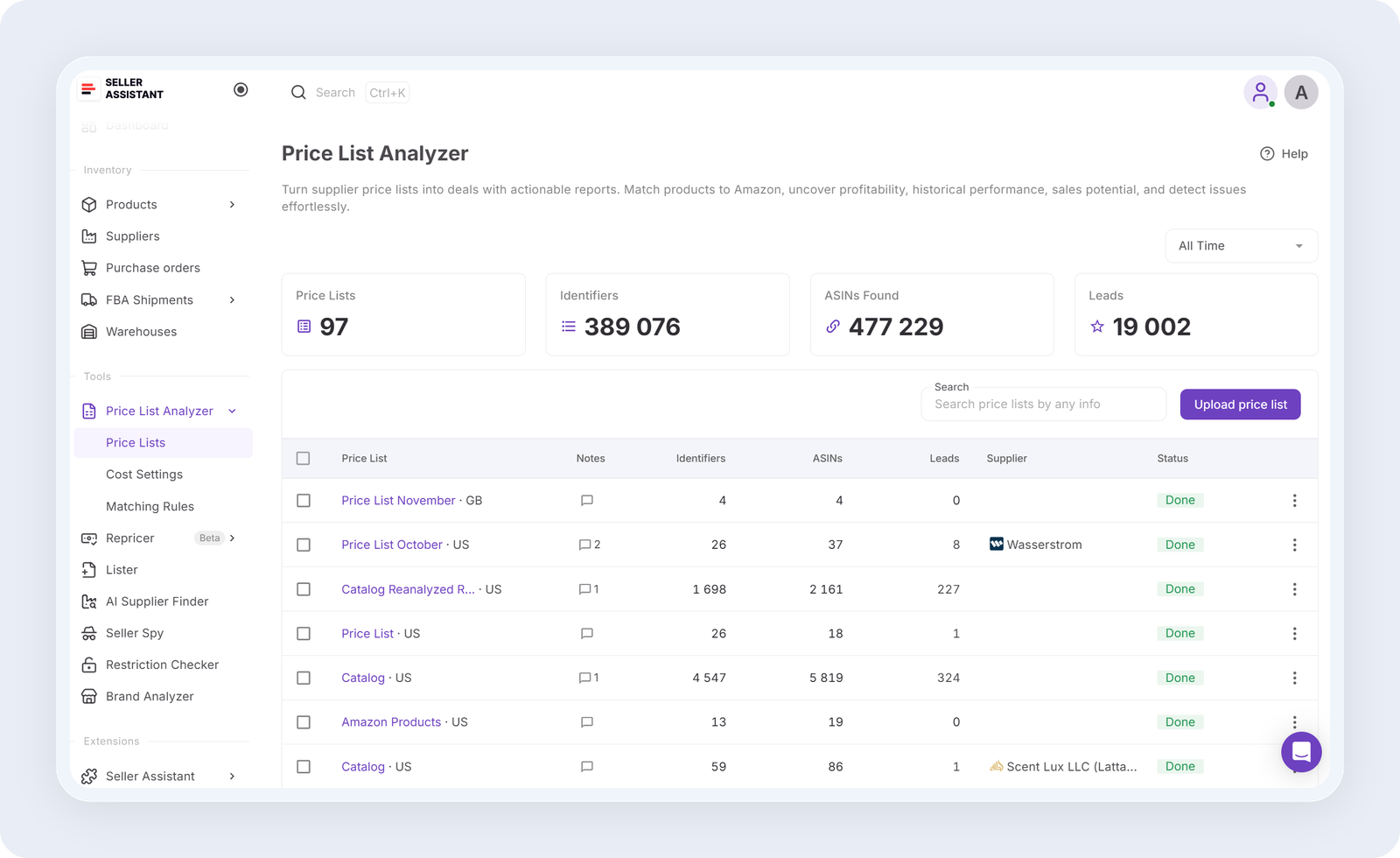
Price List Analyzer matches each line to its Amazon listing and shows which products are worth buying.
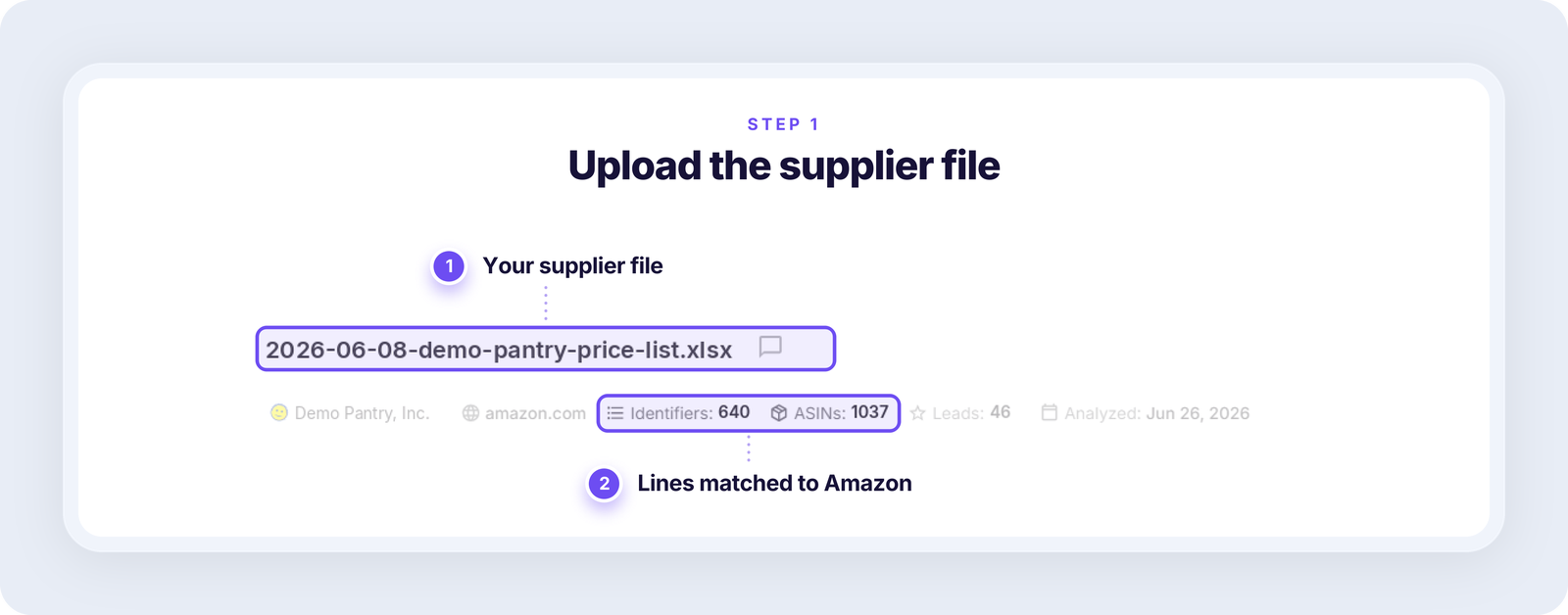
Step 1. Upload the supplier file
Upload the price list and map the identifier and cost columns, so each line matches its Amazon listing at the right cost.
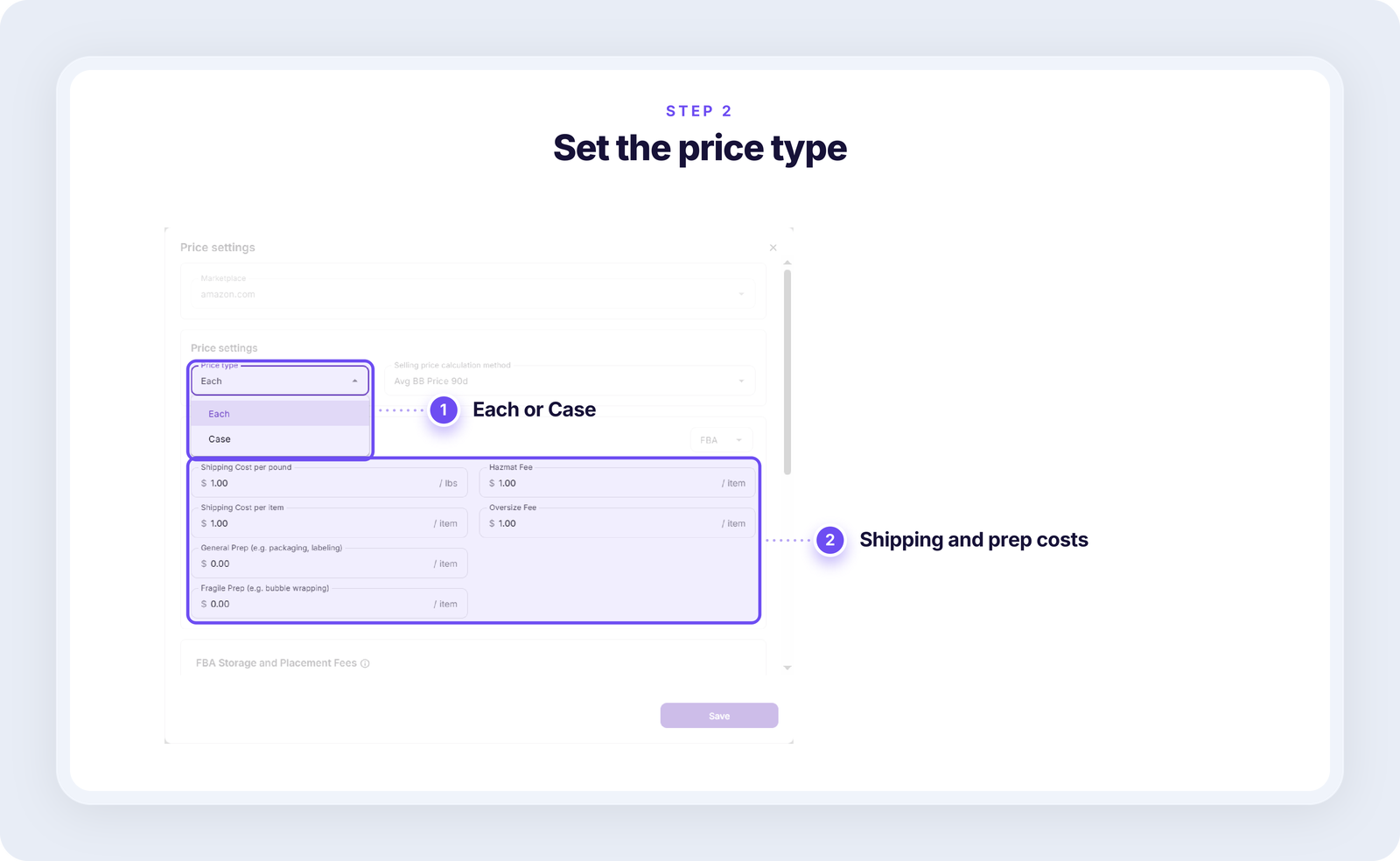
Step 2. Set the price type
In Price settings, choose Each or Case. Each is the default. Many grocery distributors price by the case, so if yours does, choose Case and make sure the supplier price list includes the number of units per case. Price List Analyzer then divides the case price by the case quantity to get the unit cost. You can also add your shipping and prep costs here, so profit reflects your costs.
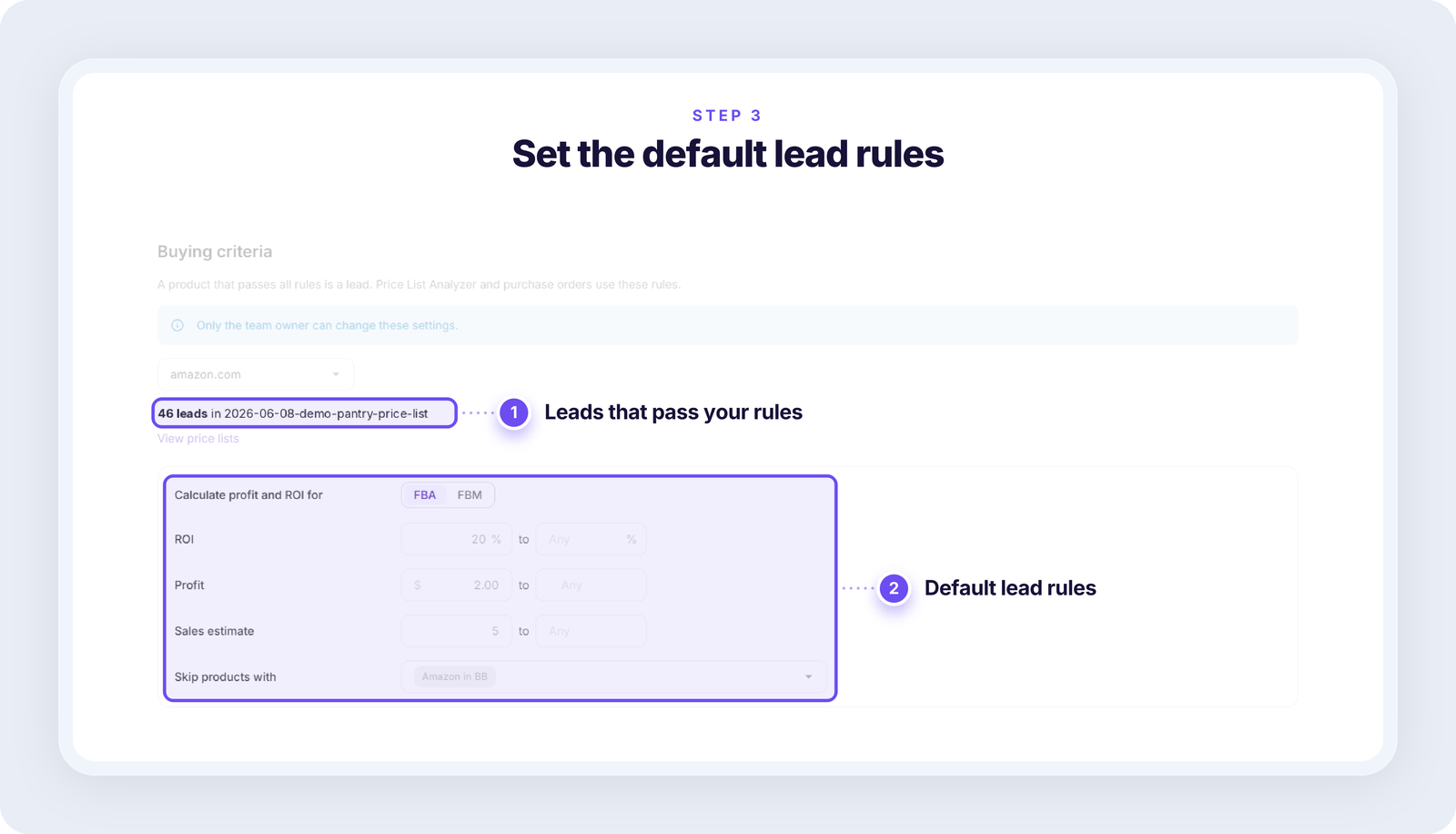
Step 3. Set the default lead rules
In Buying criteria, review the rules a product must pass to count as a lead. By default, Price List Analyzer keeps the products that:
- are sold through FBA
- have an ROI of 20% or more
- make at least $2 profit
- sell an estimated 5 or more units a month
- don’t have Amazon on the Buy Box
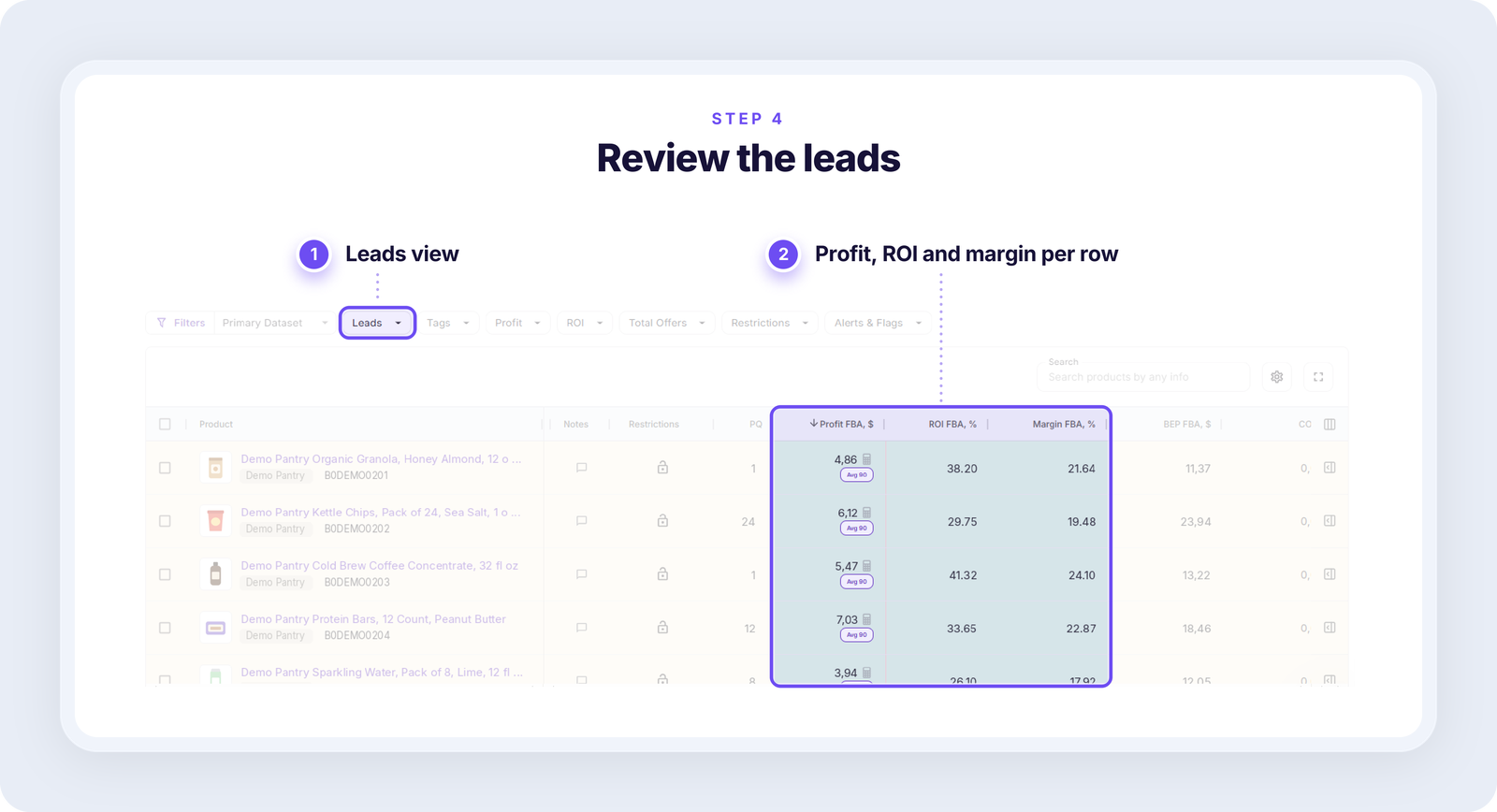
Step 4. Review the leads
For each product, the results show profit, ROI, sales estimates and Buy Box data. Start with the leads and check profit and roi row by row.
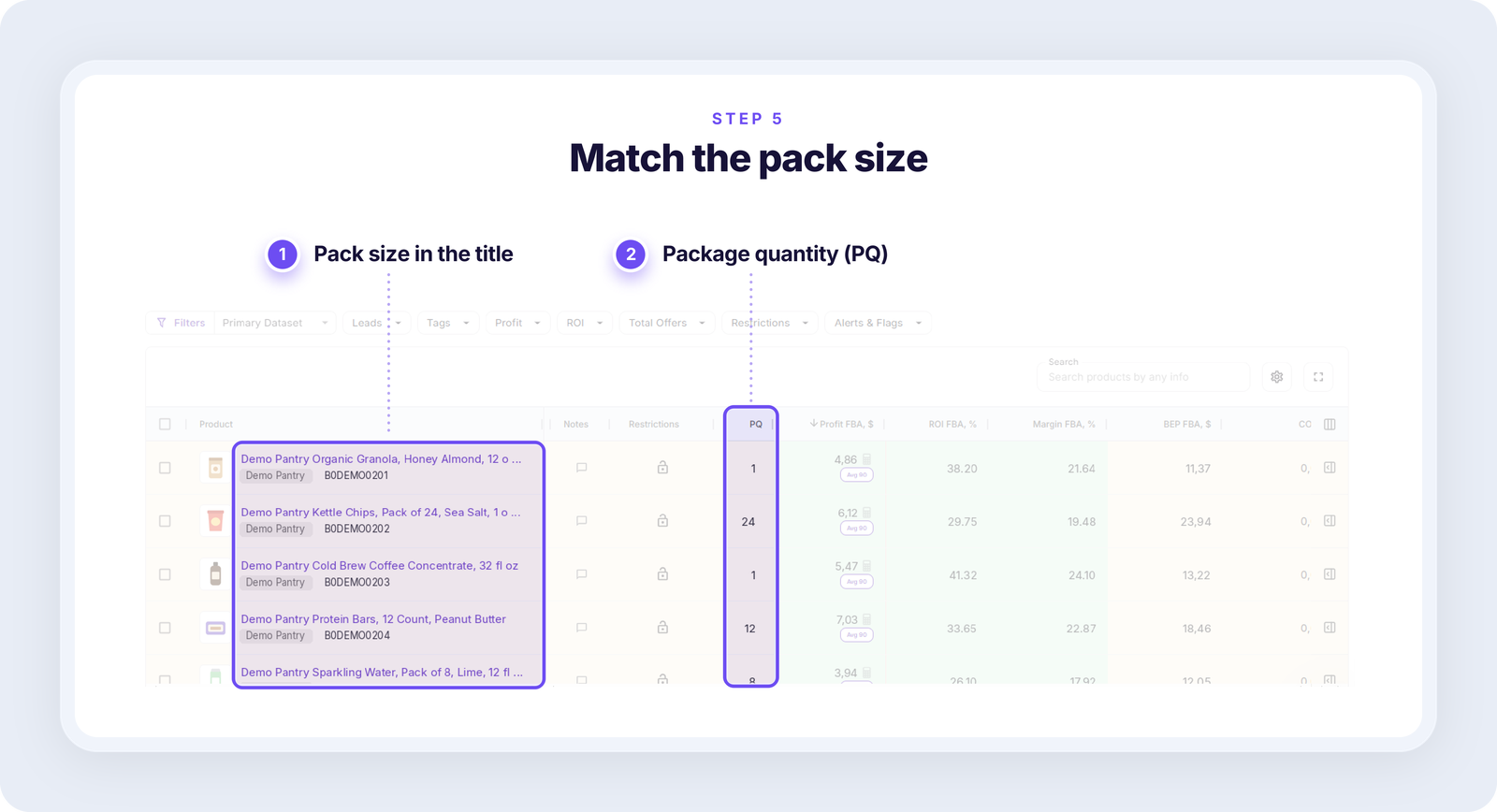
Step 5. Match the pack size
Grocery products are often sold on Amazon as singles and as multipacks. According to Seller Assistant’s State of Amazon Wholesale (Q3 2026), one grocery supplier line matches 1.62 Amazon listings on average. A 6-pack listing priced against one unit’s cost looks far more profitable than it is, so confirm the match before you add a product to a purchase order.
Common Mistakes When Buying From Grocery Distributors
Avoid these four mistakes:
- Reading a case price as a unit price. Grocery distributors often price by the case. If the price type is wrong, every profit number in the list is wrong too, so set Each or Case before you read the results.
- Matching the wrong pack size. A supplier line can match a single unit and several multipacks on Amazon. Check that the cost and the listing describe the same pack before you order.
- Ignoring meltable and expiry rules. Chocolate, gummies, protein bars and similar products are meltable, and Amazon accepts them in fulfillment centers only during a set season each year. The season starts in late summer or early fall, on different dates for different product types. Meltable stock left in a fulfillment center after the season ends in spring can be disposed of for a fee. Check the current meltable inventory dates before you order. Products with an expiration date also need enough shelf life when they arrive, so ask the distributor about both.
- Trusting last year’s price list. Sales and prices change. According to Seller Assistant’s State of Amazon Wholesale (Q3 2026), a usual 10% supplier price increase cuts grocery leads from 71.6 to 57.7 per 1,000 matched lines. Check recent sales and re-run every new price list.
FAQ
Do I need approval to sell groceries on Amazon?
It depends on your account and the brand. Amazon explains the rules on its Categories and products that require approval help page, and you apply in Seller Central. To check many ASINs at once, run them through Bulk Restriction Checker. It shows which products your account can sell, which need approval, and which are blocked.
Is grocery wholesale profitable on Amazon?
It can be. Grocery price lists give 71.6 leads per 1,000 matched lines, against 54.5 across all categories. The thin margins and pack-size traps above decide whether a given line works, so run each price list through Price List Analyzer before you buy.
What if the brand sells only through one distributor?
That distributor becomes your supply chain for the brand, so verify its authorization and its Amazon resale policy before the first order. If the brand sells well for you, ask it about a direct account.
What is a minimum order with a grocery distributor?
Minimums vary by distributor. Ask each one for its minimum order and the case pack of each product before you plan your first purchase. A minimum per delivery is easier to meet when a distributor carries several brands you can sell.
Which listing should I price against when one line matches several?
Use the listing whose pack size matches the unit or case you’re buying. In Price List Analyzer you can change package quantities and recalculate profit without uploading the file again.
Key Takeaways
Finding wholesale grocery distributors for Amazon works best one brand at a time.
- Grocery is the second most open category. According to Seller Assistant’s State of Amazon Wholesale (Q3 2026), 38.1% of grocery listings with Buy Box history are locked by one Buy Box seller, against 49.3% overall.
- Start from brands you can sell. Check grocery approval first, then find each brand’s distributors with AI Supplier Finder or ask the brand directly.
- Vet before you buy. Confirm the distributor is authorized, get invoices Amazon accepts, and ask about case packs and shelf life.
- Check every price list line. Amazon’s cut is about 45.3% in grocery, so set the price type, match the pack size, and check profit per product.
- Watch the seasons and the prices. Plan meltable products around Amazon’s meltable season, and re-run each new price list, because a usual 10% increase cuts grocery leads from 71.6 to 57.7 per 1,000 matched lines.