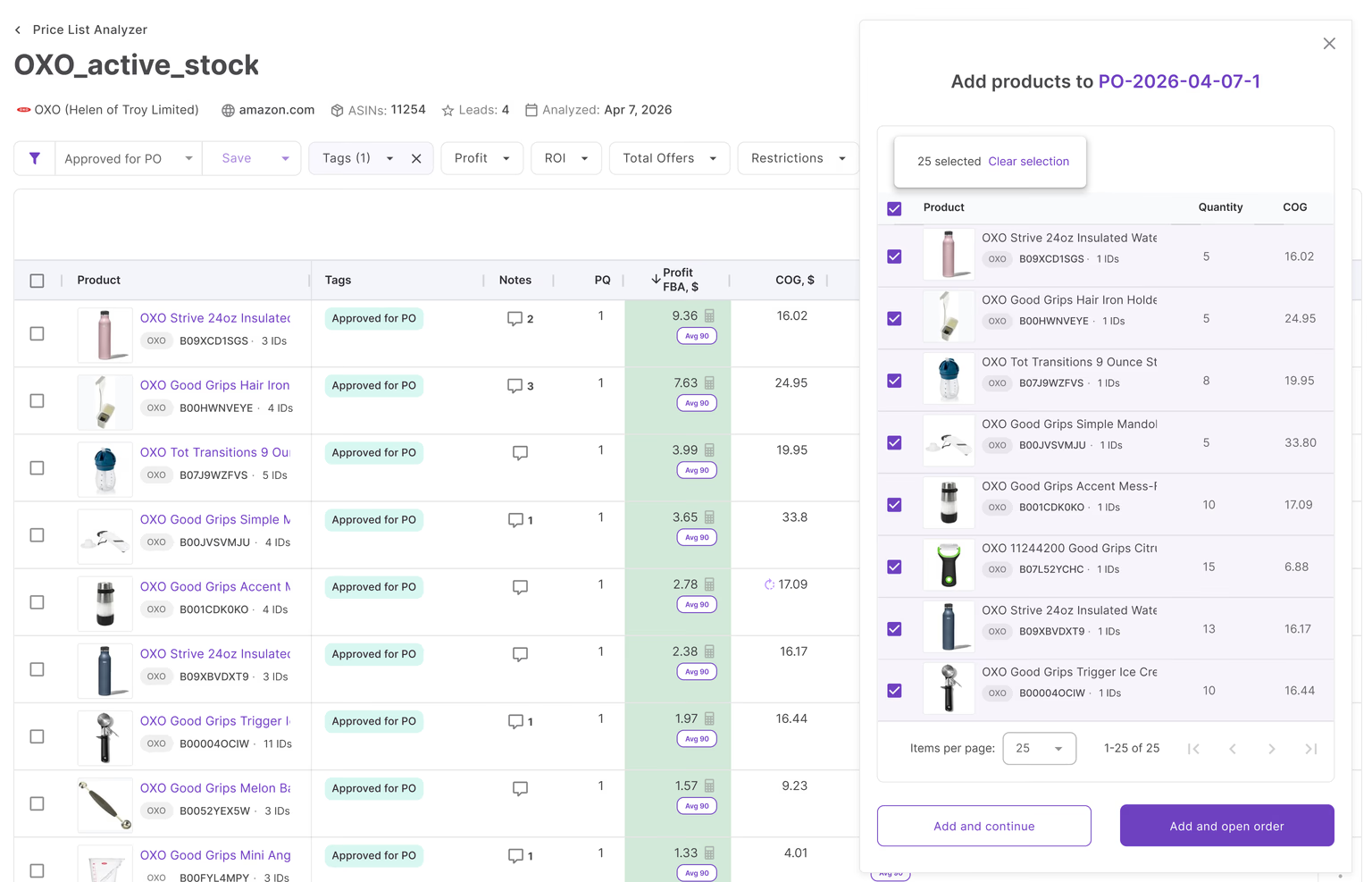


Wholesale cosmetics suppliers for Amazon sellers are the brands, authorized distributors and wholesalers that sell makeup, skincare and hair care by the case to resellers. According to Seller Assistant’s State of Amazon Wholesale (Q3 2026), beauty supplier price lists give 125 leads per 1,000 matched lines, The highest of any category. beauty also comes with brand approvals and ip complaints, so check both before you order..
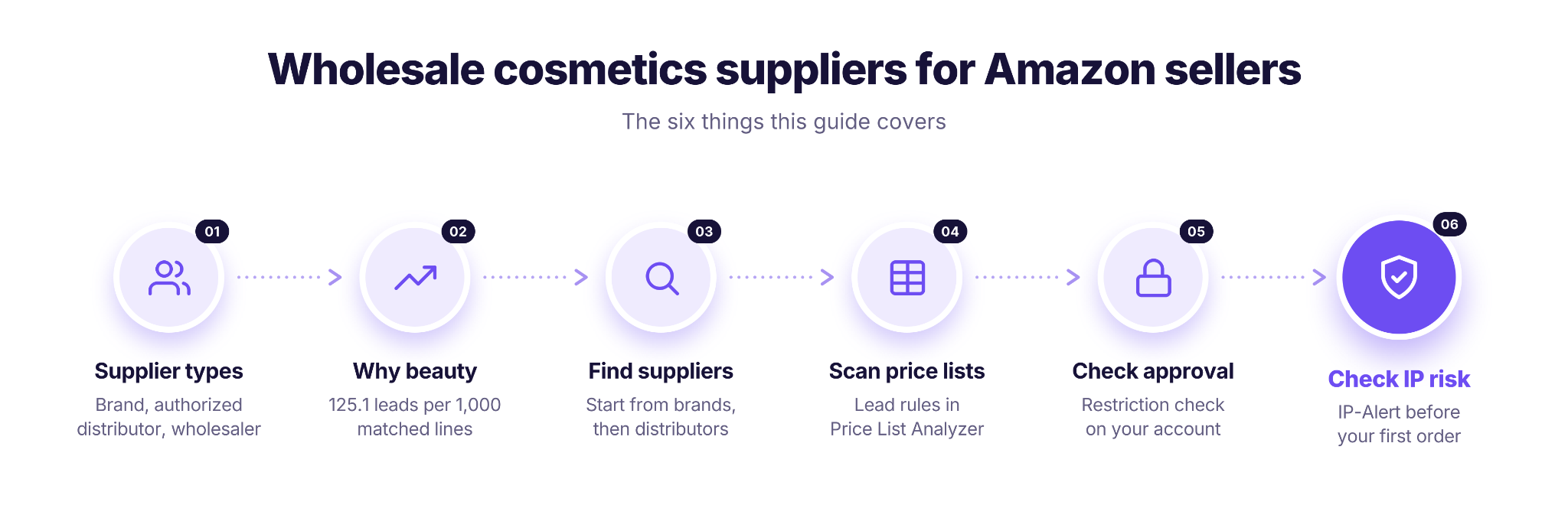
Most supplier lists online are written for salons and boutiques. This guide is for Amazon wholesale resellers. It covers who the suppliers are, how to find the ones that sell to resellers, and what to check before you buy.
What a Wholesale Cosmetics Supplier Is for an Amazon Seller
A wholesale cosmetics supplier is any company that sells beauty products to you at wholesale prices, by the case, for resale. For an Amazon seller, it usually means one of three types.
Types of suppliers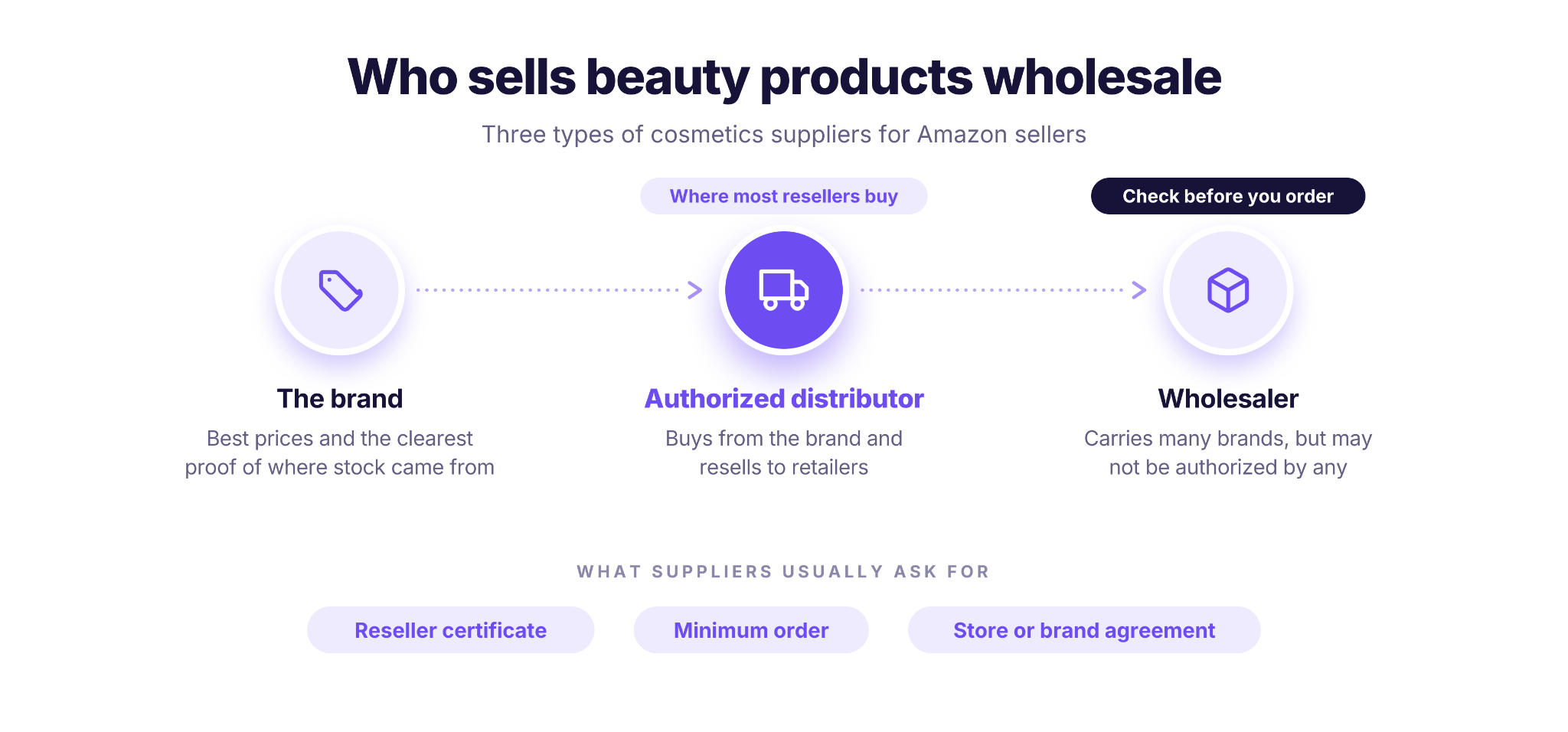
- The brand itself. Some brands sell direct to resellers, which usually gives you the lowest prices and the clearest proof of where your products came from.
- Authorized distributors. These cosmetic wholesale distributors buy from the brand and resell to retailers. Many beauty brands work only through distributors, so this is where many resellers buy.
- Wholesalers. These wholesale makeup vendors carry many brands but may not be authorized by any of them. Confirm that they’re authorized before you order.
Some beauty brands are professional-only lines sold through salons, and their distributors may sell only to licensed professionals.
What suppliers ask for
Before a supplier opens an account, it usually asks for:
- a reseller certificate or sales tax ID
- a minimum order, per order or per brand
- sometimes a website or store, or a signed brand agreement that may limit where you sell
Say upfront that you sell on Amazon. Some suppliers don’t allow marketplace sales, and it’s better to know before your first order.
Fragrance is usually sold through separate suppliers with their own rules, so this guide covers makeup, skincare and hair care.
Why Beauty Gives the Most Wholesale Leads
Beauty supplier price lists turn into more Amazon leads than any other category. A lead is a product that passes the basic buying checks: it sells at least 5 units a month, Amazon isn’t on the Buy Box, the listing matches an Amazon product with known fees, and the ROI after fees is between 20% and 200%.
Beauty vs. all categories
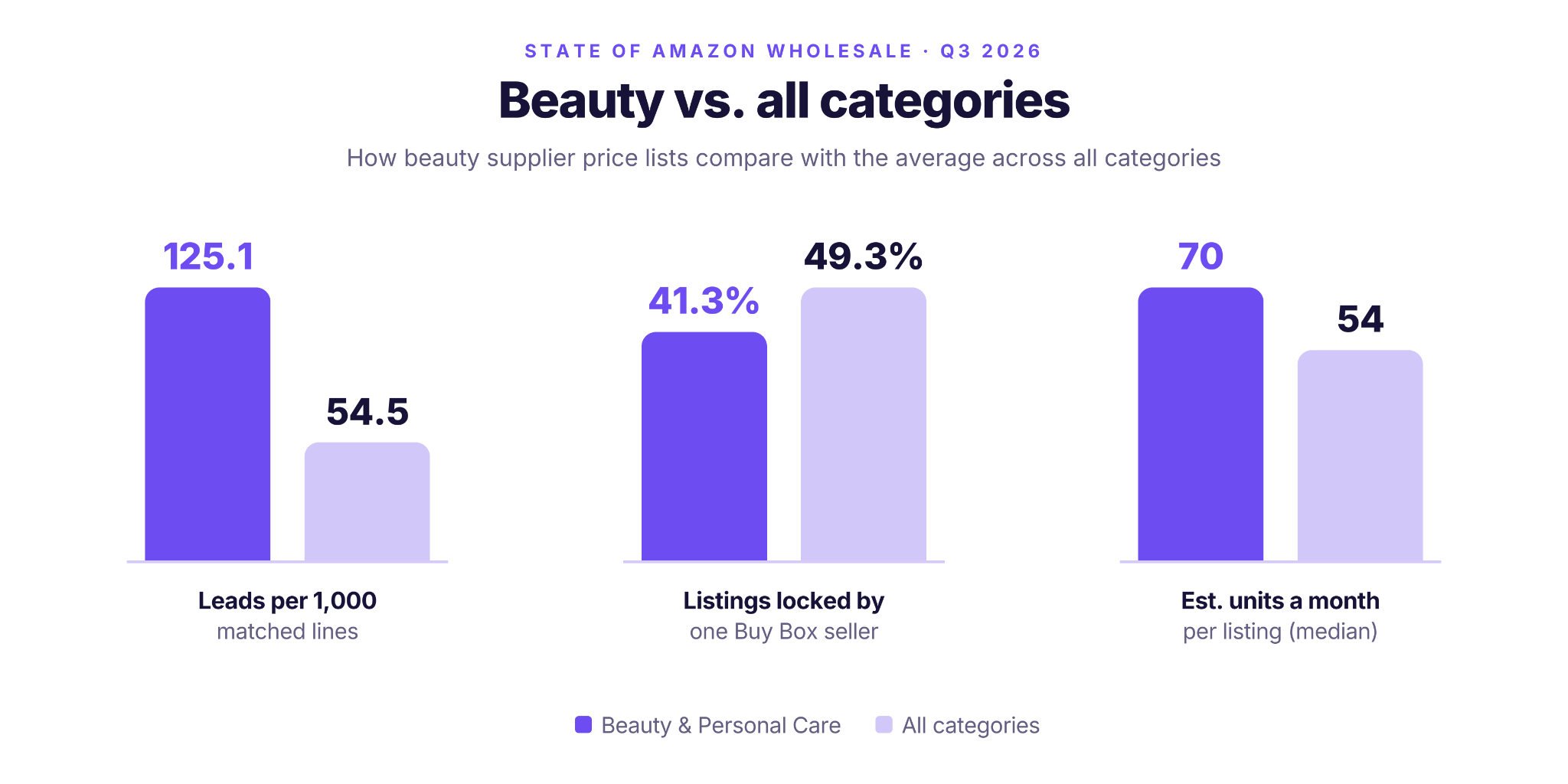
According to Seller Assistant’s State of Amazon Wholesale (Q3 2026), Beauty & Personal Care price lists give 125.1 leads per 1,000 matched lines, more than twice the 54.5 average across all categories. A matched line is a price list line that has a listing on Amazon.
 The median seller finds 92.8 leads per 1,000 matched lines in beauty, below the category average, because a few large catalogs pull the average up.
| Measure | Beauty & Personal Care | All categories |
|---|---|---|
| Leads per 1,000 matched lines | 125.1 | 54.5 |
| Listings locked by one Buy Box seller (of listings with Buy Box history) | 41.3% | 49.3% |
| Est. units a month per listing (median) | 70 | 54 |
Beauty listings sell more units per month (estimated), and fewer of them are locked by one seller who wins the Buy Box most of the time.
Beauty leads depend on supplier cost
The leads depend heavily on supplier cost. A 10% supplier discount raises beauty to 155.8 leads per 1,000 matched lines, and a usual 10% price increase drops it to 102.0. Re-check each new price list before you reorder.
How to Find Cosmetics Suppliers
A reliable way to find wholesale makeup suppliers who will sell to an Amazon reseller is to work backward from the brands you want to sell.
Start from brands
Supplier directories are the first results you see when you search for wholesale cosmetics. Most mix brand-authorized distributors with liquidation lots, dropship sites and sellers no one has verified. A supplier from a directory doesn’t show whether the brand allows it to sell to you.
Choose the brands you want to sell before you look for any supplier.
What makes a good brand to resell
- Several third-party sellers already sell it on Amazon, which suggests resellers can get the stock.
- It’s sold beyond salons and the brand’s own store.
- Your account can sell it, or can get approved for it (see the approval check below).
Then look for who supplies each brand. For the general method, see our guide on how to find Amazon FBA wholesale distributors.
Ask the brand for its authorized distributors
The brand is the most reliable source for its own distributor list. Check its website for a “Where to buy,” “Wholesale” or “Become a retailer” page, or write to its sales team and ask which wholesale makeup distributors are authorized to sell to online resellers.
To speed this up, AI Supplier Finder searches by brand name and groups the results as Brand, Distributor or Wholesaler, each with a high, medium or low match confidence.
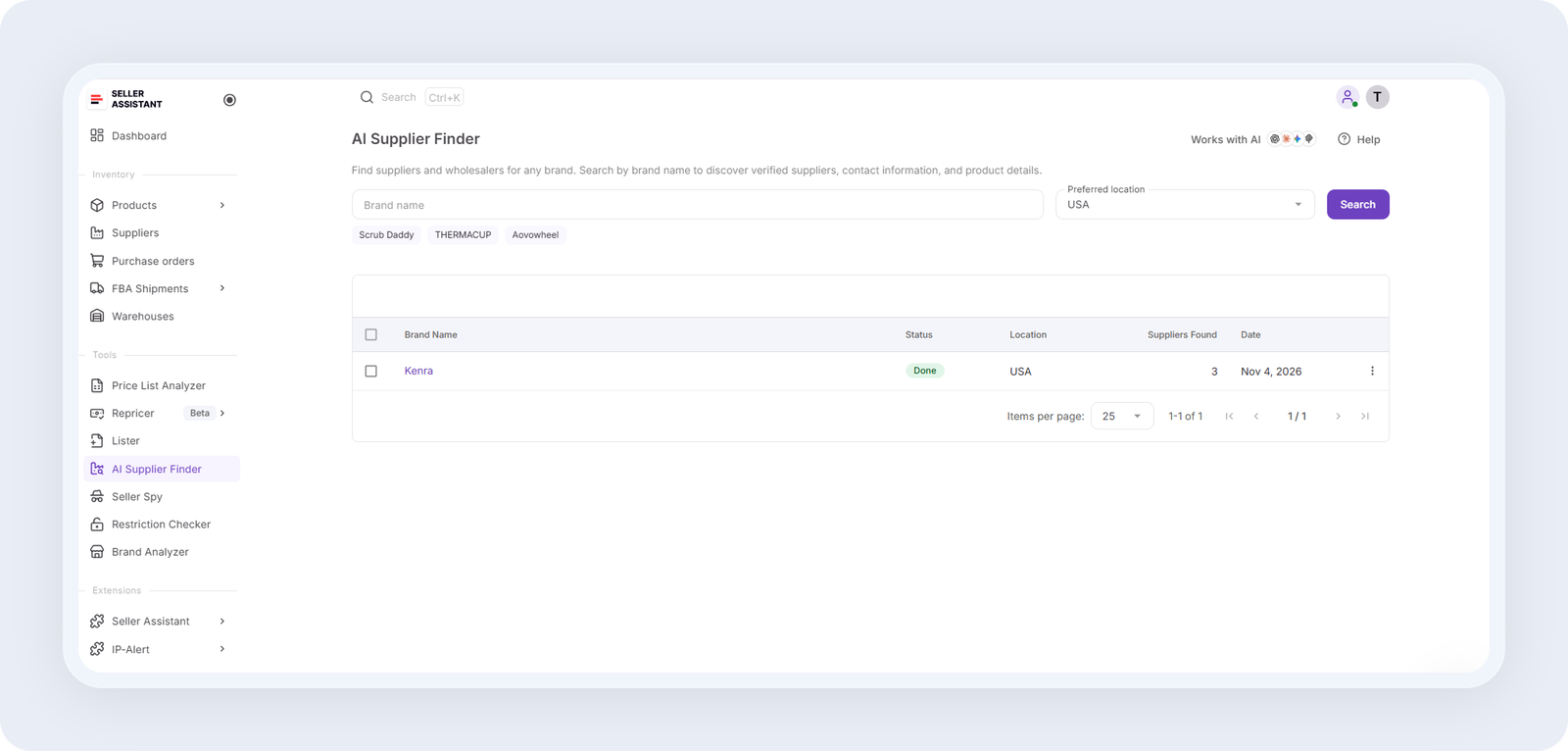
How to read the results
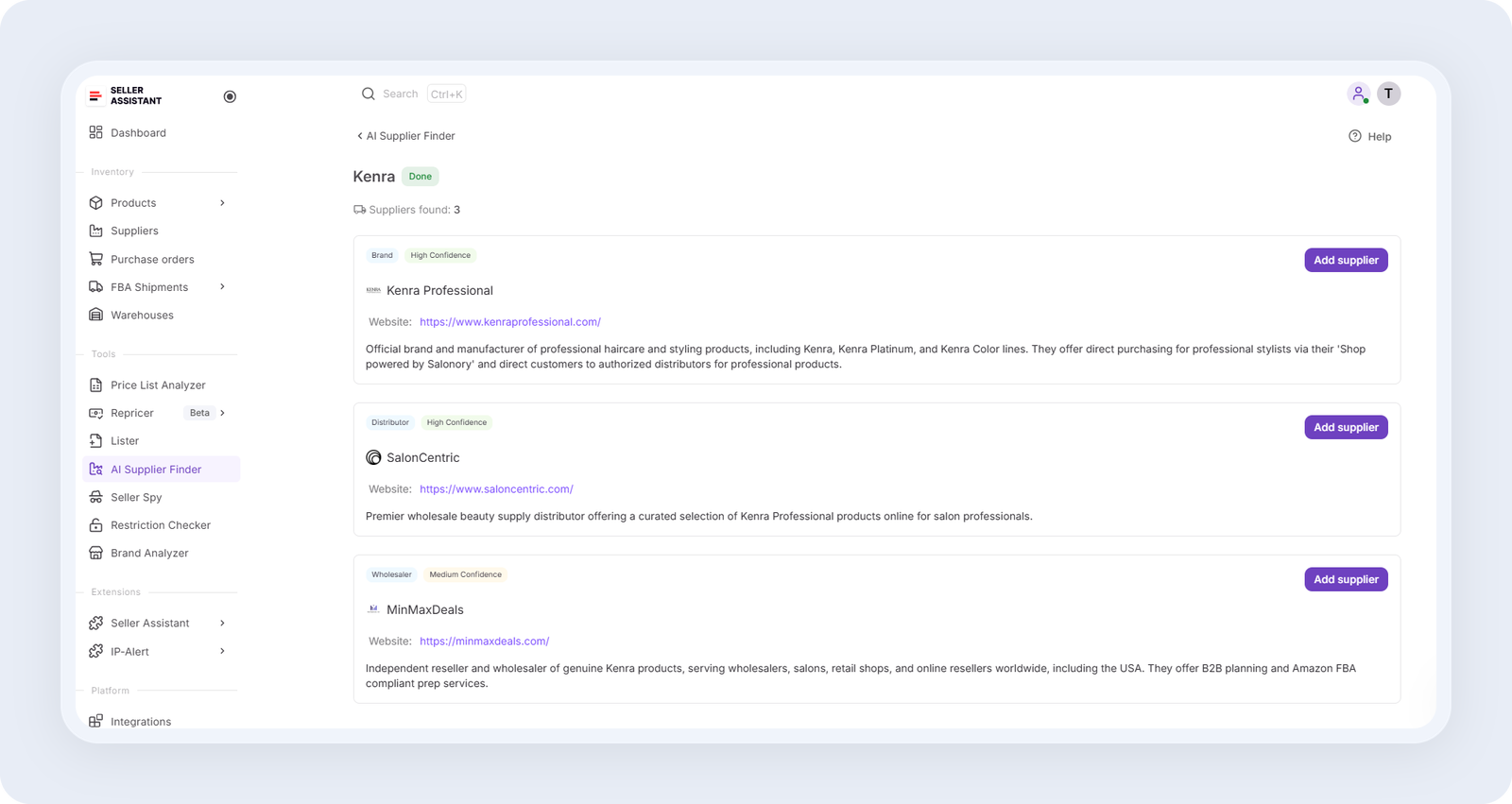
In a search for the hair care brand Kenra, the results include three types of suppliers:
- The brand, Kenra Professional: sells direct to professional stylists and sends other customers to its authorized distributors.
- A distributor, SalonCentric: sells the brand’s products to salon professionals.
- A wholesaler, MinMaxDeals: says it serves online resellers and offers FBA prep.
These are examples from one search. Professional-only lines can limit who may buy, so confirm with the brand that a supplier is authorized before you share documents or place an order. Keep every invoice, because Amazon may ask for it.
Scan each supplier price list with Price List Analyzer
Once a supplier approves you, it sends a price list, often with hundreds of lines. Price List Analyzer matches each line to its Amazon listing, so you can see which products from skincare wholesale distributors are worth buying.
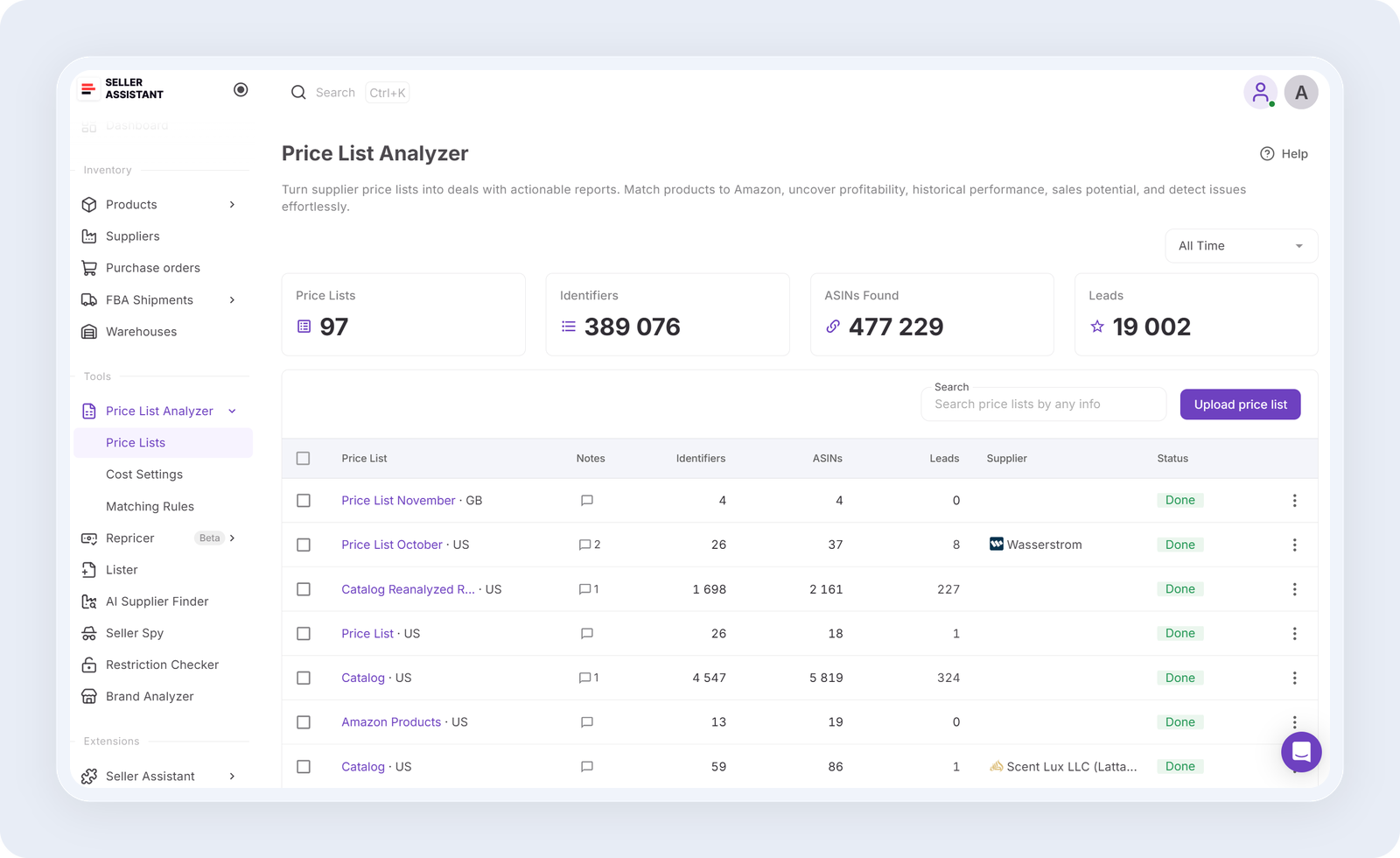
How it works
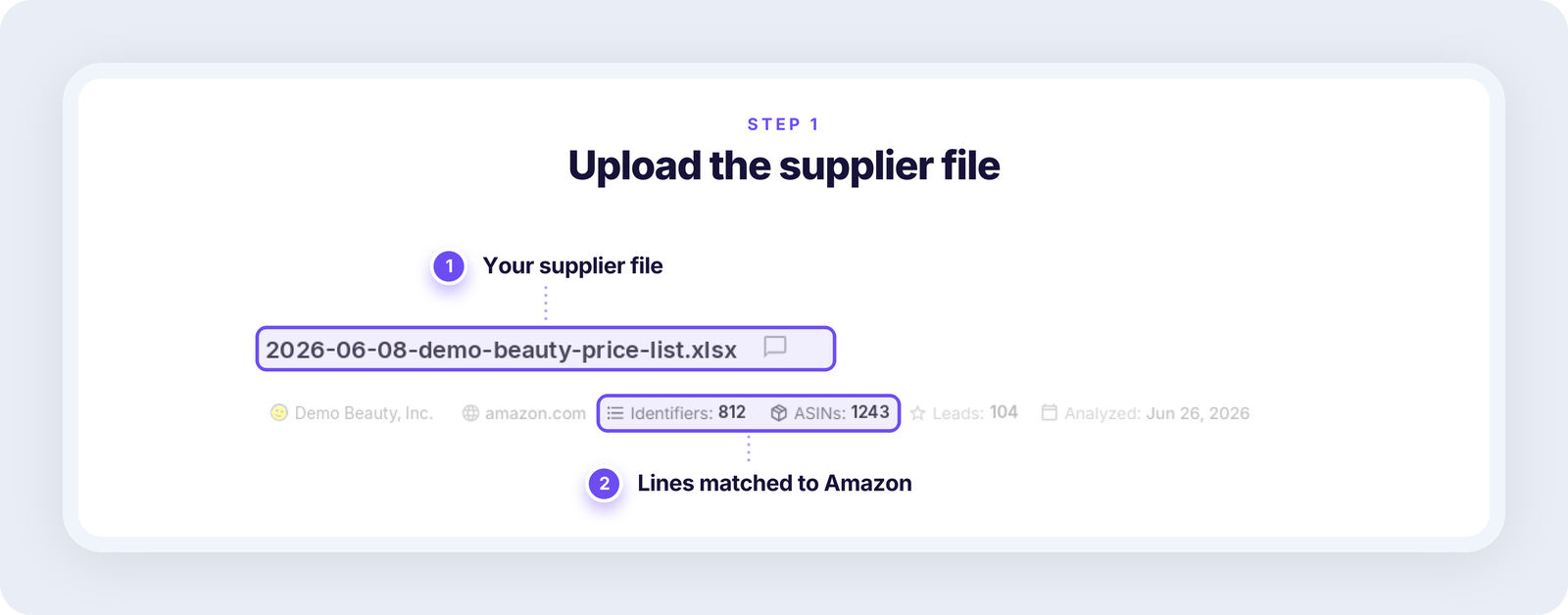
Step 1. Upload the supplier file
Upload the price list and map the identifier and cost columns, so each line matches its Amazon listing at the right cost.
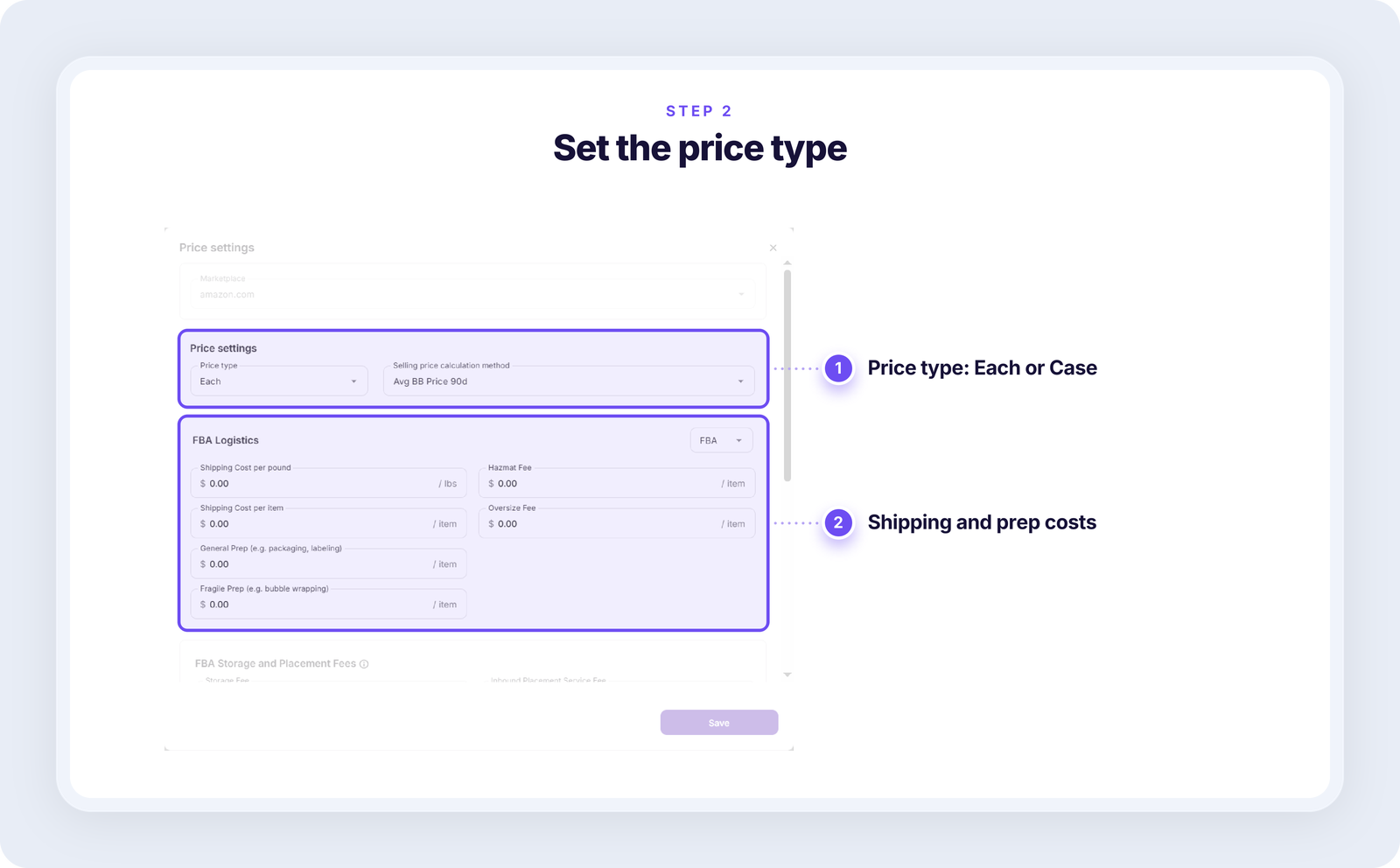
Step 2. Set the price type
In Price settings, choose Each or Case. Many wholesale skincare suppliers price by the case, and a case price read as a unit price makes every product look unprofitable. You can also add your shipping and prep costs here, so profit reflects your costs.
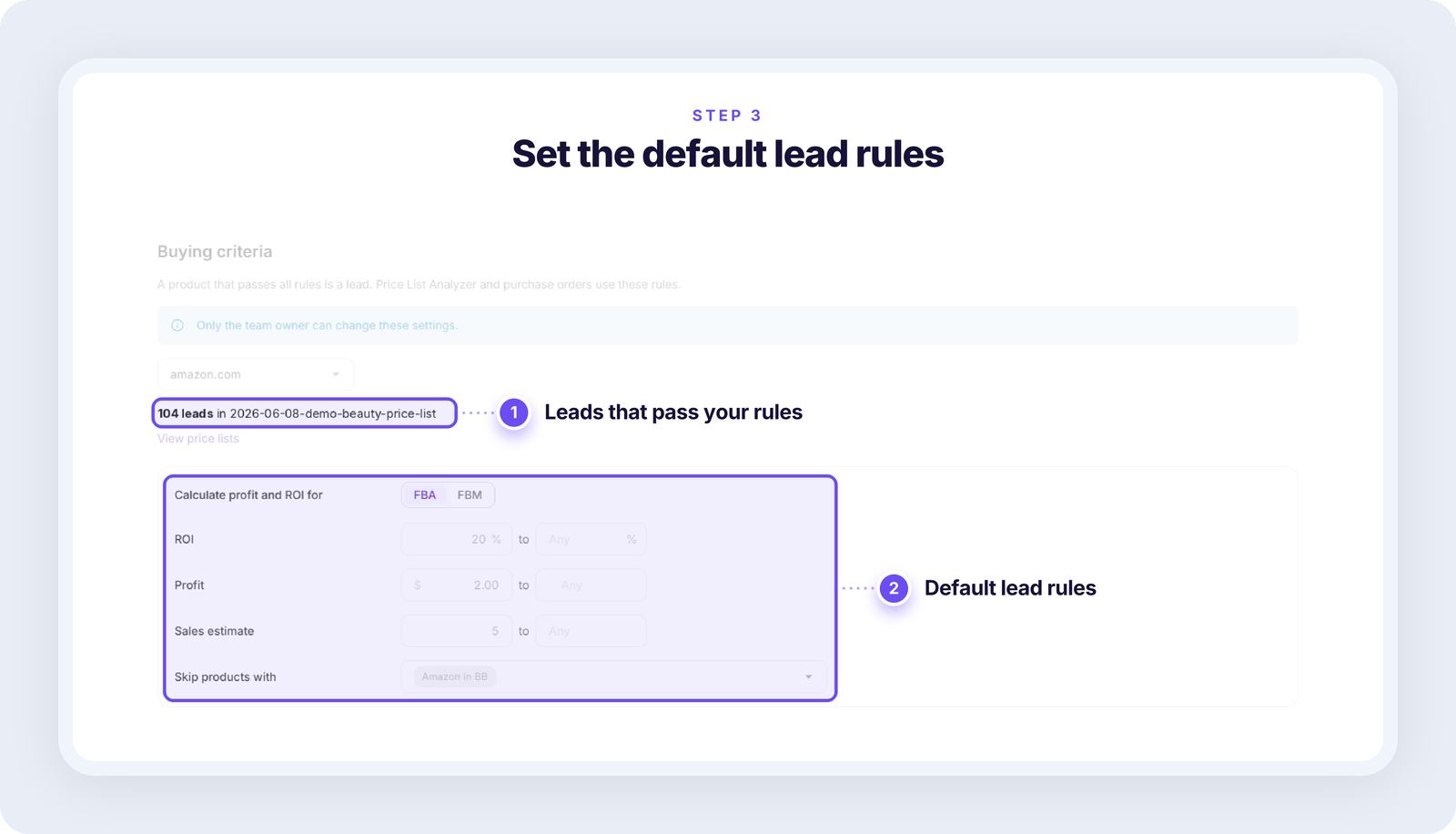
Step 3. Set the default lead rules
In Buying criteria, review the rules a product must pass to count as a lead. By default, Price List Analyzer keeps the products that:
- are sold through FBA
- have an ROI of 20% or more
- make at least $2 profit
- sell an estimated 5 or more units a month
- don’t have Amazon on the Buy Box
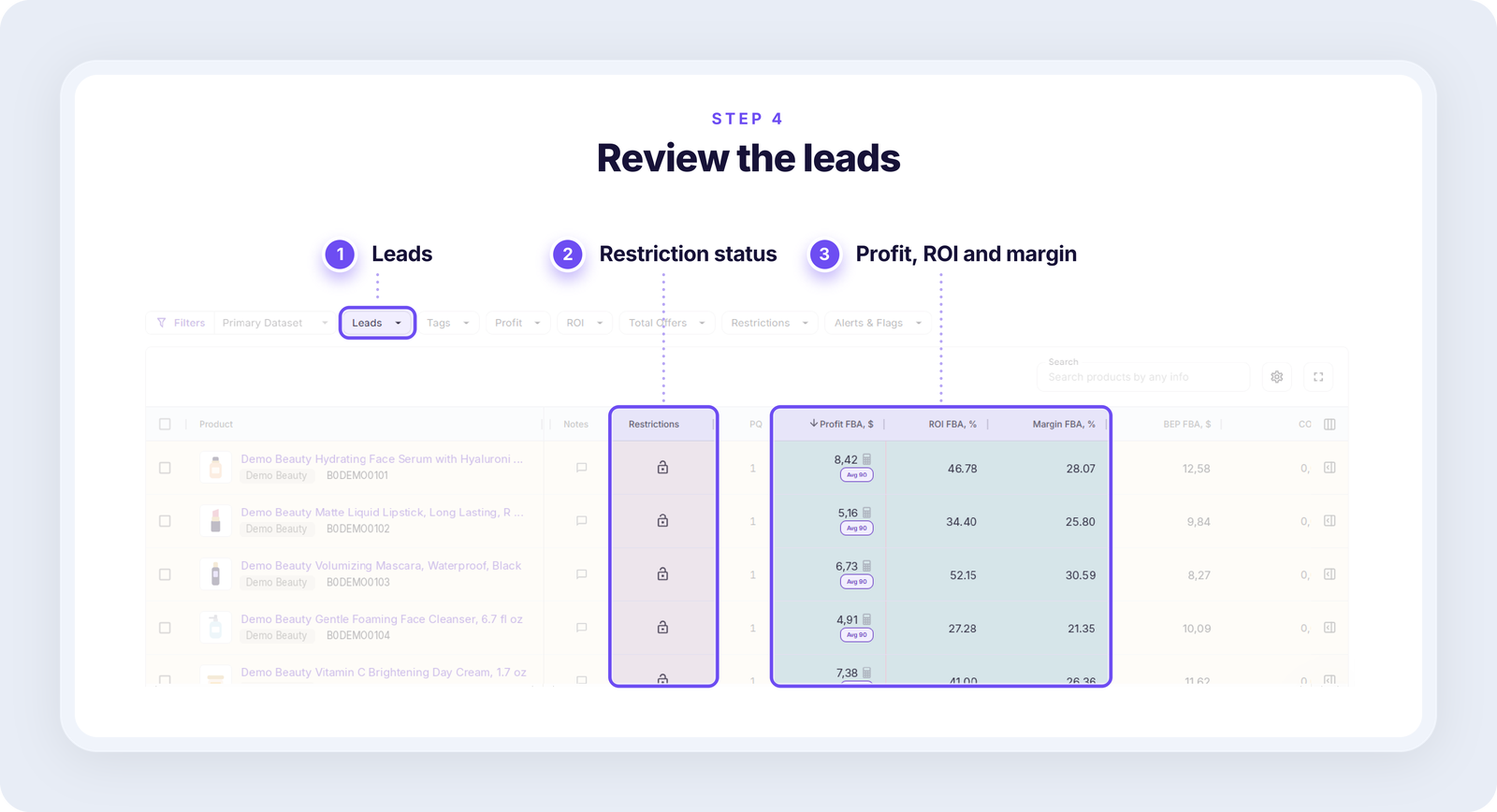
Step 4. Review the leads
For each product, the results show profit, ROI, sales estimates, Buy Box data and restriction status. Start with the leads, then check each one before you add it to a purchase order.
Check Approval Before You Buy
Some beauty brands and subcategories need Amazon’s approval before you can list them. Approval differs by account, so a brand that’s open to one seller can be restricted for another. Amazon lists the categories that need approval in its overview of categories, and our guide to Amazon restricted products explains how the rules work.
Check the whole list at once
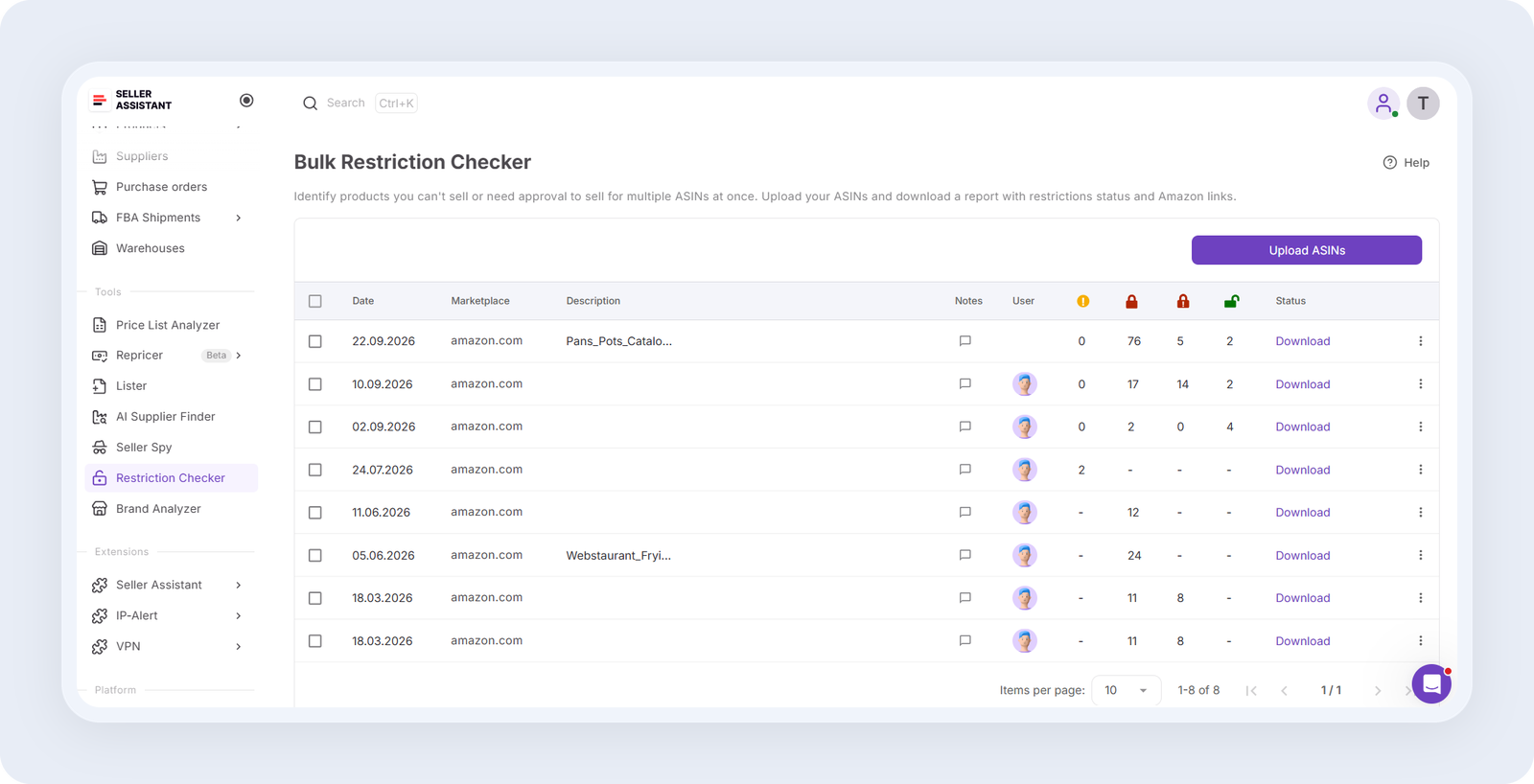
Price List Analyzer shows the restriction status of each product in a price list. To check a brand before you even contact a supplier, use Bulk Restriction Checker. It asks Amazon whether your seller account may sell each ASIN in a marketplace.
How to use it
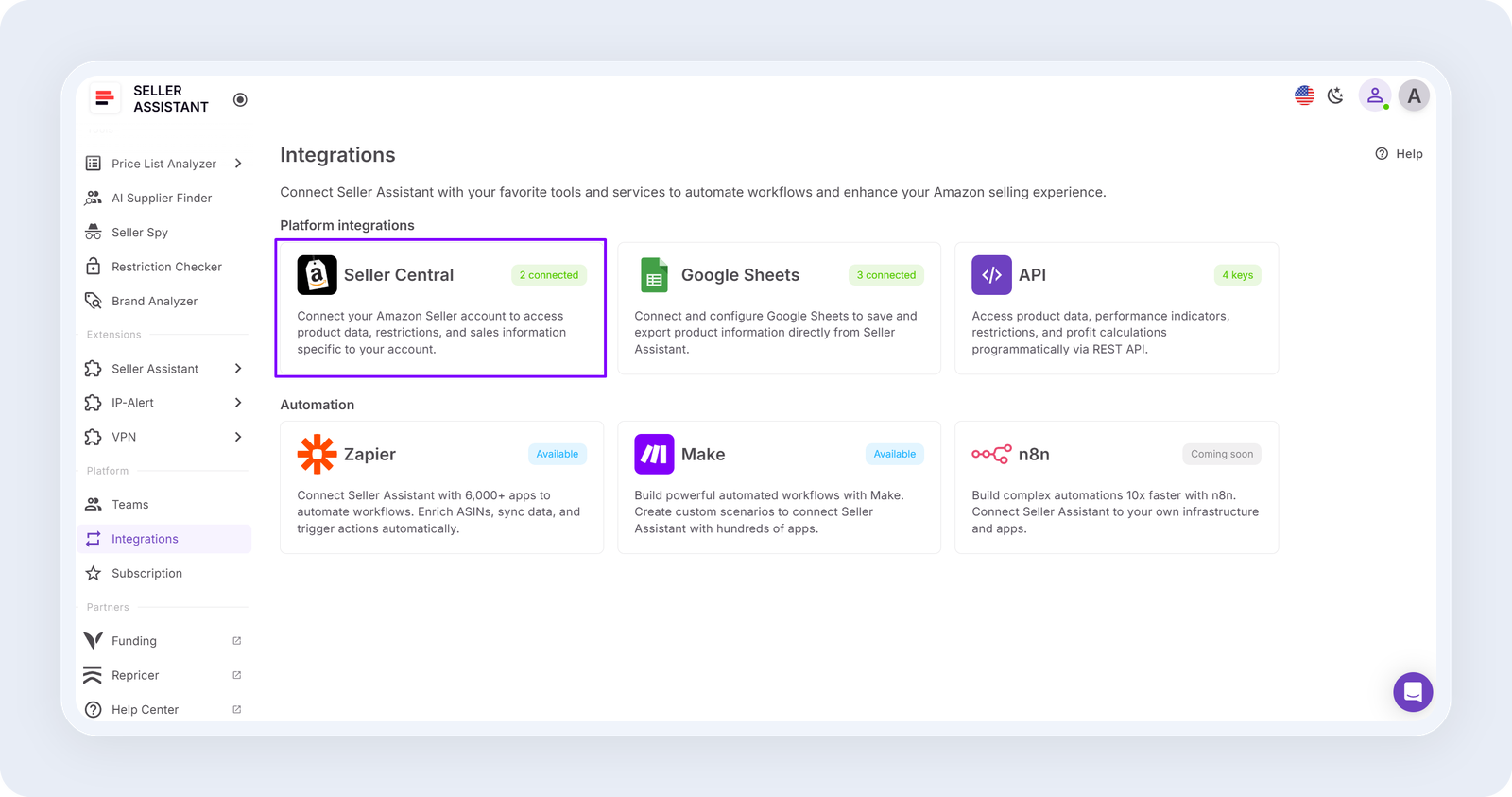
Step 1. Connect your Amazon seller account
The check runs on your own account, so the result applies only to you.
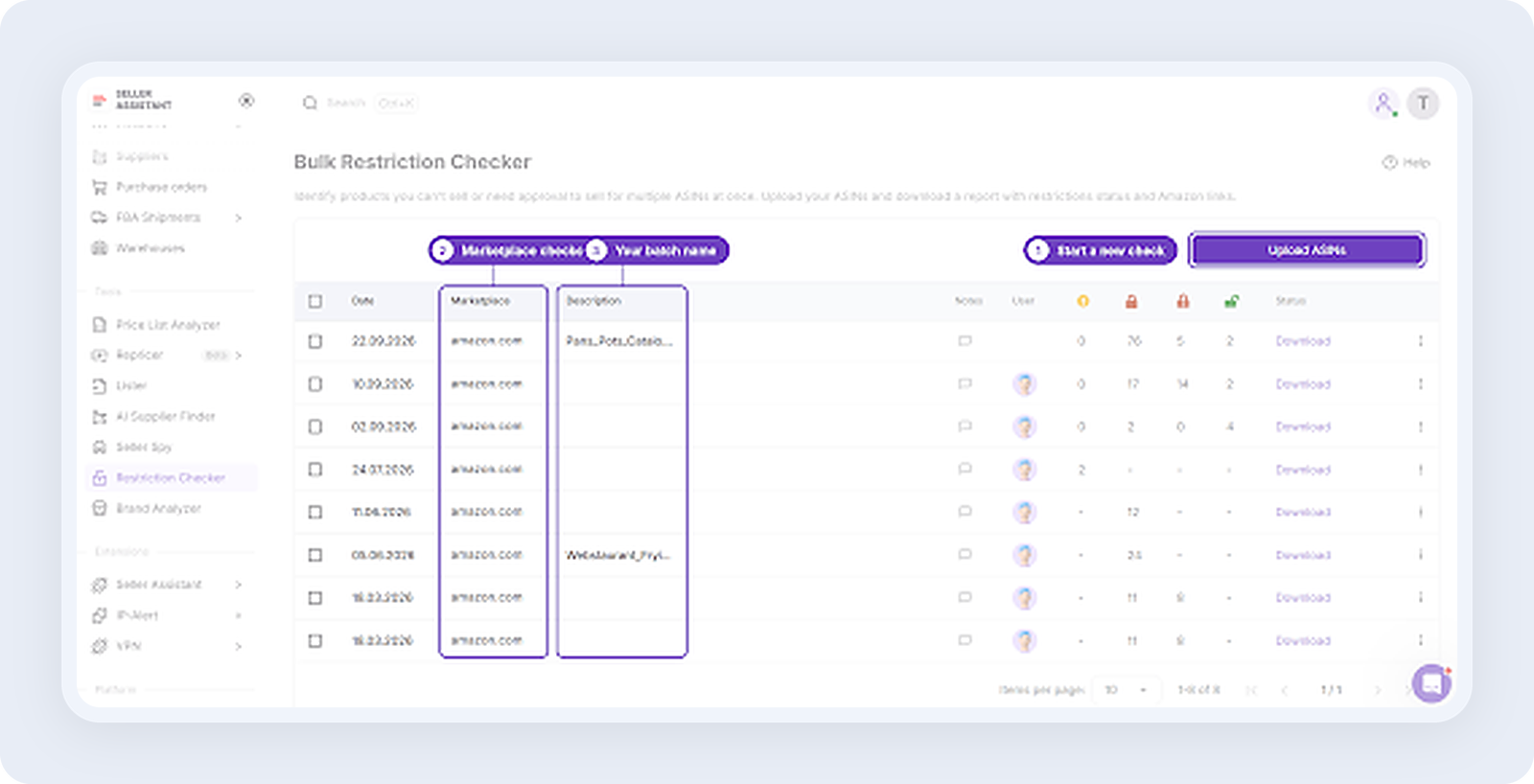
Step 2. Upload the ASINs
Upload a brand’s product list or the ASINs from a price list. The upload dialog shows how many ASINs you can check on your plan.
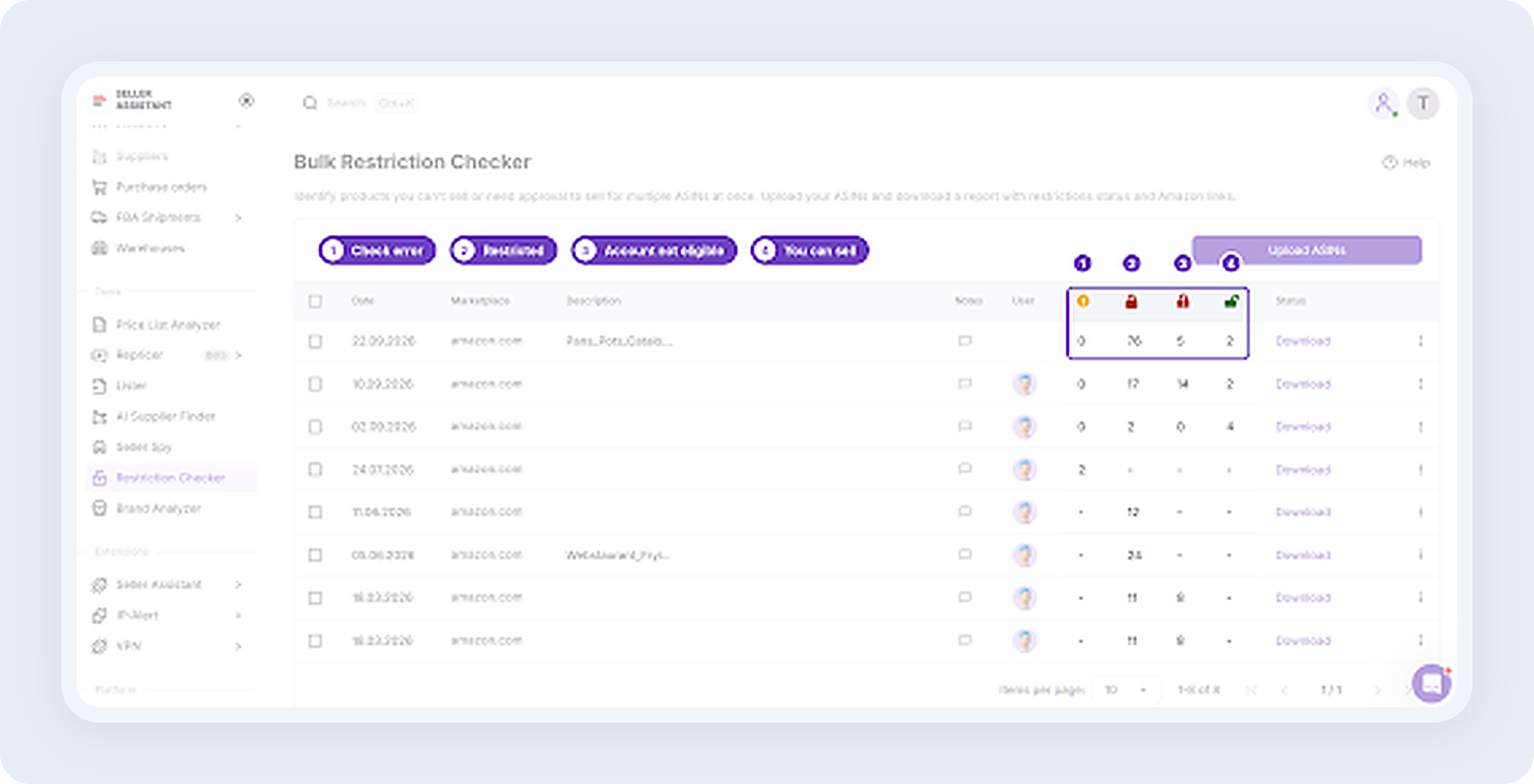
Step 3. Review the results
The export lists each ASIN with its status. Rows that need approval include a link to apply in Seller Central.
Check IP Risk Before You Buy
Some large beauty brands protect their trademarks and file IP and authenticity complaints against resellers on Amazon. A complaint can remove your listing and count against your account health, even when your products are genuine. Learn what an Amazon IP complaint is and how it affects your account.
An approval from Amazon doesn’t protect you from a complaint, so check the brand’s complaint history before you order.
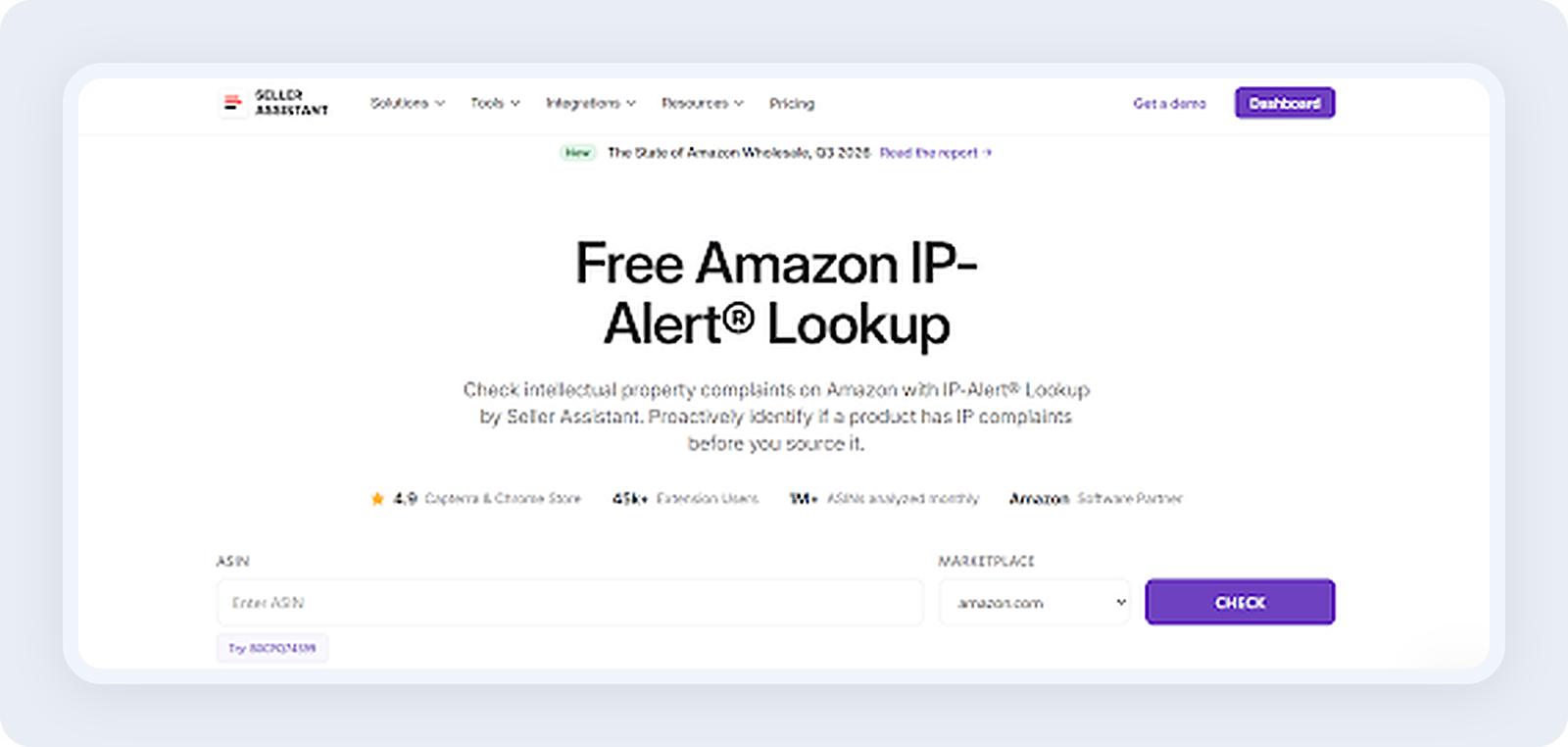
Check one product for free
Seller Assistant’s Free IP-Alert Lookup checks one ASIN with no sign-up. It shows:
- the type of complaint
- the brand that filed it
- the dates the complaint was recorded
See alerts while you research
IP-Alert® by Seller Assistant shows a red triangle icon on Amazon product and search pages, and in the Side Panel View on supplier websites. Hover over the icon to see the type of violation and the date it was recorded.
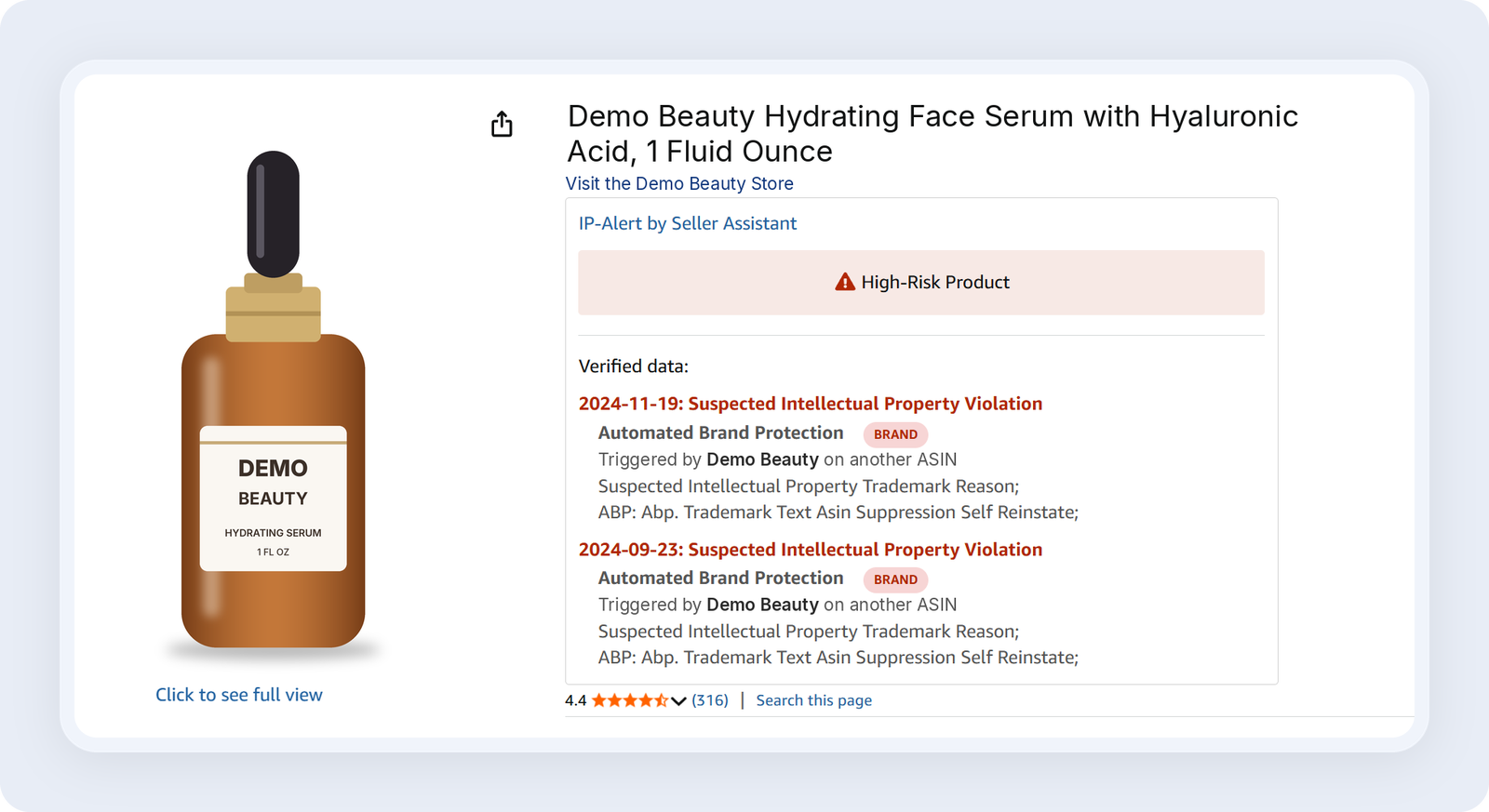
If a brand has a complaint history, ask the supplier whether it is authorized for that brand. If it isn’t, skip that supplier.
Common Mistakes When Buying From Cosmetics Suppliers
Most beauty bad buys come from a few avoidable mistakes:
- Buying from an unauthorized source. A low price from a supplier the brand doesn’t know about can lead to authenticity complaints. Confirm with the brand before your first order, and keep every invoice.
- Ignoring expiry dates. Many cosmetics and skincare products have an expiration date, and Amazon has rules on how much shelf life they need when they arrive. Ask the supplier for the dates before you order, and check them when the stock arrives.
- Trusting last year’s price list. Beauty leads are sensitive to cost. According to Seller Assistant’s State of Amazon Wholesale (Q3 2026), a usual 10% supplier price increase cuts beauty leads from 125.1 to 102.0 per 1,000 matched lines. Re-run every new price list.
- Skipping the approval check. Some beauty brands and subcategories need approval, and it differs by account. Check restrictions before you order, not after the stock arrives.
- Reading a case price as a unit price. Many beauty suppliers price by the case. Set the price type correctly, or every profit number will be wrong.
FAQ
Do I need approval to sell beauty products on Amazon?
It depends on the brand and your account. if a product needs approval, apply in Seller Central with a supplier invoice or a letter of authorization from the brand. Our guide to the Amazon letter of authorization includes a template.
Is beauty a good category for Amazon wholesale?
Beauty has the highest lead rate in the report, but the same report finds that how you select products matters more than which category you sell in. Run a beauty price list through Price List Analyzer before you change your sourcing.
How do I know if a cosmetics supplier is authorized?
Confirm it with the brand, then ask the supplier for proof that it buys from the brand, such as a letter from the brand naming the supplier as an authorized distributor.
Can I sell expired or near-expiry cosmetics on Amazon?
Amazon doesn’t allow expired products. For FBA, Amazon requires products with an expiration date to have more than 90 days of shelf life left when they arrive at the fulfillment center. Units within 50 days of their expiration date are removed for disposal. The date must be on each unit in the MM-DD-YYYY or MM-YYYY format. See Amazon’s expiration guidelines on FBA products for the full rules.
What do I do if a beauty brand files an IP complaint?
If you work with the brand, ask the rights owner for a retraction. If you don’t, appeal through the Account Health Dashboard with supplier invoices from the brand or an authorized distributor. Our guide to answering an IP infringement complaint covers both routes.
Key Takeaways
Finding wholesale cosmetics suppliers for Amazon starts with the brand, not with a supplier directory.
- Beauty has the most leads. According to Seller Assistant’s State of Amazon Wholesale (Q3 2026), beauty price lists give 125.1 leads per 1,000 matched lines, more than twice the 54.5 average.
- Start from brands. Pick brands that resellers already sell on Amazon, then ask each brand for its authorized distributors.
- Check before you buy. Run a restriction check on your account and check each brand’s IP complaint history before your first order.
- Scan every price list. Set the right price type, apply your lead rules in Price List Analyzer, and re-run each new list, because a usual 10% increase cuts beauty leads to 102.0 per 1,000.
- Keep your proof. Keep every invoice and check expiry dates when the stock arrives.