


Struggling to find consistent, high-margin inventory? Amazon wholesale pallets might be the edge you’re missing – offering bulk returns, overstock, and shelf-pulls at a fraction of the retail price.
For online arbitrage sellers and dropshippers looking to scale or diversify, liquidation pallets can be a powerful sourcing method. But they also come with risks and logistics most don’t anticipate.
In this post, we’ll break down how Amazon wholesale pallets work, where to buy them, what to avoid, and how to actually profit from them.
What Are Amazon Wholesale Pallets?
Amazon wholesale pallets are large, bulk lots of returned, overstocked, or unsold inventory bundled together and sold at heavily discounted rates. These pallets are typically sourced through Amazon’s own liquidation channels or via authorized third-party liquidation platforms.
For online and retail arbitrage and dropshipping sellers, they present a high-risk, high-reward sourcing opportunity. Instead of scanning for individual deals, you’re buying inventory in bulk – often unseen – hoping to flip it for a healthy margin. The catch? Quality and item type vary widely, and not all pallets are profitable.
How Amazon returns become pallets
Every day, Amazon processes tens of thousands of returns – from unopened electronics to damaged home goods. Not all of these items are restocked. Many are sent to liquidation warehouses, where they’re bundled into pallets by category (like tools, toys, or mixed general merchandise).
These pallets are then auctioned or sold off at a fraction of MSRP to resellers. Some go directly through Amazon Liquidation Auctions; others land on platforms like B-Stock, Direct Liquidation, or Liquidation.com. The process helps Amazon recover value on unsellable goods – and gives savvy resellers a shot at serious profit.
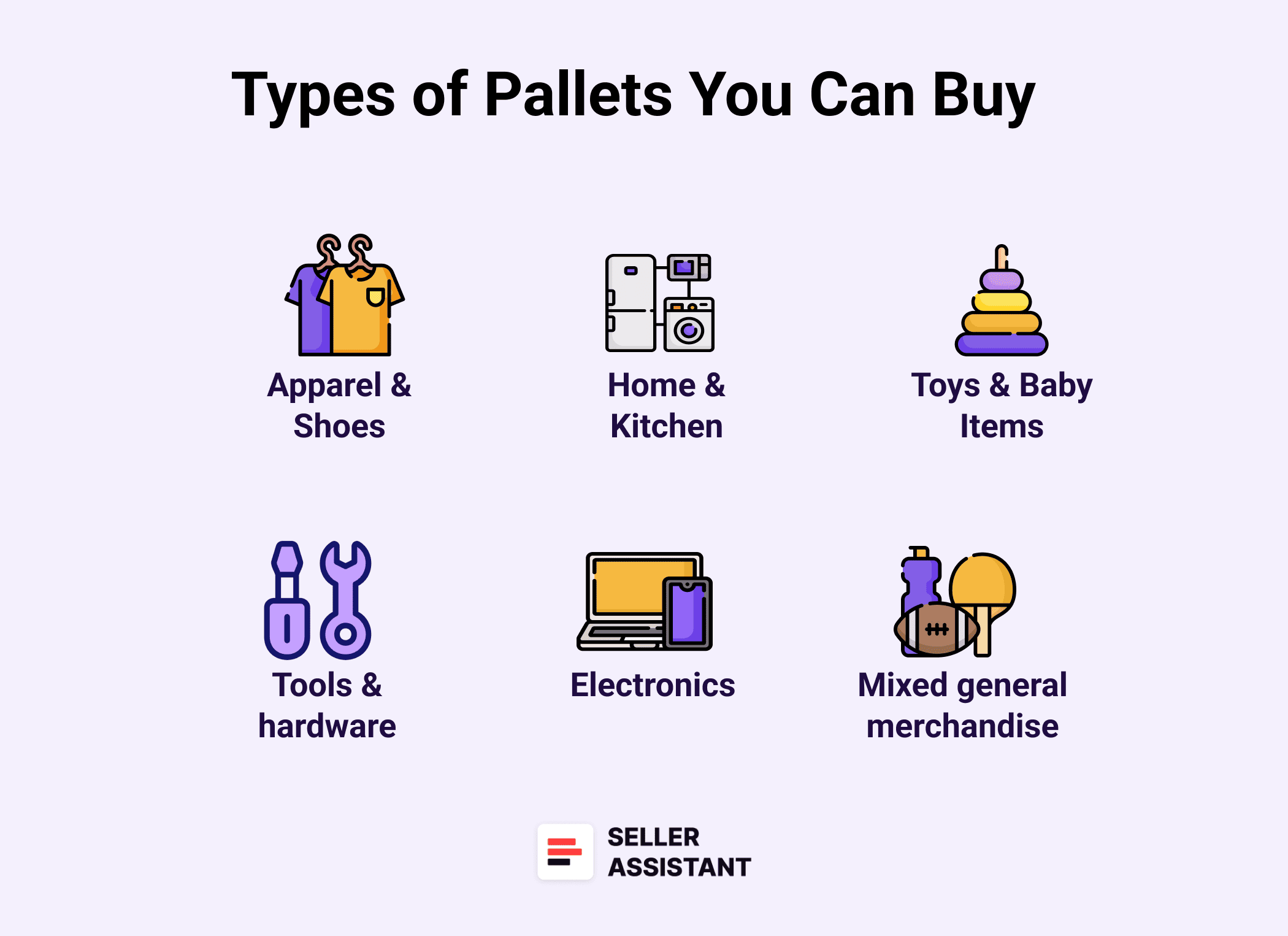
Types of Pallets You Can Buy
Not all Amazon pallets are created equal. Inventory varies by category, condition, and resale potential – and understanding what you’re buying is key to minimizing losses.
.png)
Types of Pallets You Can Buy
Electronics
Includes returned laptops, phones, accessories, gaming gear, and smart home devices. High resale value, but risk of non-working items is significant.
Home & kitchen
Think coffee makers, cookware, small appliances, decor, and furniture. Easier to inspect and test, but bulky shipping can eat margins.
Tools & hardware
Drills, saws, hand tools, and equipment – popular among local flippers and flea market sellers. Often includes open-box or lightly used items.
Apparel & shoes
Brand-name clothing and shoes sold in bulk, often shelf-pulls or customer returns. Size and style mismatches are common, but profit is possible if sorted and listed properly.
Toys & baby items
Great for Q4 prep. Mix of trending toys, baby monitors, or gear. Condition range can be wide, so visual inspection is crucial.
Mixed general merchandise
A grab bag of categories – often lower cost, higher mystery. Perfect for beginners testing the waters or sellers with varied marketplaces.
Item conditions explained
Pallets typically include items in one of three conditions.
- New
Unopened and unused – rare and highly valuable.
- Open box
Items returned after limited or no use. Often complete but may lack original packaging.
- Salvage
Damaged, incomplete, or non-functional items sold as-is. High-risk, low-cost – best for parts or local resale.
Where to Buy Amazon Pallets
There are multiple ways to source Amazon wholesale pallets, but not all platforms offer the same value, transparency, or convenience. Here’s a breakdown of the main options, tailored to what matters most for OA sellers and dropshippers.
Amazon Bulk Liquidations Store
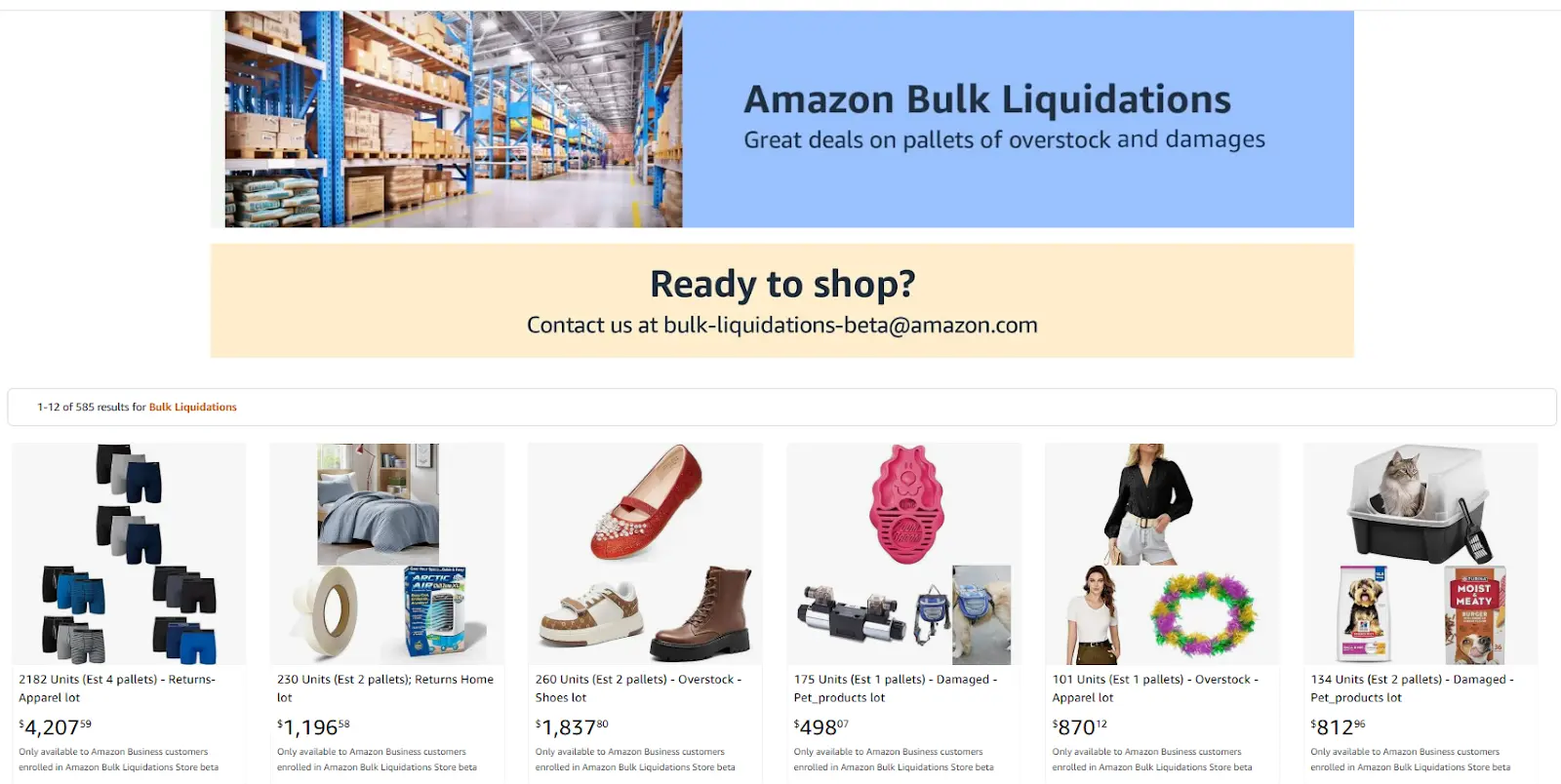
This is Amazon’s new closed-beta storefront offering bulk lots of returned, damaged, or overstocked items from Amazon or third-party sellers. Lots are pre-assembled, sold as-is, and ship directly from Amazon.
- Pros
No auction needed, purchase like a regular Amazon order, free shipping on many lots, dedicated support.
- Cons
Closed beta (requires approval), no returns, no customization, strict rules (no resale on Amazon marketplaces).
- Best for
Tax-exempt resellers in the U.S. looking for direct, low-friction sourcing – especially those operating outside Amazon.
B-Stock (Amazon Liquidations Marketplace)
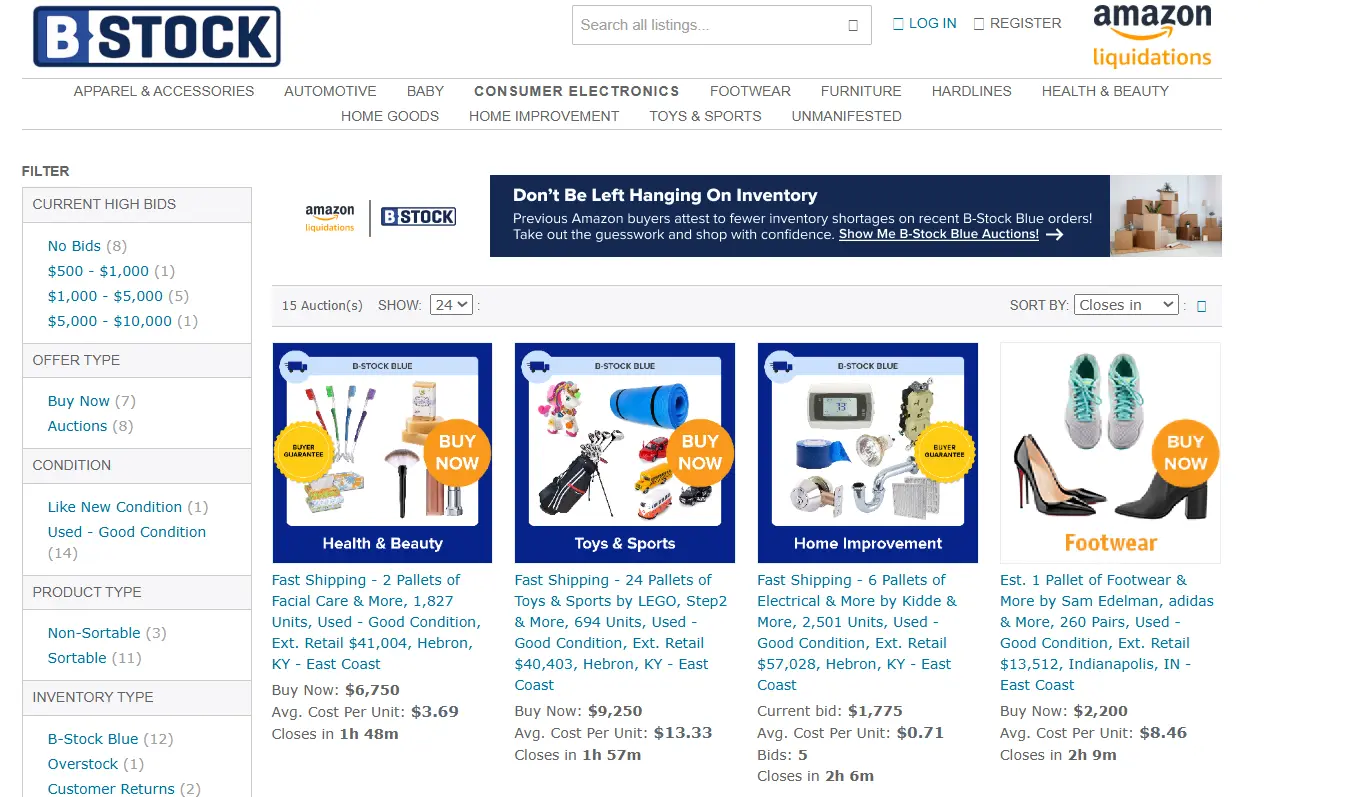
B-Stock
Marketplace connecting sellers (like Amazon) to buyers via auctions.
- Pros
Transparent bidding system, detailed manifests, multiple condition filters.
- Cons
Requires approval to bid, competition can drive up prices, shipping varies by seller.
- Best for
Experienced resellers who want better filtering and auction control.
Liquidation.com
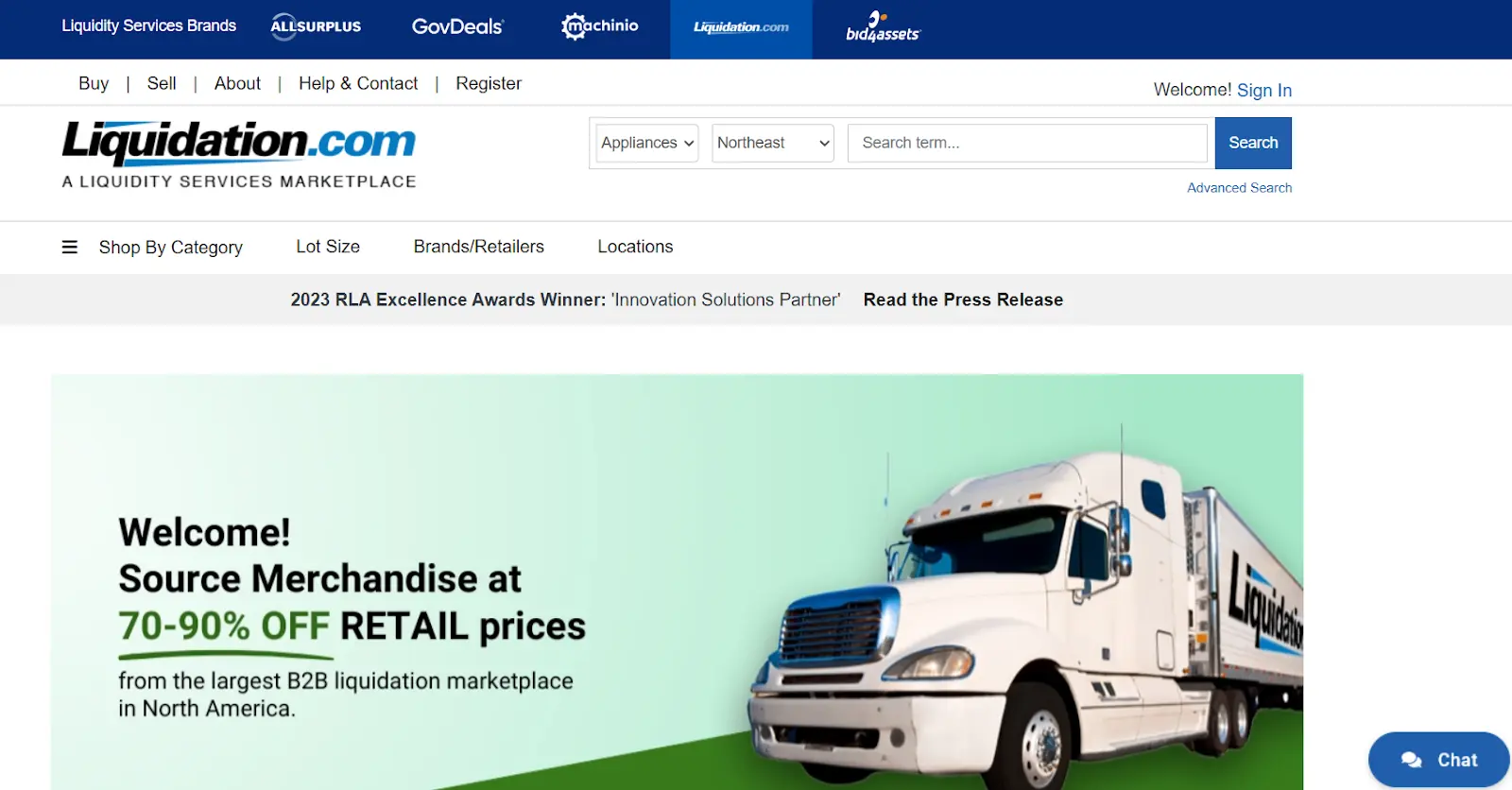
Liquidation.com
Third-party platform offering Amazon returns and surplus from multiple retailers.
- Pros
Frequent Amazon pallet listings, accessible to individuals, category filters.
- Cons
Mixed reputation for pallet quality, shipping can be costly, unclear condition grading.
- Best for
Entry-level buyers testing the model with small lots.
Direct Liquidation
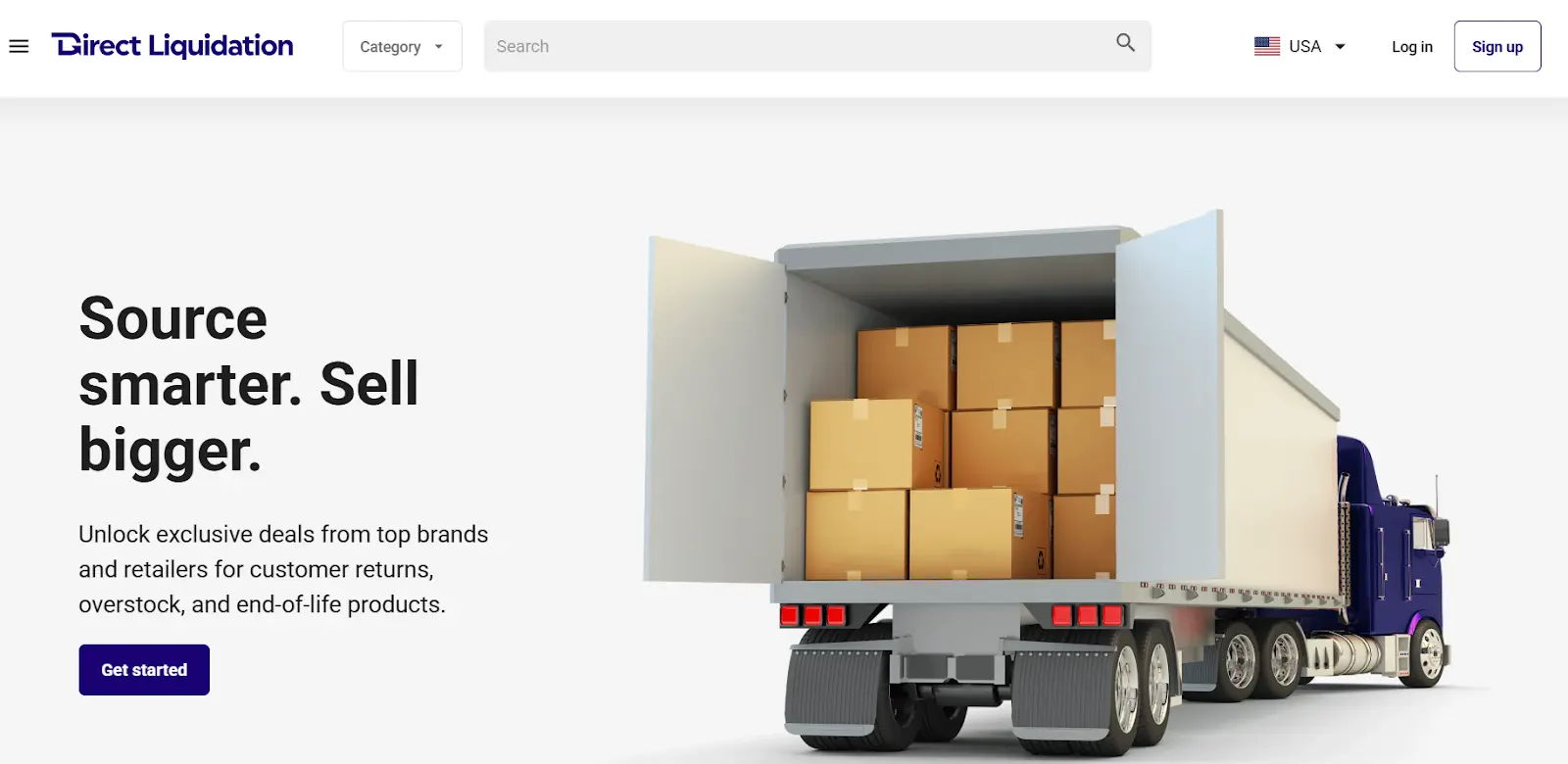
Direct Liquidation
Amazon-certified partner selling returns and shelf-pulls by category or truckload.
- Pros
Amazon lots clearly labeled, itemized manifests available, no bidding needed.
- Cons
Some listings marked as salvage-heavy, fewer mixed lots.
- Best for
Resellers who prefer fixed pricing over auctions and want reliable sourcing.
BULQ
Mostly fixed-price lots with high transparency – not Amazon-exclusive, but often includes Amazon items.
- Pros
Easy navigation, flat-rate shipping, manifest preview before buying.
- Cons
More expensive per unit, smaller lot sizes, not always Amazon stock.
- Best for
Small-scale or newer sellers who prioritize clarity and convenience.
How Much Do Amazon Wholesale Pallets Cost
Pallet prices can vary wildly depending on category, condition, and supplier. A small pallet might go for under $300, while a full truckload of electronics can reach $10,000+. Understanding what drives those numbers is essential before making your first buy.
Typical price ranges
- Small mixed lots
$250–$700
- Category-specific pallets
$800–$2,500
- Electronics or premium items
$2,000–$8,000+
- Truckloads (multiple pallets)
$5,000–$15,000+
Auction platforms like Liquidation.com or B-Stock may start lower but end higher due to bidding competition.
What affects the cost
- Category
Electronics, tools, and branded apparel command higher prices. General merchandise and home goods are typically more affordable.
- Condition
New or open-box items cost more than salvage or untested lots.
- Weight & size
Heavier pallets with large or bulky items cost more to handle and ship.
- Manifest availability
Pallets with detailed manifests (item lists) usually cost more due to increased buyer confidence.
Extra costs to factor in
- Shipping
Often not included. Freight costs can add $150–$500+ depending on distance and weight.
- Handling fees
Some platforms add buyer premiums (e.g., 5–15% of winning bid).
- Storage
If you’re ordering multiple pallets or don’t have space at home, you may need warehouse space – expect $50–$200/month for a small unit.
- Returns/loss
Most platforms sell items as-is, with no returns, so build in a loss margin.
Risks of Buying Amazon Pallets
Buying liquidation pallets can unlock solid margins – but it’s not a guaranteed win. Understanding the risks upfront is key to avoiding expensive mistakes, especially for OA and dropshipping sellers transitioning into bulk sourcing.
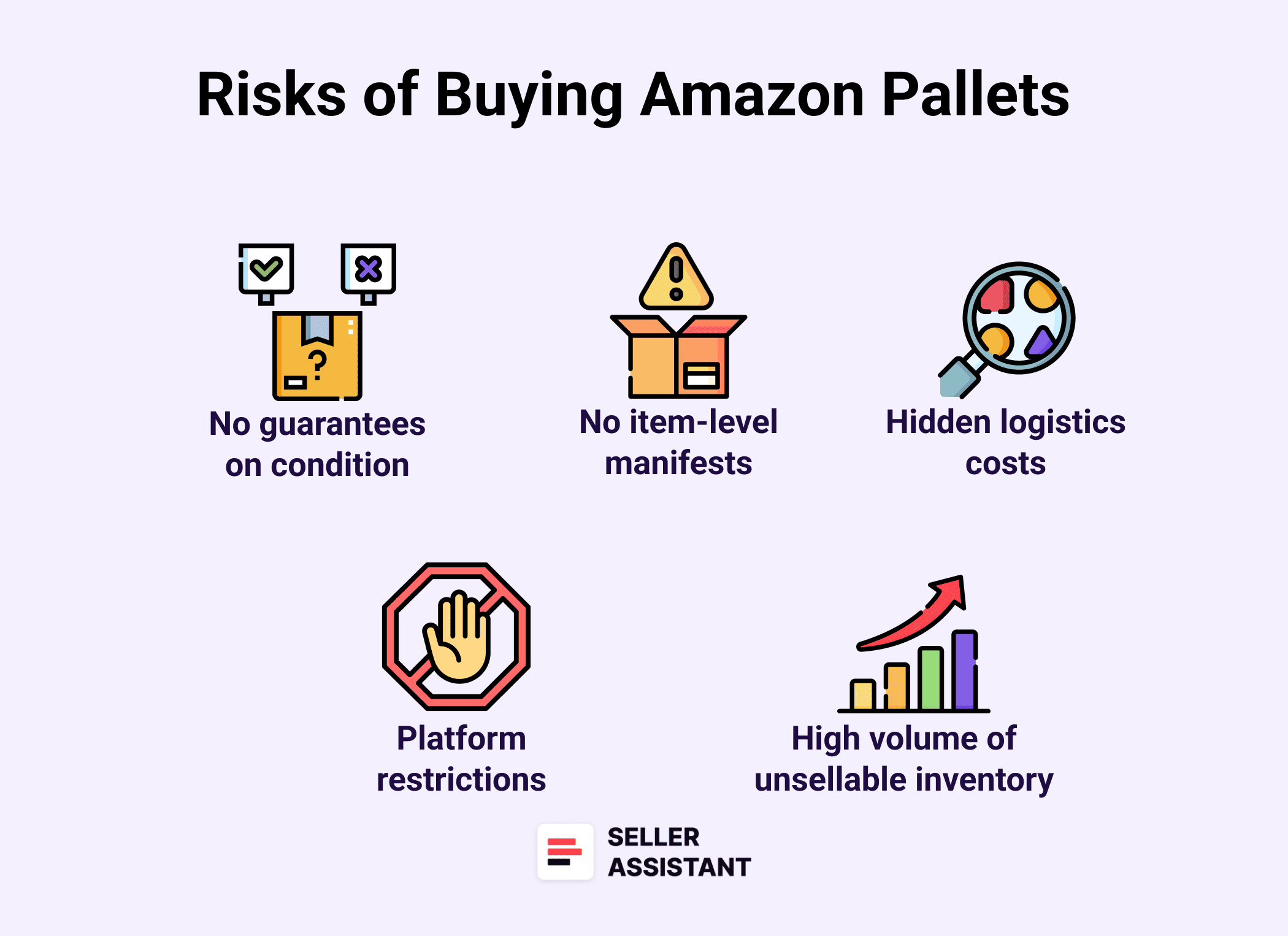
Risks of Buying Amazon Pallets
No guarantees on condition
Even if a pallet is labeled “new” or “open box,” you might still receive damaged, incomplete, or non-functioning items. “As-is” means exactly that – no returns, no replacements, no support if items don’t work.
No item-level manifests
Some suppliers (like the Amazon Bulk Liquidations Store) don’t provide detailed manifests. This means you’re buying blind – without knowing specific SKUs or brands. That adds guesswork to sourcing decisions and makes profit projection harder.
Hidden logistics costs
Returns require space. You may need a dock, forklift, or storage unit depending on shipment type. If you don’t factor in freight, unloading, or warehousing, your margins can evaporate fast.
Platform restrictions
Some suppliers – especially Amazon’s own liquidation store – explicitly prohibit resale on Amazon marketplaces. If you’re FBA-only, that’s a non-starter. Be sure to read terms carefully.
High volume of unsellable inventory
Every pallet comes with some duds. Expect a percentage of items to be broken, missing parts, or too obscure to flip. This “dead stock ” is part of the model – your job is to estimate it correctly.
Can You Make Money Selling Amazon Wholesale Pallets
Yes – but only if you treat it like a business, not a gamble. The resellers who profit consistently from liquidation pallets know how to evaluate lots, control logistics, and move inventory efficiently.
ROI is all about the spread
You’re buying in bulk at steep discounts. The goal is to resell enough usable items at a margin that covers your losses and leaves room for profit. Smart sellers aim for at least a 2–3x return on the usable portion of a pallet.
Category matters
Electronics, tools, and branded goods often flip faster and at higher margins. Home goods, toys, and general merchandise can move slower but are easier to inspect and resell locally. Apparel is hit-or-miss unless you know the brands.
Where you sell affects profits
Selling on eBay, Facebook Marketplace, flea markets, or Whatnot gives you flexibility. Selling on Amazon is usually not allowed with liquidation goods – especially from Amazon’s own bulk liquidation store. Know the rules and plan your channels accordingly.
What the pros do differently
- They track metrics – % of dead stock, shipping costs, resale velocity.
- They buy tested pallets or from reliable categories.
- They move fast – good lots go quick, and storage eats margin.
- They reinvest profit into higher-quality pallets with better manifests.
Can You Sell Wholesale Pallets on Amazon?
Yes – but with a few important conditions. If you are approved to sell the products and brands, you can absolutely resell them on Amazon. Many sellers buy wholesale pallets specifically to flip profitable inventory on the platform. The key is product research – not everything in a pallet is profitable, and you may not be eligible to sell specific products. Listing the wrong item can lead to losses or even account issues.
That’s where Seller Assistant comes in. It’s the most efficient way to evaluate large volumes of products fast, accurately, and at scale – especially when dealing with manifest data from wholesale pallet suppliers.
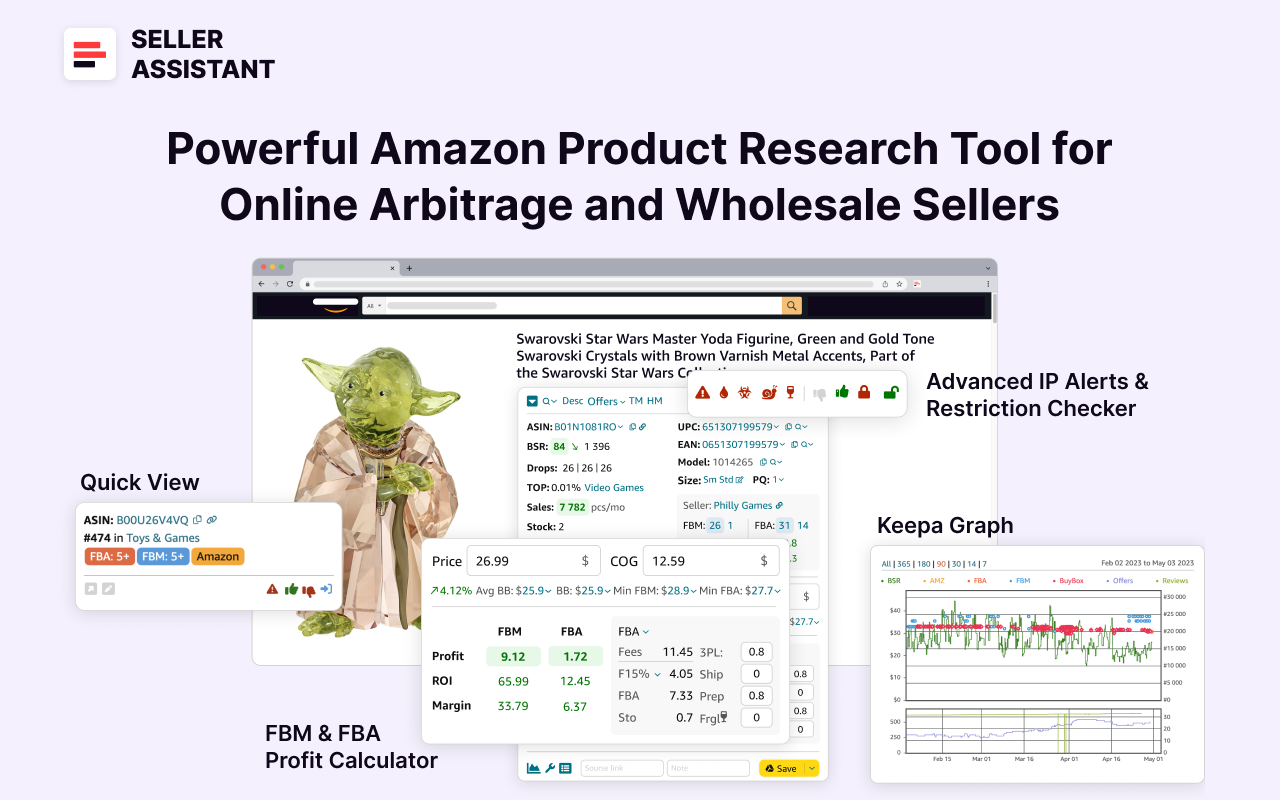
Seller Assistant
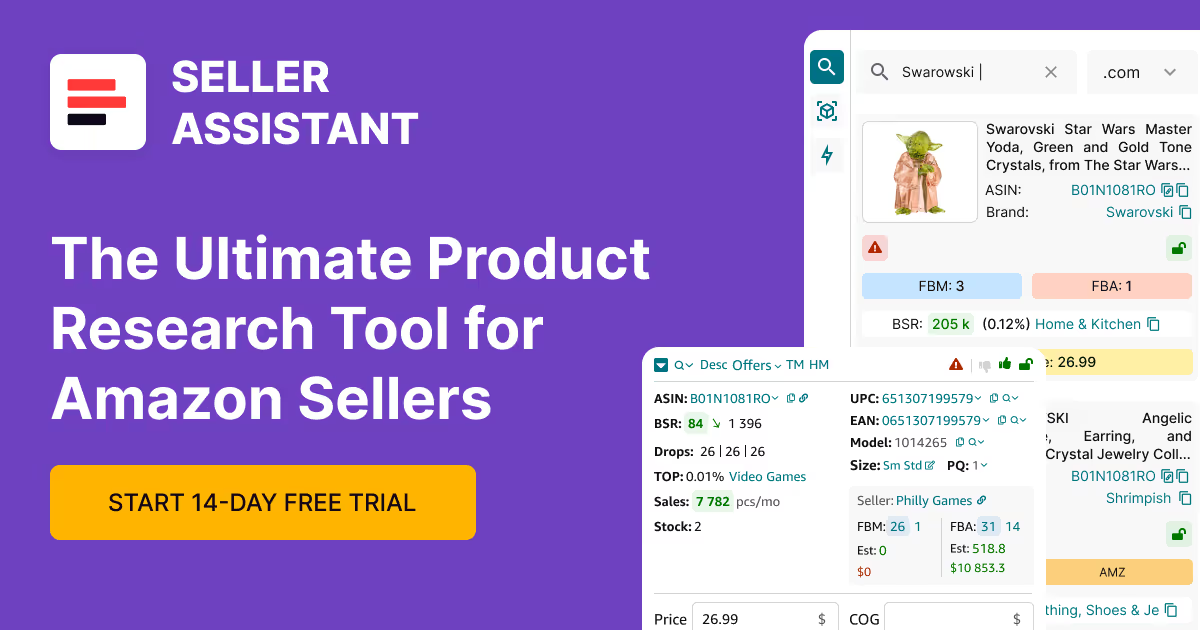
It offers a robust toolkit of over 20 features built to streamline every part of the sourcing process – from bulk scanning wholesale supplier sheets for high-margin leads to deep product research and advanced brand and competitor analysis. By using this FBA and FBM product sourcing software, you can easily identify products that have the potential to be sold well on Amazon.
Use Seller Assistant’s Price List Analyzer for pallet research
When you’re working with wholesale manifests or bulk inventory spreadsheets, Seller Assistant’s Price List Analyzer is your go-to solution for turning raw data into actionable Amazon insights. It automates the heavy lifting of bulk research, helping you instantly determine which pallet items are profitable, allowed, and worth listing.
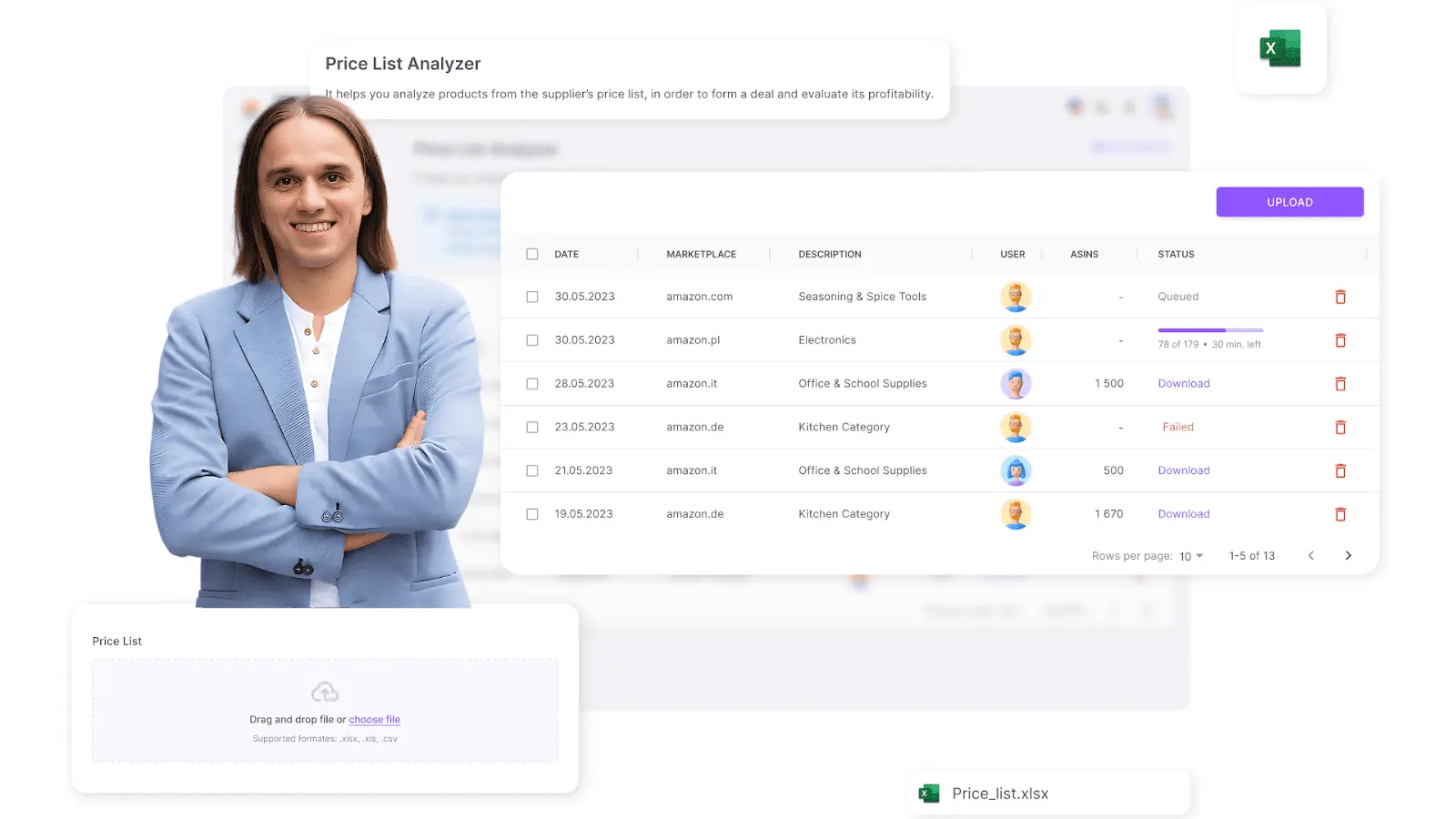
Seller Assistant’s Price List Analyzer
What Price List Analyzer does
- Matches supplier product titles or identifiers to the correct Amazon ASINs automatically
- Flags restricted or gated items you can’t sell
- Populates your spreadsheet with critical selling data:
- Sales performance: BSR, estimated sales, and demand trends
- Profitability: ROI, margin, breakeven points
- Price history: 30/90/180-day average prices, Buy Box stats
- Fee breakdowns: Amazon fees, FBA storage, shipping, prep, hazmat flags
- Competition: Seller count, Amazon in stock, Buy Box rotation
- Risk indicators: IP complaints, meltable status, fragile items
- It also lets you apply advanced filters – like ROI > 30% or BSR < 100k – to instantly isolate high-potential items. You can tag products with likes/dislikes, shortlist your best finds, and export a ready-to-act sourcing sheet.
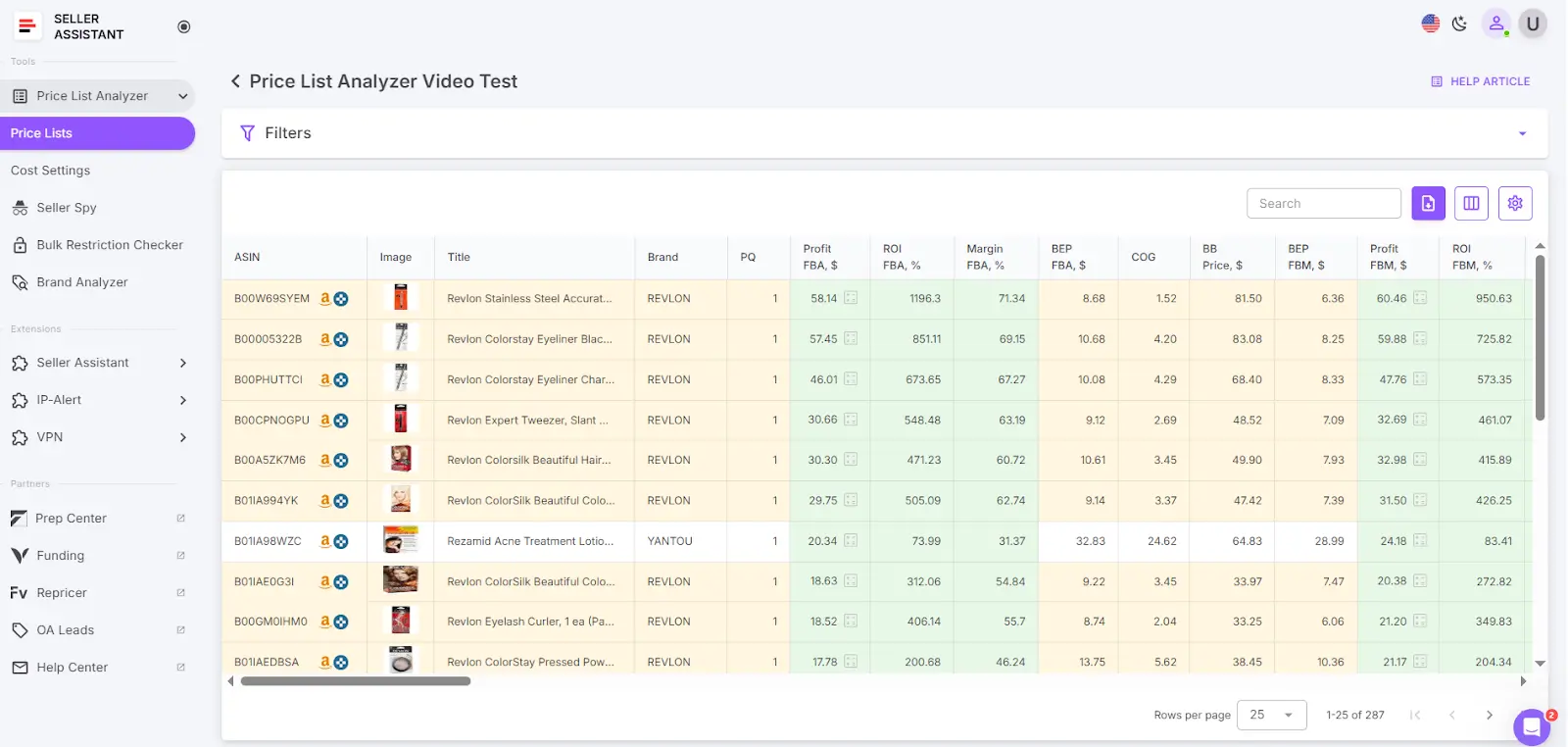
Price List Analyzer
How to research pallet manifests with Price List Analyzer
Step 1. Sign in to your Seller Assistant account and open the Price List Analyzer

Access Price List Analyzer
Step 2. Upload your supplier’s file (usually Excel or CSV), select your marketplace

Upload your wholesale price list
Step 3. Map relevant fields: product name, SKU, price

Set up your wholesale list
Step 4. Click Analyze Price List to begin scanning

Start price list processing
Step 5. Filter by profitability, rank, and risk to find the top-performing SKUs

Locate the filters feature and open the filter modal
Step 6. Export your final product list, complete with scoring and data, ready to source and list
Get the Price List Analyzer results
If you’re planning to sell Amazon wholesale pallets profitably, this tool is essential – it removes the guesswork and turns liquidation sourcing into a data-driven process. Let me know if you’d like a visual walkthrough or a sample workflow to include.
Tips for First-Time Buyers
Buying your first Amazon pallet can be exciting – and overwhelming. Here’s a focused checklist to help you avoid common pitfalls and give yourself the best shot at breaking even (or better) on your first load.
Start small
Resist the urge to go all-in on a truckload. Choose a single pallet or small lot, preferably with a manifest. This helps you understand the process without risking thousands upfront.
Avoid salvage on your first buy
Stick to new, like-new, or open-box condition pallets. Salvage lots are tempting because they’re cheap – but unless you have experience repairing or parting out items, it’s not worth the gamble.
Research resale channels before buying
Know where you’re going to sell before you buy. If you can’t sell tools locally or electronics on eBay, don’t buy those categories. Align your sourcing with your resale strengths.
Account for all costs
Don’t just look at the pallet price – include shipping, storage, time to sort, and packaging costs. Many first-timers lose money simply because they underestimate the true all-in cost.
Document everything
Take photos and unboxing videos when your pallet arrives. This protects you in case of damage claims and helps you learn what to expect from different suppliers.
Join communities
Reddit threads (like r/Flipping), Facebook groups, and YouTube resellers often share supplier feedback, reviews, and success/failure stories. Tap into their experience before you spend a dollar.
Best Practices for Reselling Items
Once your pallet arrives, your profits depend on how efficiently you sort, prep, and sell your inventory. Liquidation isn’t just about sourcing cheap – it’s about turning that chaos into clear, sellable value.
Inspect and sort immediately
As soon as the pallet is delivered, open every box. Separate items by category and condition. Test electronics, check for missing parts, and label anything you can’t resell right away.
Clean, repair, and bundle where possible
Wipe down dusty products. For salvage or open-box items, small repairs or bundled accessories (e.g., phone + charger) can be 2–3x the resale price. Presentation matters, even on eBay or Facebook Marketplace.
Use multiple resale channels
- eBay for branded or collectible items.
- Facebook Marketplace for bulky or local goods.
- Whatnot or OfferUp for fast flips or “as-is” bundles.
The more channels you know, the faster you’ll recover your investment.
Track your inventory and cost-per-unit
Use a spreadsheet or a basic resale tracker. Know how much you spent per item after shipping, fees, and overhead. This lets you adjust pricing and avoid emotion-based decisions.
Offer bulk lots to offload slow movers
If some items aren’t selling individually, group them and sell them as a bulk lot. This clears space, recovers capital, and keeps your storage costs down.
FAQ
Can I buy pallets directly from Amazon?
You can’t buy return pallets directly from Amazon’s main site, but Amazon works with liquidation partners who resell these pallets through platforms like Amazon Bulk Liquidations Store or third-party liquidators. These authorized resellers handle bulk returns and overstock inventory.
Is it worth it to buy Amazon return pallets?
Buying Amazon return pallets can be profitable if you understand product conditions, sourcing costs, and resale strategies. However, it’s a high-risk venture – some pallets contain valuable items, while others may include damaged or unsellable goods.
Does Amazon sell pallets to the public?
Yes, Amazon allows the general public to purchase pallets through liquidation channels such as Amazon Bulk Liquidations Store and authorized platforms like B-Stock and Liquidation.com. These sites offer auctions or fixed-price listings accessible without a business license.
Is buying an Amazon pallet a real thing?
Yes, it’s a legitimate practice – many Amazon sellers buy pallets of returned or excess inventory for resale. Numerous documented sources and online marketplaces support this form of retail arbitrage.
Final Thoughts
Buying wholesale pallets can be a cost-effective way to source inventory for your Amazon business – but success depends on choosing the right products. To evaluate resale potential, profitability, and product restrictions quickly and accurately, Seller Assistant is the best tool available. It gives you all essential Amazon data in one place, from BSR and competition to IP alerts and profit calculators. If you’re serious about turning wholesale pallets into profit, Seller Assistant is your must-have research companion.lets you validate deals with precision.

)